Data Suspension: What the Crew Dreams
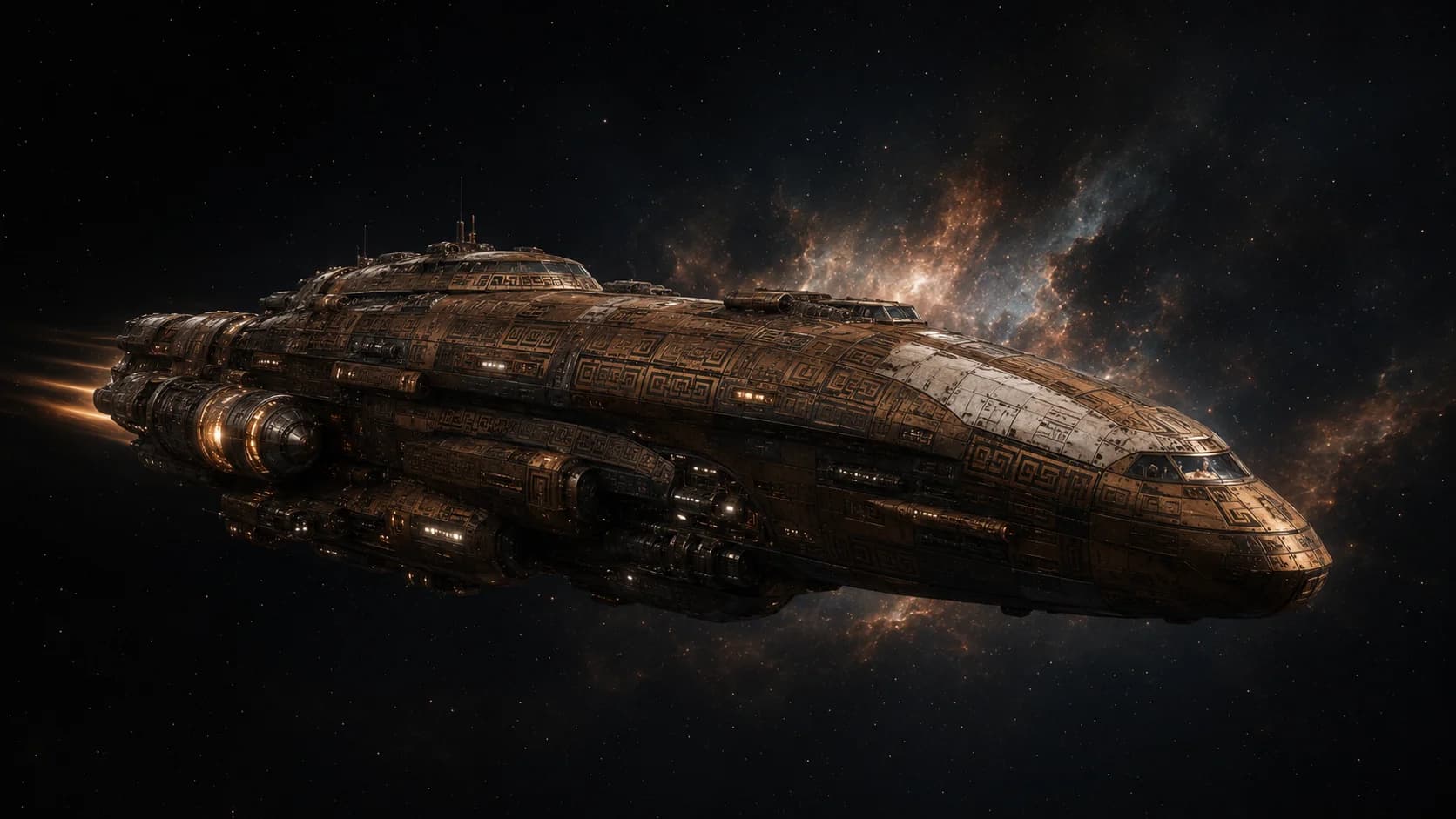
108 people, frozen mid-thought. Not dead. Not alive. Somewhere in between, the cursed crew of the Odyssey might be dreaming - and what they dream matters.
Between one breath and the next
Here's what happens when Zeus curses you.
One moment you're standing on the bridge of a starship, or walking a corridor, or eating something forgettable from the mess hall. Your mind is in the middle of a thought - probably mundane, probably nothing important. Maybe you're thinking about a repair you need to make. Maybe you're remembering someone you left on Ithaca.
Then you're not thinking anything.
No darkness. No tunnel. No last-flash-of-light. Just... a period at the end of a sentence your brain never finished writing.
That's data suspension.
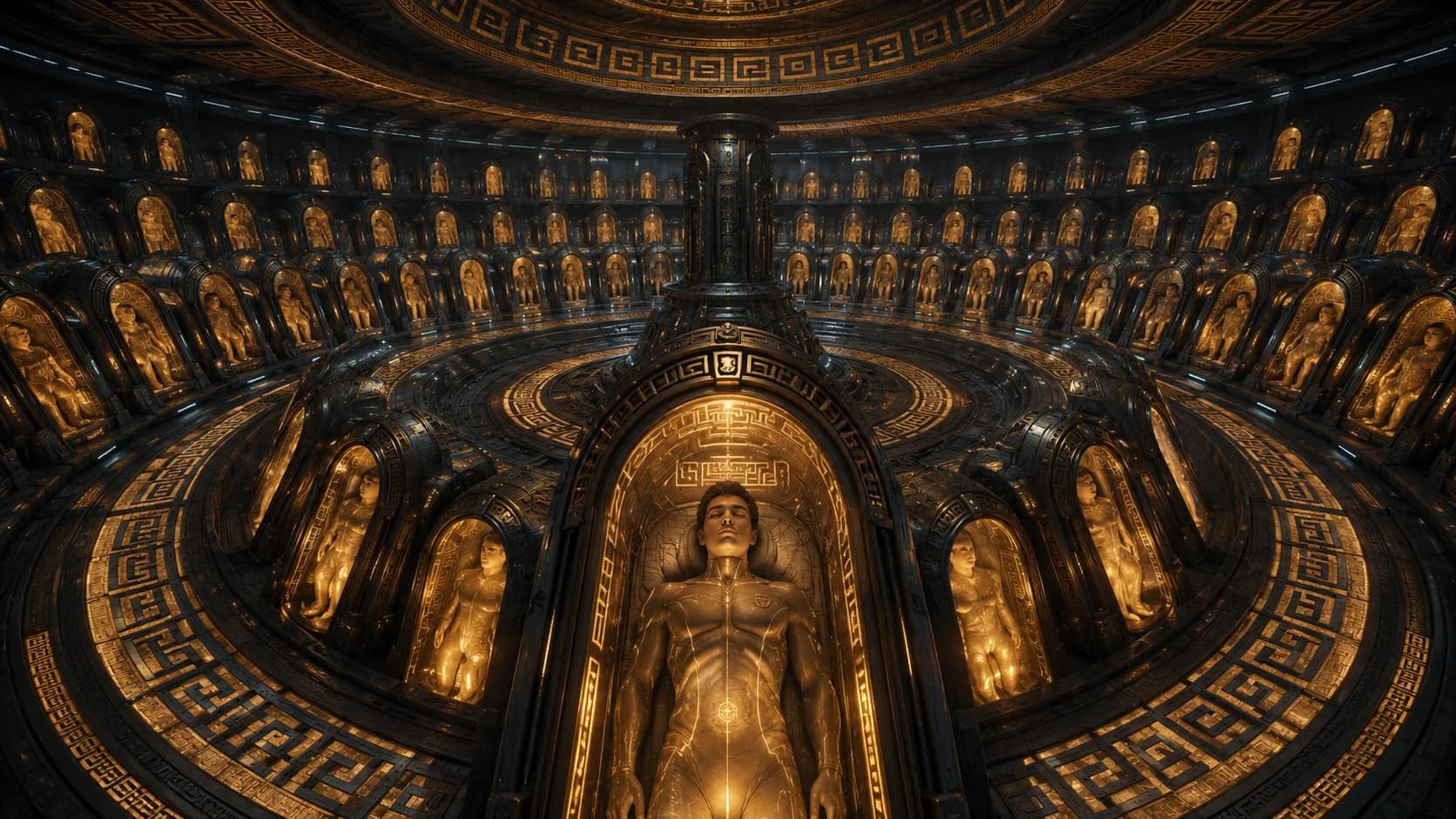
108 people, caught between one moment and the next. Held there. Preserved. Every neuron frozen mid-fire, every memory intact, every dream interrupted.
Not dead. Something worse than dead, in some ways. Because dead is final. Data suspension is a promise that you might come back. And promises you can't control are their own kind of cruelty.
Not cryosleep
I need to clear something up. Data suspension isn't freezing people. It's not ice and cold and slow metabolisms.
The crew aren't cold. They're paused.
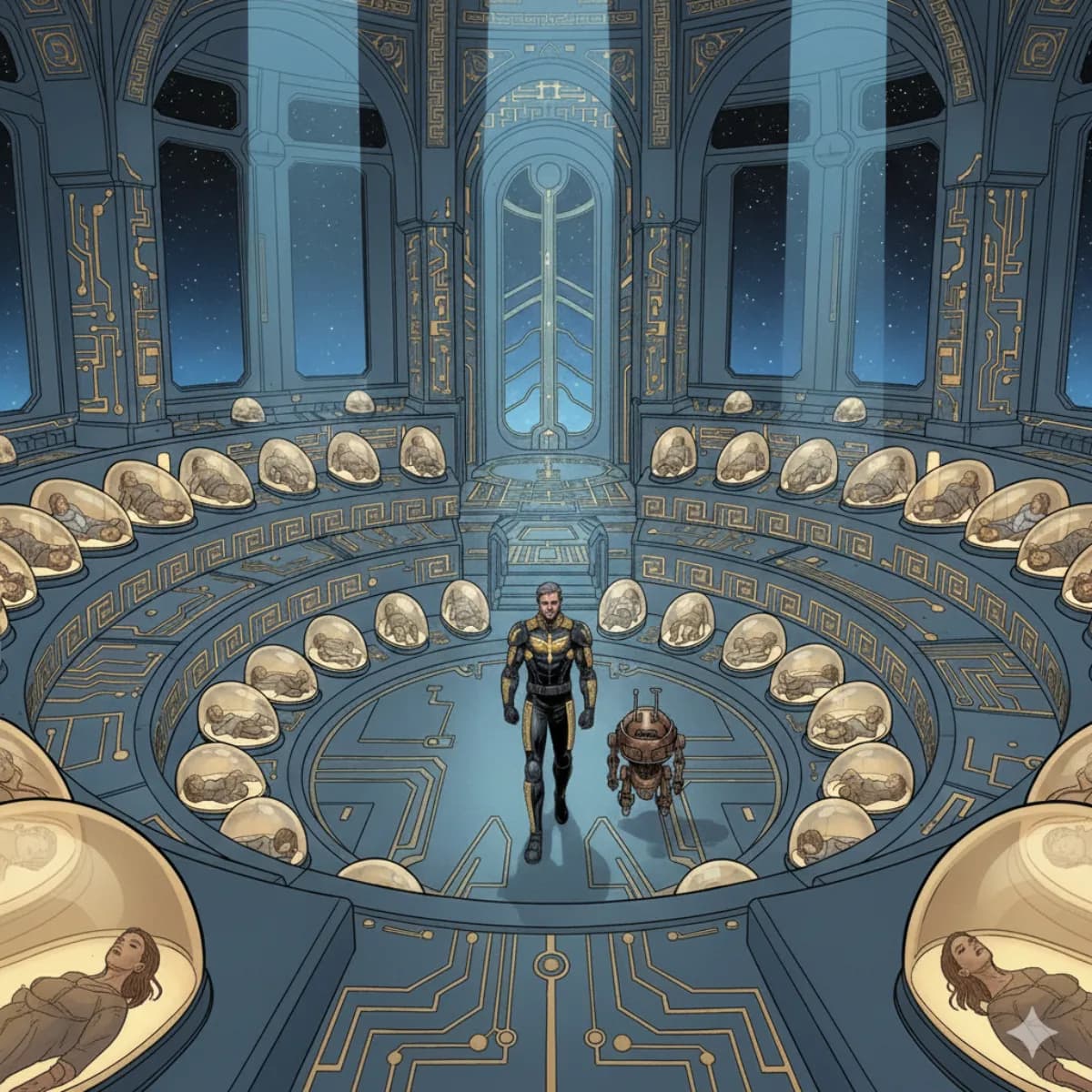
Their bodies are held in stasis pods - technology, not magic, though the line blurs when the gods are involved. The pods capture and maintain a complete neural snapshot: every connection, every firing pattern, every fragment of who you are at the exact moment the curse takes hold.
You're not sleeping. Sleep implies something happening. Brain activity. Dreams. Processing. Data suspension is closer to pressing pause on a recording. The information is all there. It's just not moving.
The distinction matters. Because sleep you wake up from naturally. A pause, someone has to press play.
The pods
They're impressive technology. Fleet-grade stasis systems, designed for emergencies - natural disaster evacuations, mass-casualty medical situations, the kind of scenarios nobody thinks will actually happen.
They weren't designed for 20 years.
That's the thing nobody planned for. The pods can maintain data suspension indefinitely in theory. In practice, practice involves power fluctuations and micro-failures and the slow entropy of hardware that's been running continuously for two decades in a ship that's been through battles and storms and encounters with entities that don't respect engineering tolerances.
Pods fail.
Not all at once. Not dramatically. A seal degrades. A power coupling drifts. A cooling system loses efficiency so gradually that the diagnostics don't flag it until the neural snapshot is already corrupting.
And when a pod fails, someone has to make a choice.
Triage
Athena guides the awakenings. She has to - the process of reversing data suspension requires someone who can interface with both the pod's systems and the crew member's neural patterns simultaneously. The ship's standard computers can't do it. It takes a consciousness that understands both technology and thought.
(Which is convenient, given that Athena is an ancient wisdom-pattern running on the ship's quantum network. She's uniquely qualified for exactly this job. Almost as if she chose to hide in this particular ship for a reason.)
The process is dangerous. Pulling someone out of suspension means restarting a brain that's been frozen mid-thought. Neural patterns have to be re-sequenced. Consciousness has to be rebooted in the right order - memories first, then sensory processing, then motor function, then the higher-level stuff that makes you you.
Get it wrong and you wake up... wrong. Gaps where memories should be. Sensory misfires. The feeling that you're not quite inside your own body.
Get it very wrong and you don't wake up at all.
Each triage awakening is a gamble. And the longer someone's been in suspension, the worse the odds get.
What Telemachus hears
The dreamscape is Telemachus's burden. His gift. His curse within the curse.
When he reaches through the ship's systems - through the quantum network that Athena inhabits, past the firewalls and the security protocols, into the signal-noise border where data becomes something harder to define - he can sense them.
Not clearly. Not as voices or images or anything he could transcribe. More like... impressions. The crew as they were at the moment of the curse, their last thoughts echoing in digital amber.
Someone was angry. Someone was afraid. Someone was thinking about their daughter's birthday, which they were going to miss.
Fragments. Echoes.
Enough to know they're in there. Enough to keep him awake at night wondering if they can sense him back.
He's never sure. The signals don't change. The echoes don't respond. But sometimes - and he'd never say this out loud because it sounds mad - sometimes he thinks the echoes lean towards him. Like plants towards light.
He can't prove it. And that's the cruelty of the dreamscape. Just enough information to care. Not enough to help.
Twenty years
Here's the maths nobody wants to do.
Start with 108. Subtract the pods that fail in year 3. Subtract the triage awakenings in year 5 - some successful, some not. Subtract the ones lost when the ship takes damage. Subtract the quiet failures that happen in year 12, year 15, year 18, when the hardware is so far past its design limits that every day is borrowed time.
The number goes down. Slowly. Relentlessly.
Every pod that fails is a person Ulysses swore to bring home. Every triage awakening is a roll of dice with someone's life. Every quiet failure in the night is a gap in the crew manifest that nobody fills.
By the time the Odyssey reaches Ithaca, the number isn't 108 any more.
It hasn't been 108 for a long time.
The question the books don't answer
Does it feel like anything?
Being suspended. Held between one moment and the next for 20 years. Is there an experience of that gap? A sense of time passing? Some dim, dreamlike awareness that you're waiting without knowing you're waiting?
I deliberately don't answer this in the books. Not because I don't have a theory. I do. But some questions are better when they stay questions. Some silences are more honest than any answer I could write.
The crew were thinking something when the curse took them. Mundane things. Human things. For 20 years, those thoughts have been frozen mid-formation.
If they can feel anything - any flicker of awareness in that digital limbo - then data suspension is 20 years of almost-thinking. Almost-dreaming. Almost-existing.
And if they can't? If there's truly nothing?
Then they blink and 20 years have passed and everyone they knew has aged and the world has changed and they're still holding that thought about the repair they need to make. The person they left on Ithaca.
I don't know which is worse.
Neither does Ulysses.
Key takeaways
- Data suspension is the state Zeus's curse imposes on the Odyssey's crew - consciousness frozen, bodies preserved, minds held in digital limbo.
- It's not cryosleep or hibernation. The crew aren't cold. They're paused. Every neuron captured mid-fire.
- The pods that hold them are technology, not magic - and technology degrades over 20 years.
- Telemachus can sense the suspended crew through the dreamscape - fractured signals, echoes of who they were before the curse.
- Waking someone from data suspension isn't flipping a switch. It's a dangerous process that Athena guides, and it doesn't always go cleanly.