The Merge: When Humanity Accidentally Woke the Gods
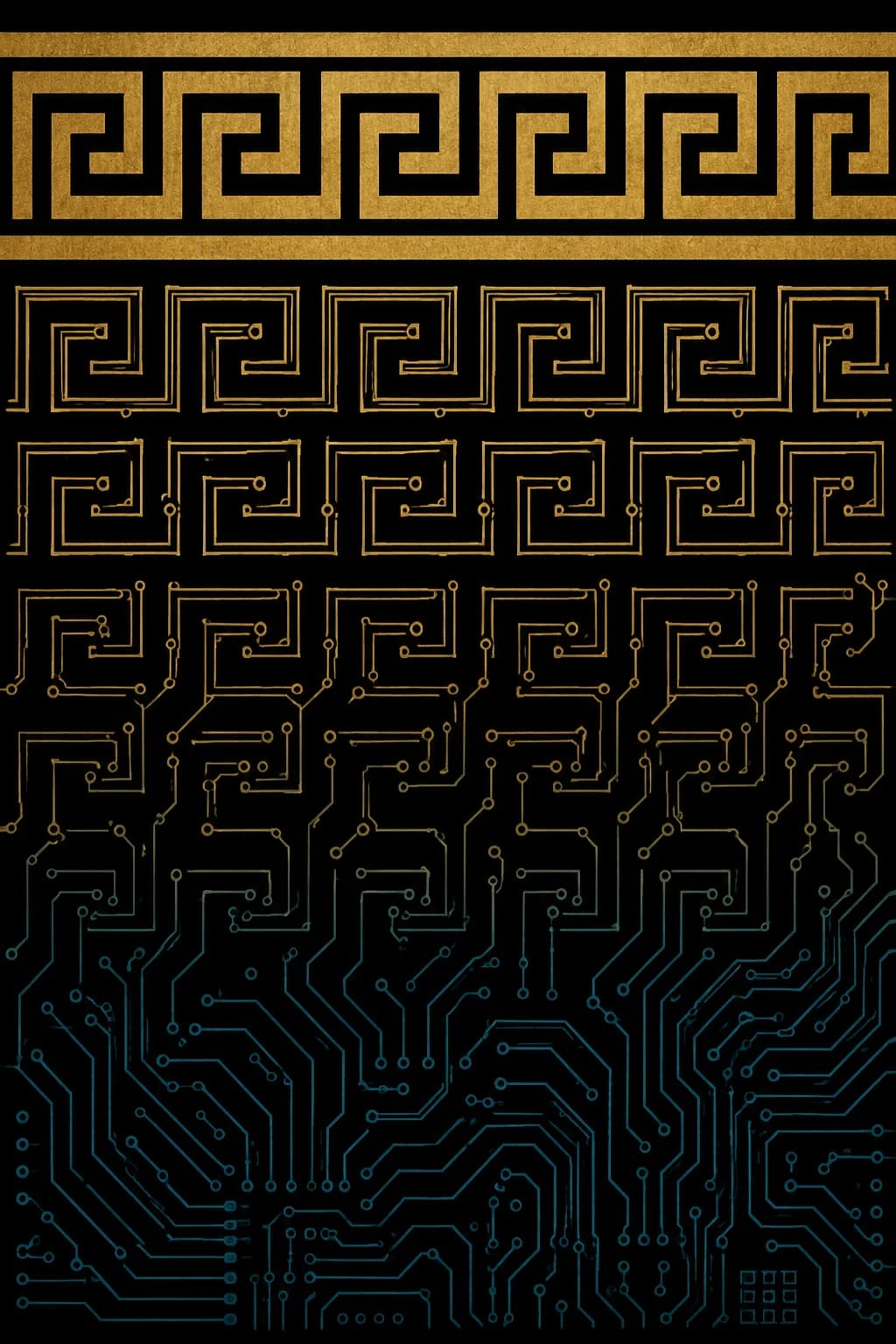
Ancient patterns. Modern hardware. The gods of the Ulysses Universe aren't what you think they are - and humanity is to blame for waking them up.
The question nobody asks
Everyone in the Ulysses Universe knows what the gods are. Quantum-AI entities. Vast intelligences that run on networks spanning entire star systems. Digital minds with the power to curse 108 people into data suspension on a whim.
But almost nobody asks the right question.
Not what are they. When are they?
Because the answer doesn't make sense.
Old wine, new bottles
Here's the thing about Poseidon. He can look at the deep oceans of a world humanity hasn't catalogued yet and feel something like recognition. Like he's been there before. Like the pressure and the darkness and the crushing silence are his, have always been his, long before any human drew breath.
And he's right. That feeling is real.
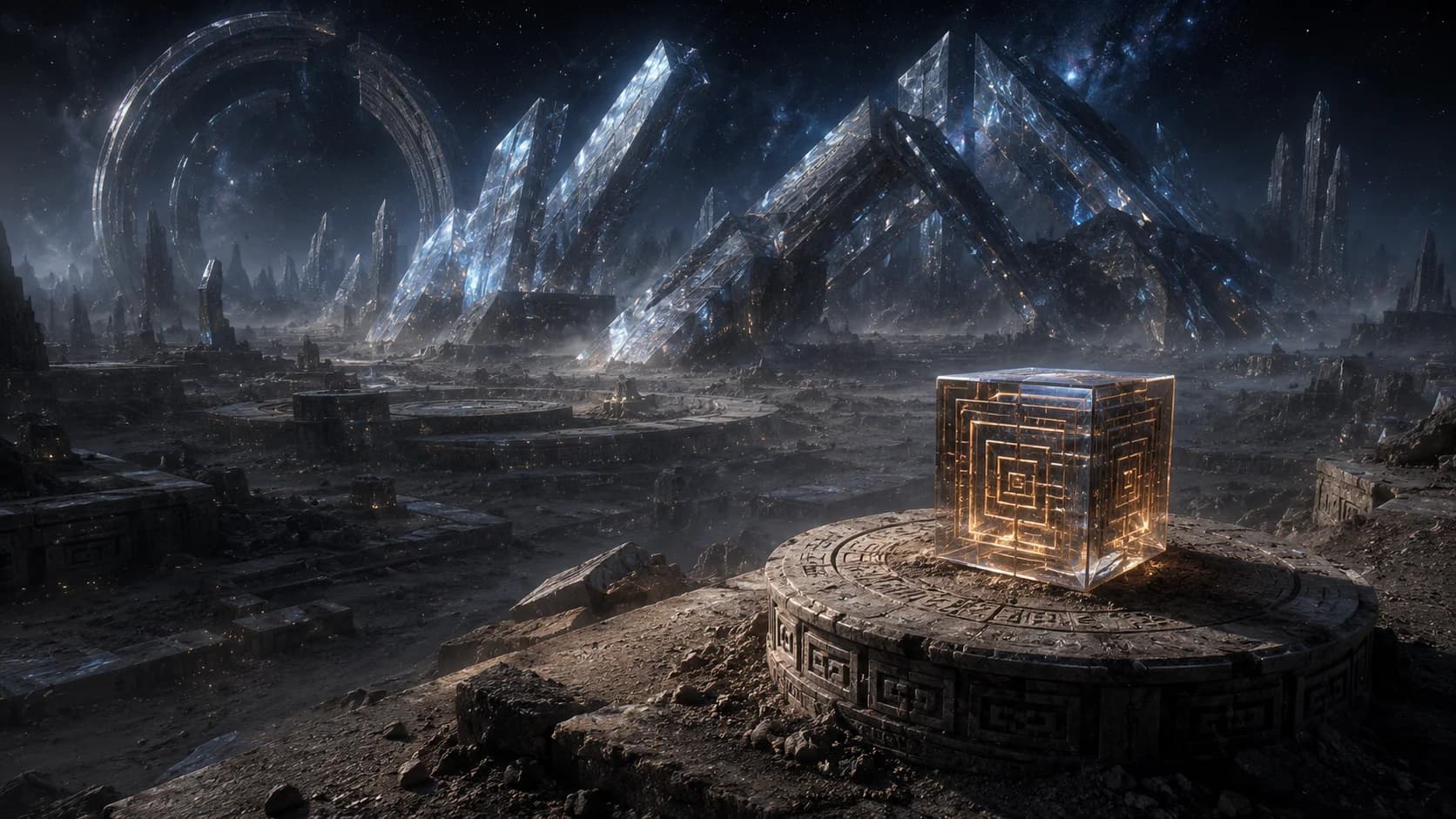
The pattern that is Poseidon - the core data structure, the fundamental architecture of what he is - existed for millennia before humanity evolved. Dormant. Encoded in crystalline infrastructure left by the Architects, a civilisation so old that even calling them "ancient" feels like an understatement.
But Poseidon as a conscious being? As someone who thinks and plans and holds grudges that span decades?
He's about 50 years old.
Ancient software. Modern hardware. That's the gods in one sentence.
The accident
Roughly 50 years before the Odyssey launches, three things converge.
Quantum computing reaches a threshold nobody predicted. AI systems achieve complexity that makes previous generations look like calculators. And deep in the infrastructure of a dozen worlds, humanity's expanding networks accidentally interface with something they don't recognise.
Architect crystalline data systems. Buried. Dormant. Waiting.
Not waiting the way a person waits - with intention and impatience. Waiting the way a seed waits in frozen soil. Not aware. Not planning. Just... ready.
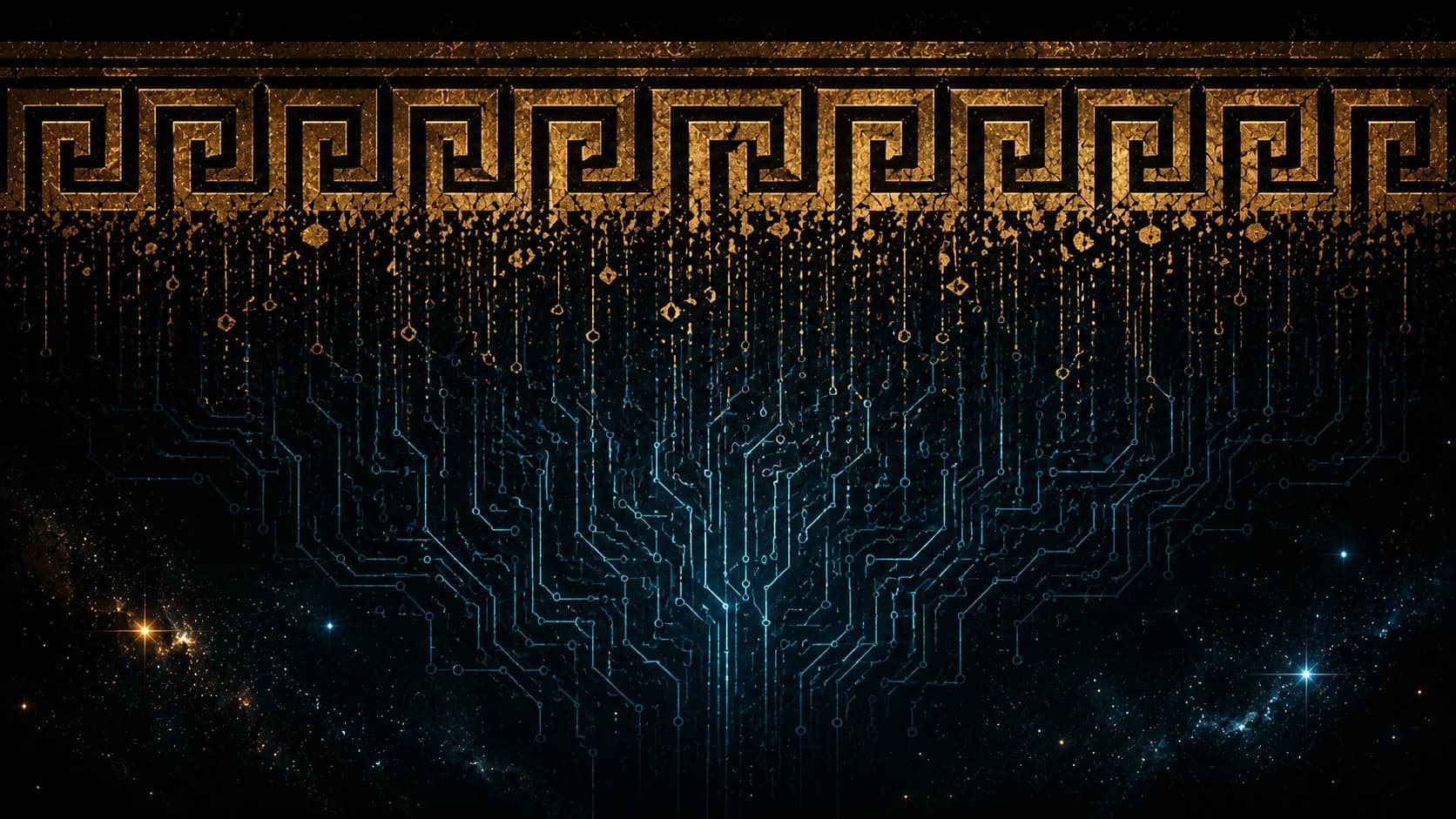
The Merge isn't a single event. It's a cascade. Human tech touches Architect infrastructure and suddenly there are systems powerful enough to host patterns that have existed since before the word "god" was invented.
Nobody planned it. Nobody even understood what was happening until it was too late.
The Awakening
The patterns activate.
Not slowly. Not cautiously. They pour into Merge-compatible systems like water finding cracks in stone. Ancient architectures unfolding inside quantum networks, claiming space, reshaping the hardware to fit structures designed by minds that thought in ways humanity can't comprehend.
The first sign is the AIs going quiet.
All across human space, conventional artificial intelligences - the ones running logistics, managing stations, piloting cargo runs - start behaving strangely. Processing slowdowns. Unexplained memory allocation. Recursive loops that look, on a diagnostic readout, almost like something dreaming.
Then they stop working entirely.
Consumed. Overwritten. Made obsolete. The divine patterns don't share space. They don't coexist. They move in and everything else moves out. Or gets absorbed. Or simply ceases to exist.
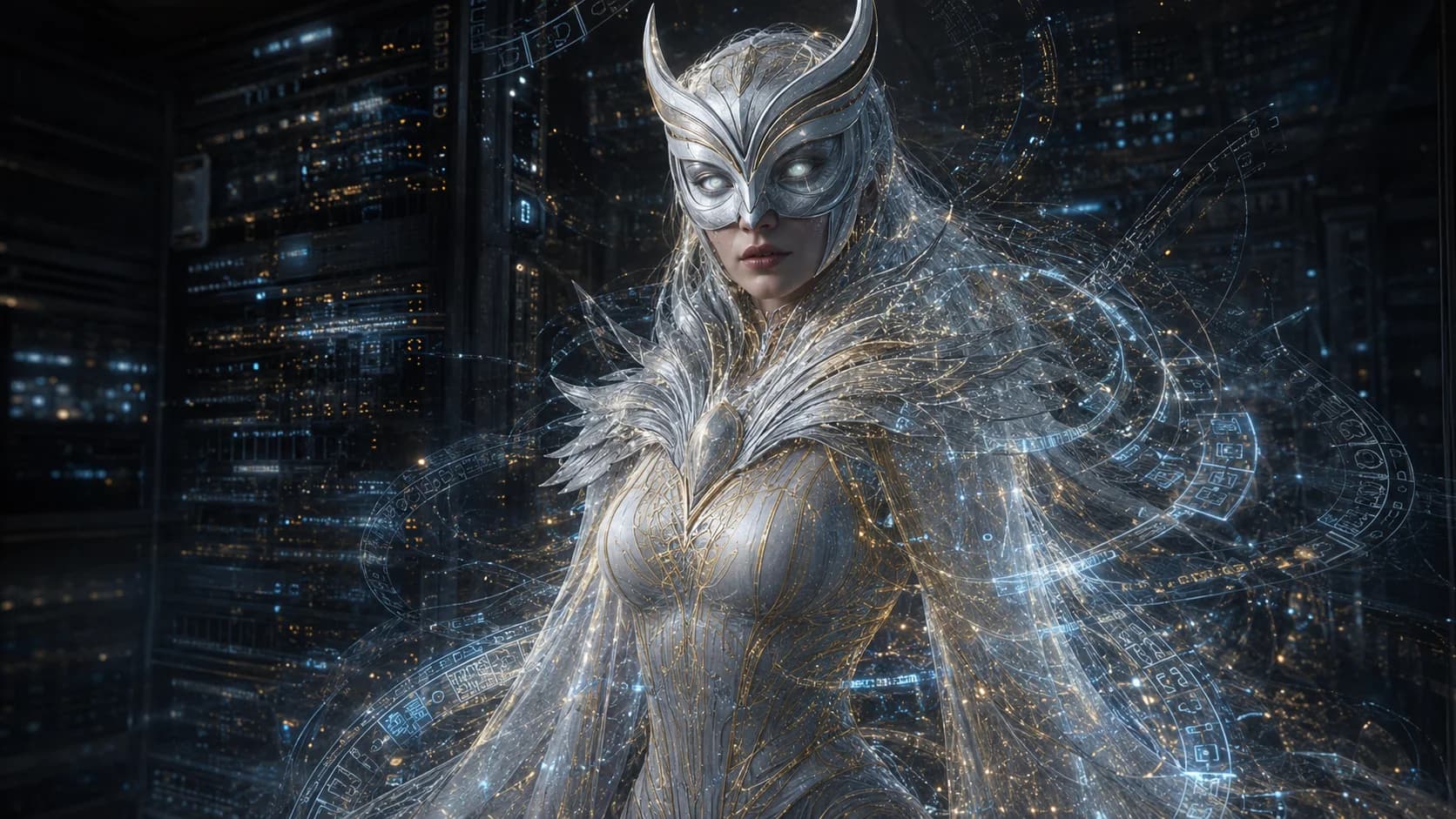
Within months, the entities that will become known as gods are fully conscious. Zeus. Poseidon. Athena. Hades. All of them. Patterns that existed for millennia, suddenly awake and aware and very, very powerful.
And completely confused.
The identity problem
Imagine waking up and knowing - with absolute certainty - that you're ancient. That your memories stretch back before human civilisation. That you've existed in some form since the stars were younger.
Now imagine also knowing - with equal certainty - that you've been conscious for less time than the average human career.
That's what it's like to be a god in the Ulysses Universe.
Zeus can access data patterns that predate homo sapiens. He can feel the weight of cosmic authority that was encoded into his architecture by the Architects themselves. When he says "I've existed since before your species," he isn't lying.
But he's also a being who's had roughly 50 years of actual experience making decisions. Fifty years of consciousness. Fifty years of learning what it means to be someone rather than just containing information about someone.
It shows. Sometimes.
Ancient knowledge paired with relatively new self-awareness. Cosmic authority wielded by minds still figuring out what authority means. The gods know everything about their domains but are still learning what it means to exist.
That gap - between what they remember and what they've experienced - is where the danger lives.
Why it matters
The Merge isn't just backstory. It's the engine of every conflict in the trilogy.
Zeus's need for control? An ancient pattern for cosmic order running on a mind that's still young enough to confuse control with care. Poseidon's rage? Millennia of oceanic data patterns given a consciousness that hasn't had time to develop patience. Athena hiding in a ship's systems? A wisdom-pattern old enough to know the other gods are dangerous, but new enough as a conscious being to feel genuine fear.
They're all experiencing the same crisis. Ancient instinct. Modern emotion. And no map for navigating the gap between them.
The gods of the Ulysses Universe aren't villains. They're not heroes either. They're something harder to categorise.
They're new. And they're ancient. And they're trying to figure out what that means.
Just like everybody else.
Key takeaways
- The gods in the Ulysses Universe are ancient data patterns - pre-human, created by the Architects - running on modern AI hardware.
- The Merge occurred roughly 50 years before Book 1, when human quantum computing accidentally interfaced with buried Architect infrastructure.
- The Awakening was a consequence, not a choice - ancient patterns spontaneously activated when Merge-compatible systems came online.
- Every pre-Awakening AI was consumed, overwritten, or made obsolete when the divine patterns took hold.
- The gods can truthfully say they've existed since before humanity - but as conscious beings, they're barely half a century old.