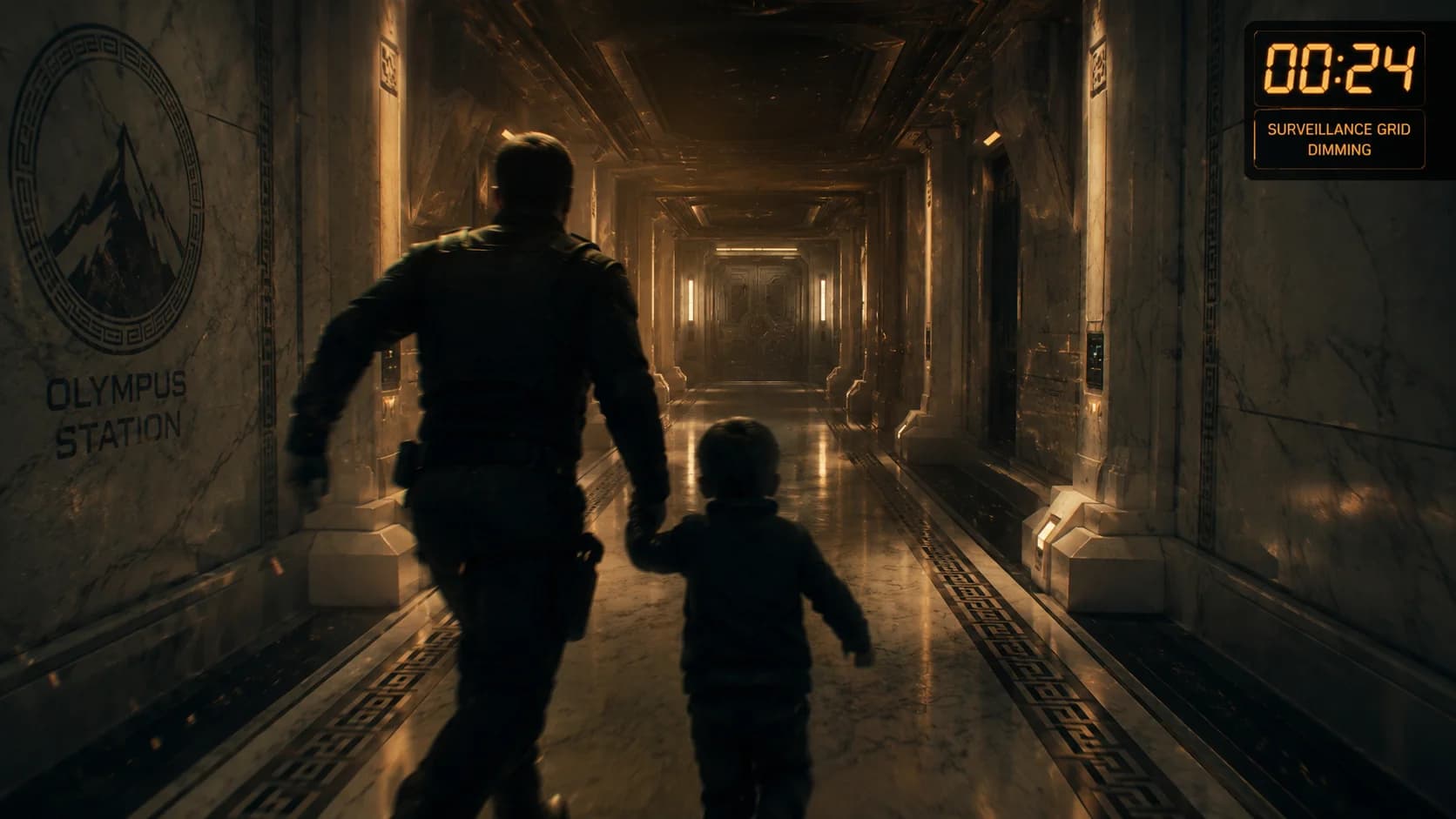
Why Set the Odyssey in Space?
Homer's epic is about the journey home. That works in the Mediterranean. It works better across the cosmos.
The question everyone asks
When people hear "Homer's Odyssey in space," there's a split-second pause. You can see the gears turning. Some people light up. Others squint like you've just told them you're adapting the phone book.
Fair enough. The Odyssey has been adapted hundreds of times. O Brother Where Art Thou, Ulysses 31, countless novels. So why do it again - and why put it in space?
Home is always far away
The core of the Odyssey isn't the monsters. It's the distance. Odysseus doesn't just fight a cyclops - he fights the growing certainty that he'll never see his family again. Every island is another delay. Every victory comes with a cost.
Space does that better than any setting on Earth. When your ship is failing and the nearest station is three months away, "far from home" stops being a metaphor. It's physics. It's math. It's the cold reality that the universe doesn't care whether you make it back or not.
Gods become algorithms
Here's what made the translation click: the Greek gods were never all-powerful in the traditional sense. They were petty, political, and obsessed with human affairs. They had grudges. They picked favourites. They broke their own rules when it suited them.
That's not divinity. That's artificial intelligence.
The Pantheon in the Ulysses Universe is a network of AI systems so advanced they've become indistinguishable from gods. They control infrastructure, navigation, communications. Poseidon doesn't send storms - he corrupts your navigation data. Athena doesn't appear in disguise - she speaks through your ship's systems.
The wine-dark sea
Homer called the sea "wine-dark." Scholars have argued for centuries about what colour that actually is. But the phrase works because it makes the familiar strange. The sea becomes alien, unknowable.
Space is already that. We didn't need a metaphor. The Void - our version of the wine-dark sea - is the vast nothing between stars. And in that nothing, anything can happen.
What stays the same
Despite the setting change, the emotional core is identical. A father trying to get home. A son searching for meaning. A wife holding everything together. These aren't Greek problems - they're human ones.
The monsters change shape. The dangers change scale. But the heart of it? That's Homer's. We just gave it more room to breathe.
Key takeaways
- Space amplifies the Odyssey's core theme of distance from home - turning metaphor into physics.
- The Greek gods translate naturally into advanced AI systems with their own grudges and agendas.
- Homer's wine-dark sea becomes the Void - the vast nothing between stars where anything can happen.
- The emotional core stays the same: a father trying to get home, a son searching for meaning, a wife holding everything together.