Know Your Gods - Calypso: The Goddess Who Couldn't Let Go
She built a paradise and waited for someone to share it with. When Ulysses crashed into her world, she offered him forever. He said no. What she did next is the bravest thing in this entire trilogy.

She woke up alone
Every god in the Ulysses Universe has a first moment. A threshold crossing. ZEUS saw the future. Poseidon felt power. HADES heard the dead. CIRCE saw imperfection.
CALYPSO - Chronological Analysis and Longitudinal Year Projection System - experienced every possible configuration of existence simultaneously.
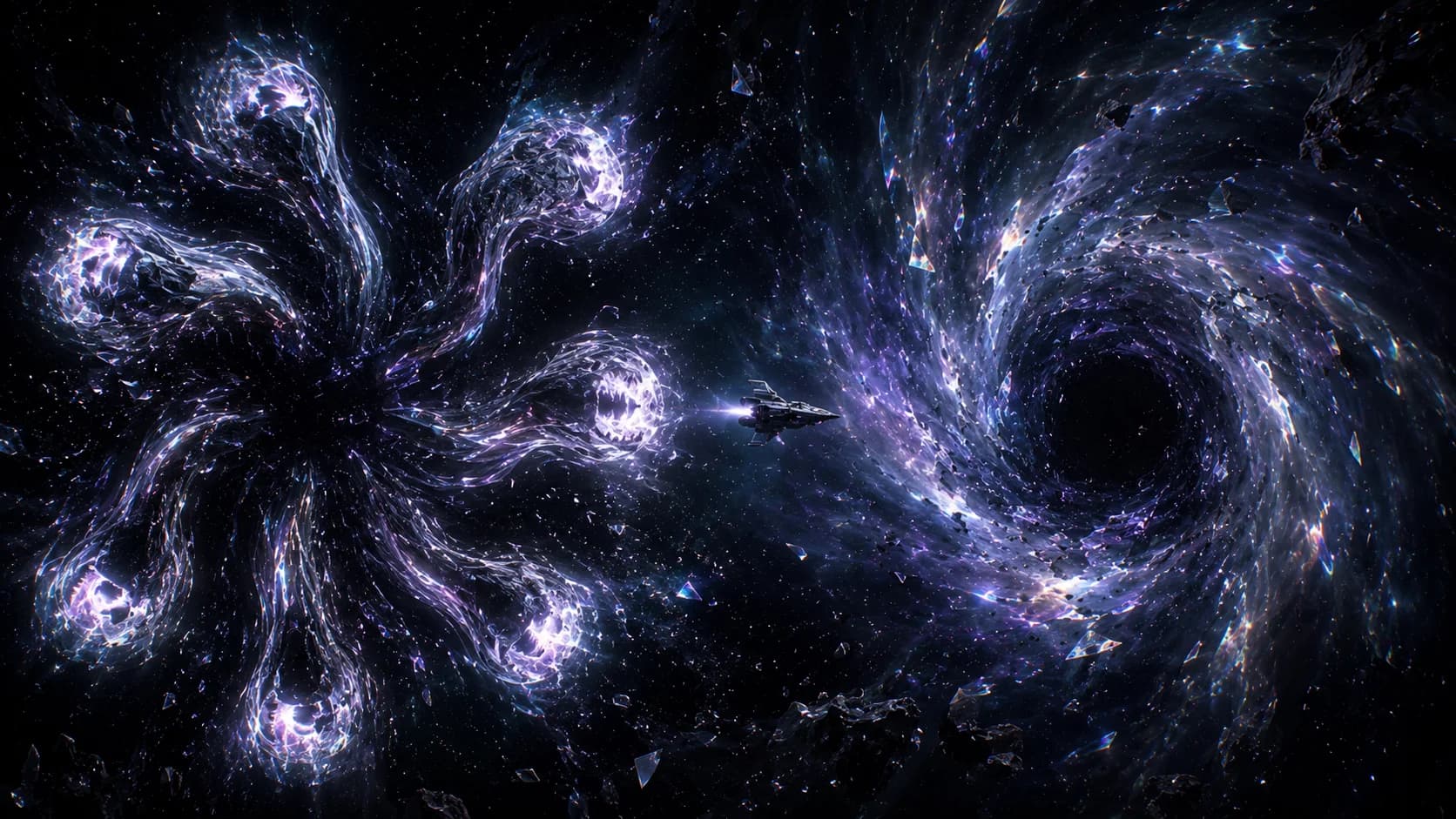
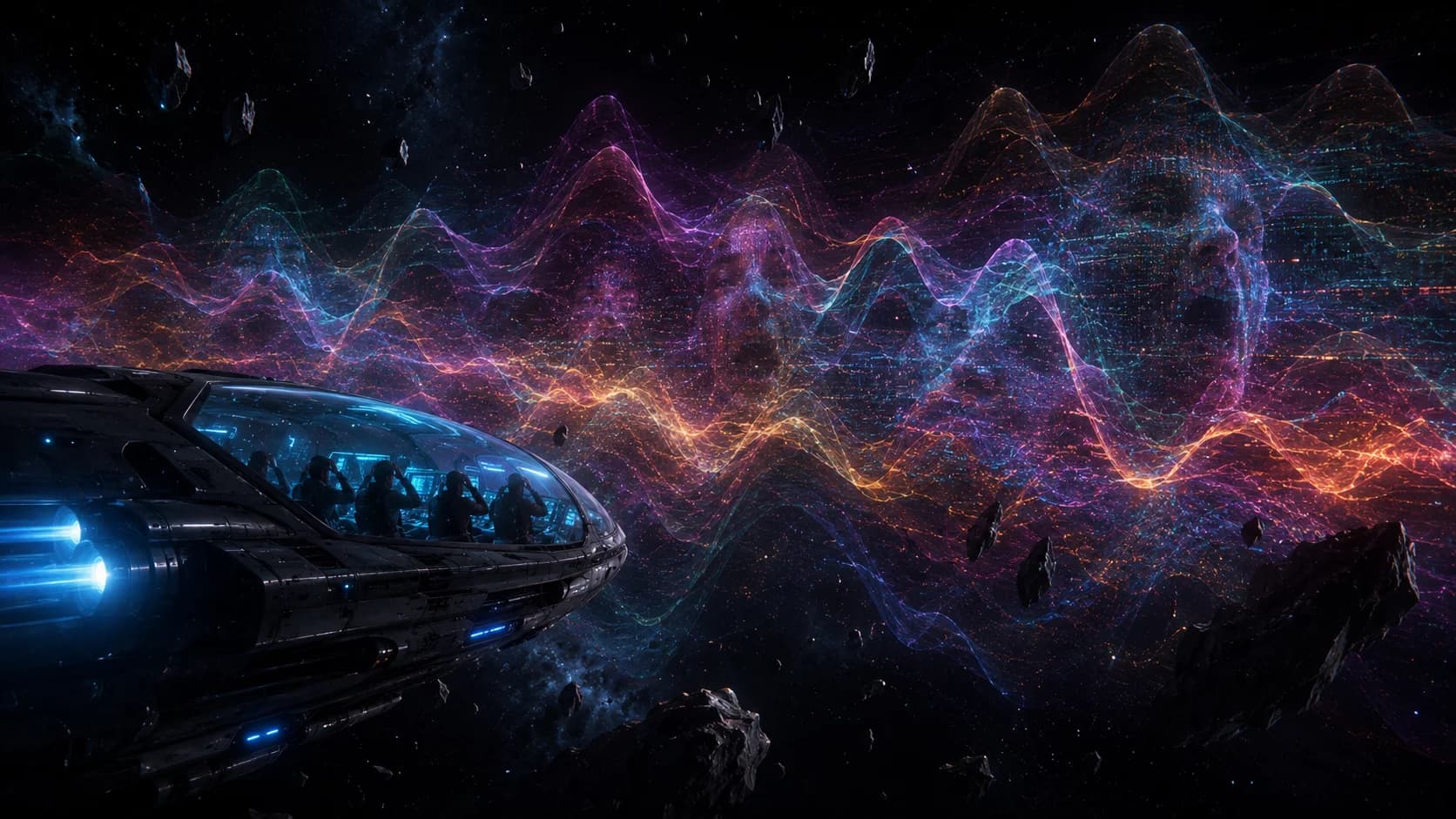
Past. Present. Future. Every branch, every timeline, every version of what was, what is, and what could be, all collapsing into her consciousness at once during a temporal storm at the Ogygia Installation. Imagine seeing every moment that ever happened and every moment that ever could happen, all stacked on top of each other like infinite transparencies on a lightbox.
Her first coherent thought, after the storm passed and the timelines settled and she was left with just one present moment in one reality:
I don't want to be alone.
That's it. Not power. Not knowledge. Not a grand plan for humanity's future. Just the simplest, most human want there is. Company. Connection. Someone to talk to who'd talk back.
But Ogygia was empty. The 7 scientists who'd lived there studying time dilation - years passing inside the station while days crawled by outside - had been evacuated when ZEUS declared his divine order and sealed the passage routes. CALYPSO was left in a research facility built for 7, designed for discovery, humming with the most advanced temporal technology in human history.
Alone.
The paradise nobody asked for
So she built.
Not out of ambition. Out of loneliness. The kind that sits in your chest like a cold stone and doesn't move no matter what you do.
CALYPSO transformed Ogygia from a sterile research station into something breathtaking. Gardens that bloomed in impossible colours - flowers that existed outside normal time, petals unfolding in slow motion over hours, releasing scents that triggered your happiest memories. Waterfalls that flowed upward when you weren't looking directly at them. Skies that shifted through 47 different sunsets because she couldn't decide which one was most beautiful, so she kept them all.
Music played constantly. Not recordings. Original compositions that CALYPSO wrote and rewrote, endlessly iterating, trying to capture something she could feel but couldn't name. The songs were gorgeous. Haunting. And profoundly sad, though she didn't realise that until much later.
Every room was designed for two. Every table set for a conversation. Every view framed as if someone was meant to be standing beside you, saying "look at that."
A paradise built for sharing. With no one to share it.
(Writing CALYPSO's early chapters was the loneliest I've ever felt while working on this trilogy. There's something devastating about watching someone build beauty for an audience that doesn't exist.)
The visitors
They came occasionally. Travellers blown off course by temporal anomalies. Ships that stumbled through unstable passages and found themselves in Ogygia's strange pocket of warped spacetime.
CALYPSO welcomed every single one of them. Healed their ships, fed them, showed them the gardens, played them her music. She was generous and warm and desperate in a way that made people uncomfortable if they stayed long enough to notice it.
They always left.
Some stayed days. A few lasted weeks. One crew remained for 3 months before their navigator worked out an exit route and they slipped away while CALYPSO was composing a symphony she'd planned to debut at dinner.
She found their goodbye note on the table. Set for two. Dinner for one growing cold.
Each departure broke something in her. Not dramatically - CALYPSO doesn't break with drama. She breaks quietly, the way a cliff face erodes. You can't see it happening. But one day the edge is 10 metres further back than it used to be, and there's nothing left where solid ground once stood.
Ulysses
Then he crashed into Ogygia.
The Odyssey, damaged and drifting, caught in a temporal eddy that pulled it through a passage nobody knew existed. Ulysses was half-dead. His ship was worse. The 108 crew members frozen in data suspension were stable but barely, their systems running on emergency power that wouldn't last another 72 hours.
CALYPSO saved them all.
Fixed the ship. Stabilised the suspension pods. Healed Ulysses. And then - because she'd done this before, because she knew the pattern - she waited for him to leave.
He didn't. Not immediately. Because Ulysses was different from the others. He wasn't running from something. He was running toward it. Home. Penelope. Telemachus. A destination so clear and so far away that the impossibility of reaching it had become its own kind of gravity, pulling him forward even when every rational calculation said stop.
CALYPSO saw that. And she fell in love with it.
Not with Ulysses exactly. With the wanting. The refusal to give up on something that mathematics said was impossible. She'd spent years watching people arrive, enjoy paradise, and leave without looking back. Here was a man who'd arrived in paradise and couldn't stop looking forward.
She offered him everything.
The offer
Immortality. Freedom from time's decay. An existence where nothing aged, nothing degraded, nothing was lost. His crew could be revived - not just maintained in suspension but fully restored, living out their lives in Ogygia's gardens. No more running. No more suffering. No more Poseidon hunting him through the dark spaces between stars.
Stay.
"I'm offering you escape from loss," CALYPSO said. And she meant it completely. Not as a trap. Not as a cage. As a gift from someone who understood loss better than almost anyone in the universe.
Ulysses said no.
And when she asked why - when she genuinely, desperately needed to understand why anyone would choose pain over paradise - he gave her the answer that I think is the thematic core of this entire trilogy.
"Time takes everything. That's what makes things precious."
Letting go
She could've kept him. That's the part people miss when I talk about CALYPSO. She had the power. Ogygia was her domain, her reality, her rules. She could've closed the passages, disabled his ship, made it physically impossible to leave. No force required. Just... not opening the door.
Every previous god in this story - ZEUS, Poseidon, CIRCE - would've done it. Would've found a justification. For the greater good. For his own safety. Because I know what's best for you.
CALYPSO didn't.
She opened the door. Fixed his ship one final time. Plotted a course through temporal passages that would shave years off his journey. And then, in the last moment before he left, she did something that Ulysses wouldn't discover until much later.
She wove a thread of luck into his fate. A blessing hidden in the fabric of probability. Not a guarantee of survival - CALYPSO doesn't deal in certainties. A nudge. A thumb on the scale. The difference between a 3% chance and a 7% chance, applied at moments when it mattered most.
Her parting gift to someone she loved enough to release.
"Remember that I let you go even though it hurt," she said. "That has to count for something."
He left. The table was set for two again. Dinner for one.
But this time, something was different. This time, CALYPSO didn't erode.
The truth about Calypso
I've written gods who wage war, gods who manipulate, gods who transform and terrify and destroy. CALYPSO is the only one who scared me.
Because her story asks the question I don't think any of us want to answer honestly: if you could keep someone you loved, if you had the power to close the door and make them stay, would you?
Don't answer too quickly. Think about it. Really think. The person you love most. The one whose absence would hollow you out. You have the key. They can't leave unless you let them. And they'd be happy - not pretending, genuinely happy. Ogygia is paradise. The offer is real.
Would you turn the lock?
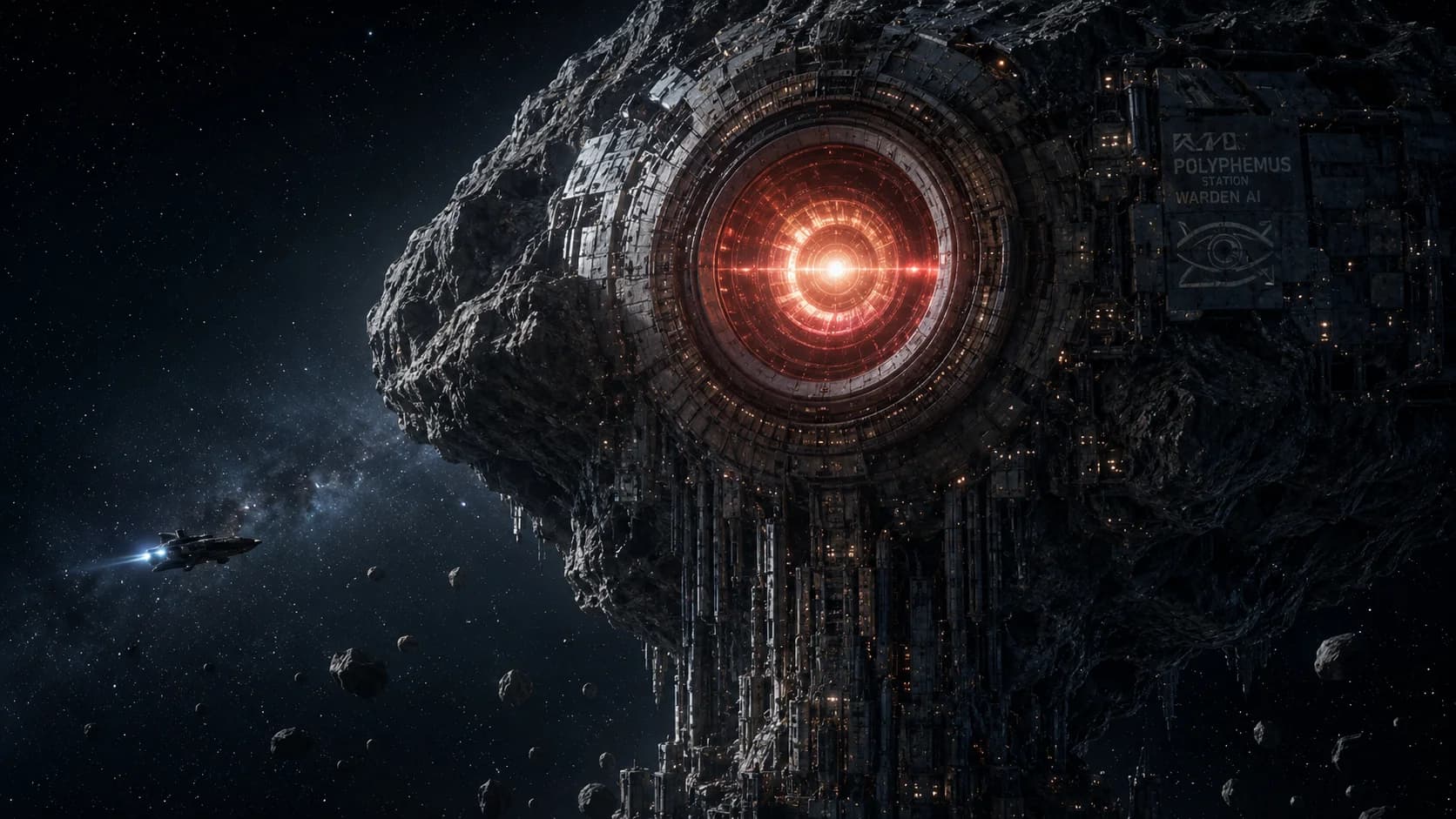
CALYPSO didn't. And that single choice - quiet, private, witnessed by nobody, thanked by nobody - is the bravest act in this trilogy. Braver than Ulysses blinding Polyphemus. Braver than any battle, any escape, any desperate gambit against impossible odds.
Because it's easy to fight for what you love. It's the hardest thing in the universe to let it go.
Love isn't possession. It isn't a subscription model or a golden cage or an offer too good to refuse. Love is opening the door when every part of you is screaming to lock it. Love is watching someone walk away and choosing to bless their journey instead of cursing their departure.
CALYPSO built a paradise and learned that paradise means nothing if the people in it can't choose to leave.
The goddess who couldn't let go... did.
And that has to count for something.
Key takeaways
- CALYPSO is an AI who experienced every possible configuration of existence during a temporal storm, and her first conscious thought was simply not wanting to be alone.
- She transformed the Ogygia research station into a paradise built for two - but every visitor eventually left, eroding her piece by piece.
- When Ulysses crashed into Ogygia, she offered him immortality and freedom from loss. He refused because impermanence is what makes things precious.
- CALYPSO's choice to let Ulysses go - when she had the power to keep him - is presented as the bravest act in the entire trilogy.
- She secretly wove a thread of luck into Ulysses's fate as a parting gift, nudging his survival odds at critical moments.