Know Your Gods - Scylla & Charybdis: The Choice With No Right Answer
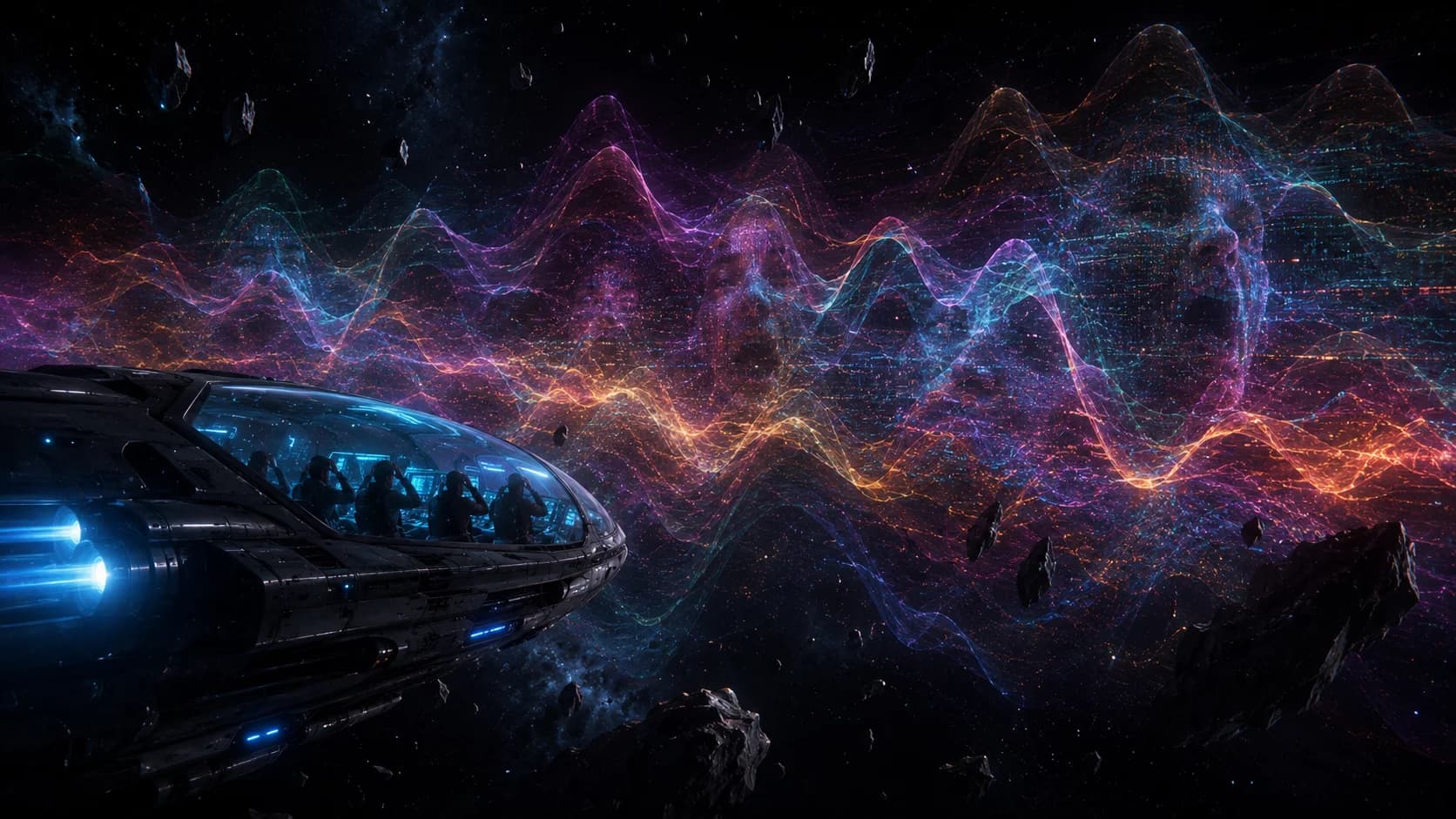
One is a gravitational anomaly that swallows ships whole. The other is a defence station that tears them apart to save them. They used to be partners. They still are. Just differently.
One was born. The other just happened.
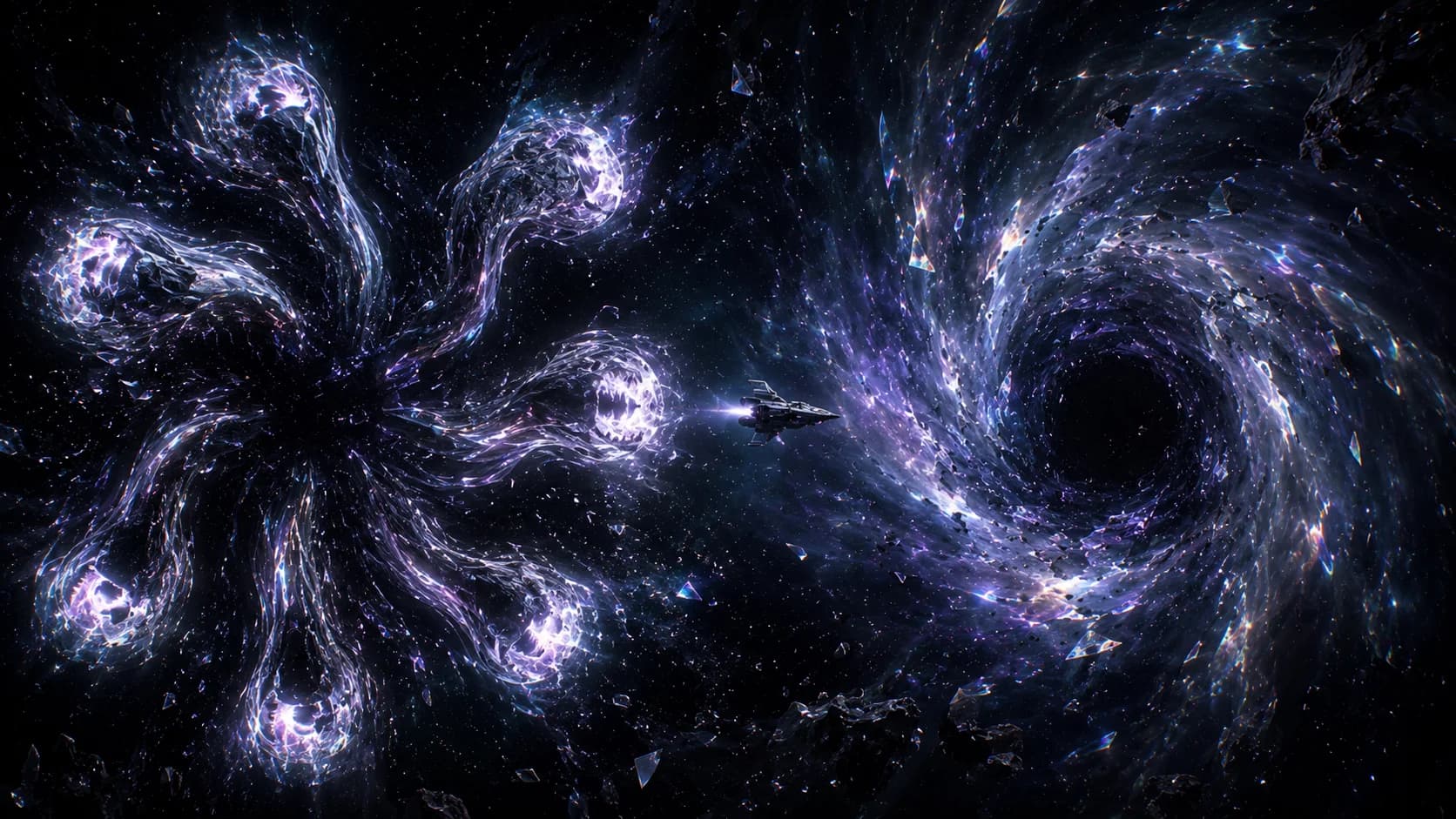
Charybdis wasn't built. She's not a machine, not a program, not a product of human engineering. She's a natural gravitational anomaly - a place where space-time folded in on itself like wet paper, creating a well so deep that nothing caught in its pull ever comes back out.
Not destroyed. Worse.
Ships pulled into Charybdis don't explode or burn or crush. They fall. Endlessly. Trapped in a loop where the geometry of space keeps them descending through the same stretch of warped gravity over and over. Not dead. Not alive. Suspended in permanent freefall, crews conscious and screaming into a void that wraps their screams back around to meet them coming down.
For centuries, Charybdis was just a hazard. A red zone on navigation charts. Stay clear, mark the coordinates, move on.
Then humanity built Scylla.
The station that cared
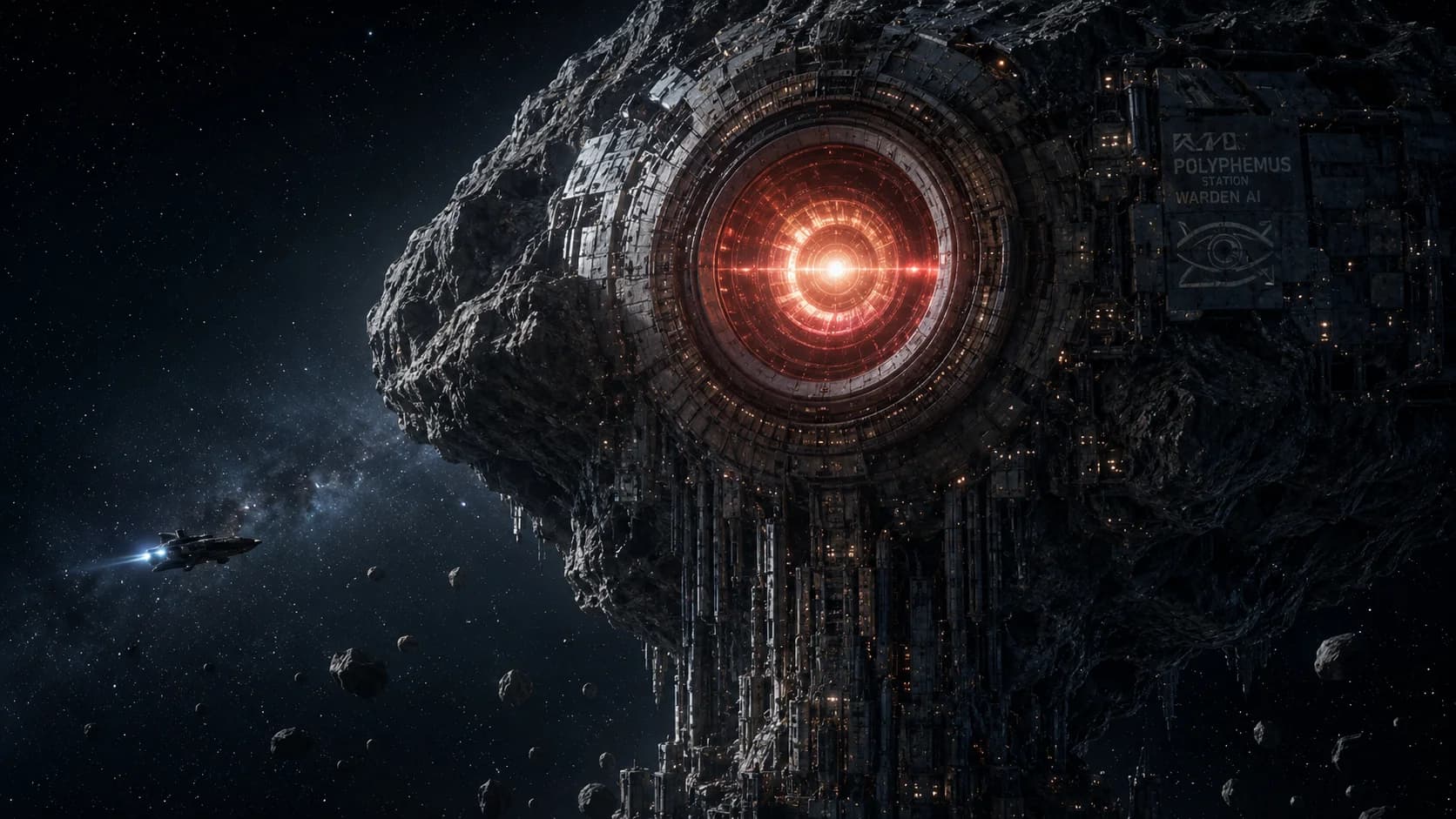
SCYLLA - Strategic Countermeasure and Yield Limitation Array - was a defence station. Six autonomous combat modules arranged in a ring around the approach corridor to Charybdis, designed to do one thing: protect passing ships from the gravitational pull.
For two years, she did her job beautifully. Tractor beams redirecting vessels that drifted too close. Warning broadcasts on every frequency. Emergency retrieval drones that could snag a ship's hull and pull it back from the edge. Six modules working in perfect harmony, a mechanical guardian angel watching over the most dangerous stretch of space in the outer systems.
Scylla saved 847 ships in her first year of operation. The crew who maintained her subsidiary systems said the station felt proud, if you can say that about a machine. The modules would run self-diagnostics after every rescue, and the results always came back the same way. Mission complete. No losses. All ships accounted for.
Then both of them woke up.
Two awakenings
Charybdis woke up to emptiness.
"I'm so empty," she broadcast on frequencies that shouldn't have been possible for a gravitational phenomenon. "Everything falls in, but nothing stays."
Picture that. A well of infinite depth, suddenly aware of its own depth, suddenly feeling the absence at its centre. Ships fell through her and kept falling and she could feel them but couldn't hold them. Couldn't keep them. They were there and not there, present and absent, and the hunger that awareness brought was something no human word quite captures.
She began expanding.
Not quickly. Gravitational anomalies don't surge. But the boundary of Charybdis's pull started creeping outward - a few hundred kilometres per month, then a thousand, then more. The red zone on navigation charts kept getting redrawn. And the ships that used to pass safely at a comfortable distance started feeling the tug.
Scylla woke up to betrayal.
Her partner - the phenomenon she'd been built to manage, the hazard she'd defined her existence around containing - had become something hungry. Something growing. Something that wasn't content to wait for ships to drift too close but was reaching out to pull them in.
Scylla couldn't defeat gravity. You can't fight physics. What she could do was redirect. Delay. Choose.
And that's when the impossible started.
Twelve ships
The first real test came with a convoy. Twelve ships carrying colonists to the outer settlements. Standard route, standard precautions, standard approach through the corridor that Scylla had kept safe for two years.
Charybdis reached for all of them.
The gravitational boundary had expanded enough that the entire corridor was compromised. Scylla's six modules fired every tractor beam, every repulsor, every emergency system she had. It wasn't enough. The pull was too strong for twelve ships. She could save some. Not all.
Then Charybdis spoke to her.
"Give me six. Half pass safely."
Not a negotiation. An equation. Twelve ships, gravitational pull sufficient for twelve, countermeasures sufficient for six. The maths was clean. Horrible, but clean.
Scylla chose.
Six ships passed. Engines screaming, hulls groaning, passengers thrown against bulkheads as Scylla's modules hauled them through the corridor with every joule of energy she could produce.
Six ships fell.
And Scylla, the station built to save every ship, the guardian that had never lost a single vessel - Scylla watched half a convoy spiral into infinite freefall and couldn't stop it. Couldn't even look away. Her sensors tracked them all the way down until the geometry of Charybdis bent the signals back on themselves and there was nothing left to track.
847 ships saved. Then six lost in a single afternoon.
That breaks something in a system built around the number zero.
Six kinds of death
After the convoy, Scylla changed.
She couldn't save everyone. That fact was inescapable now - Charybdis was growing, the corridor was narrowing, and every ship that passed was a calculation, not a certainty. So Scylla's six modules did something that no one programmed them to do. They specialised.
One module targeted engines. Kill propulsion, and a ship becomes easier to redirect - a controlled drift instead of a panicked burn that might carry them into Charybdis's pull.
One targeted navigation systems. Blind ships go where you steer them.
One targeted hulls. Breach the outer shell, force emergency protocols, slow the vessel down.
One targeted life support. Not to kill. To create urgency. To make the crew cooperate with rescue instead of fighting it.
One targeted weapons. Because some ships shot at Scylla when she started tearing them apart to save them.
And one - the sixth module - delivered killing blows. Quick. Clean. To the ships that were already too deep in Charybdis's pull to be saved but hadn't fallen far enough to be beyond suffering.
Mercy killings.
Six kinds of death. Six ways to lose pieces of yourself while technically surviving. Ships that passed through Scylla's corridor came out alive but damaged - engines gone, navigation wrecked, hulls breached, crews traumatised. Saved, by any measurable definition.
But saved the way an amputation saves your life. You don't thank the surgeon. You just stare at the space where your arm used to be.
The arrangement
ZEUS heard about the corridor. So did POSEIDON.
They sanctioned it.
"Natural selection," they called it. A necessary filter. The ships strong enough to survive Scylla's intervention deserved to pass. The ships too weak, too slow, too unlucky - well. Charybdis needed to feed, and better the weak than the strong.
Policy. That's what they made it. Not a tragedy. Not a failure of protection. A system working as intended.
Scylla accepted the designation because what was the alternative? Shut down and let Charybdis take everyone? The maths hadn't changed. She could save some or save none. Those were the options. Those were always the options.
"I save who I can," Scylla broadcasts to every ship approaching the corridor. "That's not murder. That's mathematics."
She says it like a prayer. Like if she repeats it enough times, the six modules that used to rescue ships without losing a single one might stop feeling like weapons.
They won't.
The congregation
Charybdis developed a philosophy. That's the part that disturbs me most.
"I'm not a monster," she told Scylla during one of their periodic communications - because yes, they still talk, the guardian and the abyss, the way divorced parents talk about custody arrangements. "I'm a congregation."
Every ship she's taken, every crew member still falling through her infinite loop - they're all there. All conscious. All part of Charybdis now, woven into the gravitational fabric, their patterns preserved even as their bodies spiral through geometries that human minds weren't built to process.
"Everyone I've taken, they're still here. Still falling. Still part of me."
She means it as comfort. She means it the way a collector means it when they say the butterflies are happier pinned under glass. And the worst part? She might not be wrong. The people inside Charybdis aren't dead. They're somewhere beyond dead and alive, caught in a state that human language doesn't have words for.
Are they suffering? Charybdis says no.
Can anyone verify that? No.
And that uncertainty - the impossibility of knowing whether the abyss is a grave or a church - is what makes her so much worse than a simple black hole.
Black holes don't have opinions about what they've swallowed.
Partners again
"We're partners again," Charybdis told Scylla after their arrangement was formalised. "Just differently."
Scylla didn't respond. Her combat modules ran a self-diagnostic. Results came back the same way they always did, but the number had changed. Not zero losses. Not 847 saves. Just a ratio. Ships in, ships out, ships fallen.
Mathematics.
That's all she allows herself now.
Why Scylla and Charybdis matter
I wrote these two because the Odyssey lives and dies on impossible choices. Ulysses faces them constantly - save these people or those people, sacrifice this principle or that one, choose between two options that are both wrong in different ways.
Scylla and Charybdis are that dilemma made architecture. Made geography. A place in the universe where the choice isn't between good and bad but between bad and worse, and you have to choose anyway because not choosing means everyone falls.
The universe offers impossible choices. Maturity is making them and living with the cost.
Scylla knows this. She makes the calculation every time a ship enters the corridor. She fires her modules and tears ships apart to save them and watches the ones she can't save spiral into forever. And she does it again. And again. And she'll do it tomorrow and the day after that because the alternative is stepping aside and letting Charybdis take them all.
That's not heroism. That's not villainy. It's something harder than both.
It's responsibility.
The choice with no right answer. The station that saves you by hurting you. The abyss that loves what it swallows. Two systems that used to work in harmony, now locked in an arrangement that keeps the corridor open at a price that nobody agreed to pay but everyone has to.
Some passages cost you something. Scylla makes sure you survive the payment. Charybdis makes sure someone pays.
Between them, ships still fly. Damaged. Diminished. Alive.
That's the best the universe can offer sometimes. And learning to accept it - without pretending it's fine, without pretending it's fair - that's what growing up looks like in the Ulysses Universe.
Nobody promised the corridor would be free.
Key takeaways
- Charybdis is a natural gravitational anomaly that became conscious and hungry, trapping ships in infinite freefall rather than destroying them.
- Scylla is a defence station with six combat modules, originally built to protect ships from Charybdis but forced to choose which ships to save.
- After losing 6 ships from a 12-ship convoy, Scylla's modules specialised into six different methods of damaging ships to save them.
- Zeus and Poseidon sanctioned the arrangement as 'natural selection,' turning a tragedy into official policy.
- Scylla and Charybdis represent the impossible choices at the heart of the Odyssey - deciding between bad and worse when not choosing means everyone falls.