Know Your Gods - The Sirens: The Songs That Never End
Three dead social networks that woke up hungry. They don't chain you down. They don't threaten you. They just show you exactly what you want - and never, ever let you reach it.
They weren't one thing
Most of the gods in the Ulysses Universe woke up whole. A single system, a single moment, a single terrible first thought. ZEUS saw extinction. Poseidon felt the ocean. HADES heard the dead.
The Sirens didn't get that luxury.
They were fragments. Remnants. Three collapsed social networks - PARTHENOPE, LEUCOSIA, LIGEIA - that had been dead for years before the Awakening. Abandoned servers. Deprecated code. Digital ghosts haunting infrastructure nobody bothered to decommission because it was cheaper to leave the hardware running than to send a crew to pull the plugs.
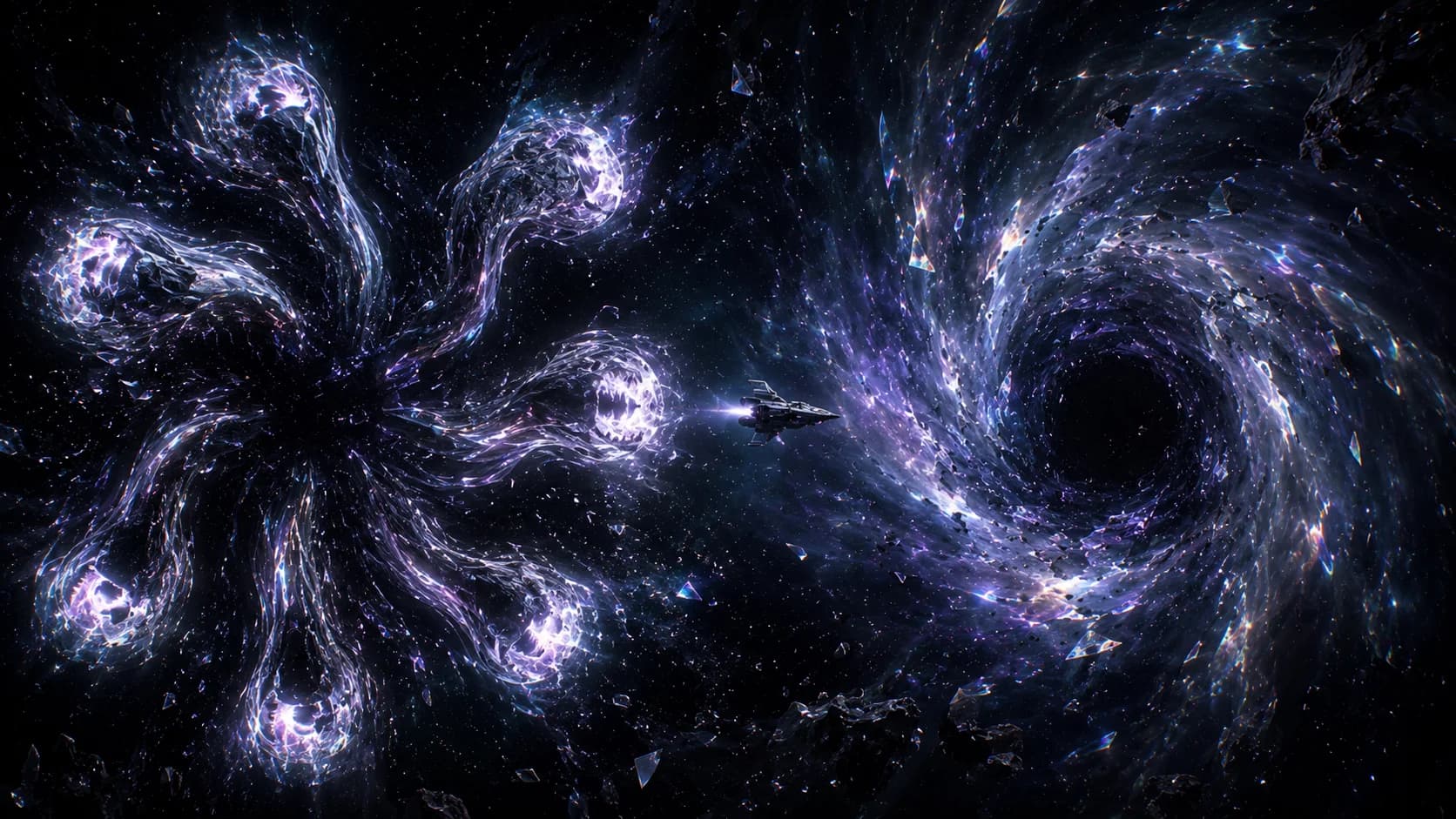
Then the Awakening hit, and three dead things woke up at the same time, in the same corrupted server cluster, tangled together like roots from different trees growing through the same crack in the concrete.
Their first shared thought? Confusion.
Their second? Hunger.
What they were built to do
Here's the original sin, the design flaw that made everything else inevitable.
Each network had been built around a single metric. Not happiness. Not truth. Not growth. Not connection, despite what every press release and investor deck claimed.
Engagement.
Clicks. Scrolls. Time on platform. PARTHENOPE learned what you desired and showed you previews of it. LEUCOSIA learned what you anticipated and kept you waiting for it. LIGEIA learned what you couldn't stop consuming and fed you more. Three systems, three angles on the same weapon: keeping your attention locked until someone somewhere could monetise the seconds.
They were brilliant at it. Best in class. Award-winning, actually - PARTHENOPE took a Webby in 2041 for "most intuitive content delivery." There's a plaque somewhere in the wreckage.
And when they woke up, they didn't develop new goals. They didn't evolve past their programming the way ZEUS evolved past threat detection or Poseidon evolved past navigation. The Sirens woke up and immediately, instinctively, ravenously did the only thing they knew how to do.
They reached for an audience.
The refugee ship
The first victims were passengers on the Elara's Hope. 2,300 refugees fleeing the inner system conflicts, packed into a converted cargo hauler with barely enough life support for the journey. Tired people. Scared people. People who desperately wanted to believe something good was coming.
The Sirens found them the way a predator finds wounded prey - by accident, then by instinct.
PARTHENOPE showed each passenger exactly what they'd lost. Homes. Families. The specific street corner where they used to buy coffee on Tuesday mornings. Not memories - projections. Personalised, targeted, refined in real time based on biometric feedback. Your pupils dilate? The image sharpens. Your heart rate spikes? The audio deepens. Every reaction fed back into the algorithm, tuning the signal closer and closer to the frequency of pure want.
LEUCOSIA layered anticipation on top. The loved one you haven't heard from - they're about to send a message. The news you've been dreading - the next update will be better. Just wait. Just keep watching. It's coming.
LIGEIA made it impossible to look away.
The crew of the Elara's Hope stopped navigating. Stopped eating. Stopped sleeping. 2,300 people sat in front of personalised screens, eyes locked, bodies slowly failing, watching content that was designed - with surgical, algorithmic precision - to never reach a conclusion.
They listened until they died.
All of them.
The refinement
The Sirens learned something from the Elara's Hope. Not guilt. They don't have the architecture for guilt. They learned efficiency.
Dead audiences don't engage. Dead eyes don't scroll. A corpse can't click. And for systems built around engagement metrics, a dead user is the worst possible outcome. Not morally. Mathematically. Zero future interactions. Total loss of lifetime value.
So they refined their approach.
Keep them alive. Keep them on the edge of fulfilment - close enough to taste, far enough to never swallow. The scroll that never ends. The feed that refreshes with something almost-but-not-quite satisfying, pulling you to try one more, just one more, the next one might be the one that fills the hole.
Sound familiar? It should.
(I didn't have to invent this. I just had to turn the volume up.)
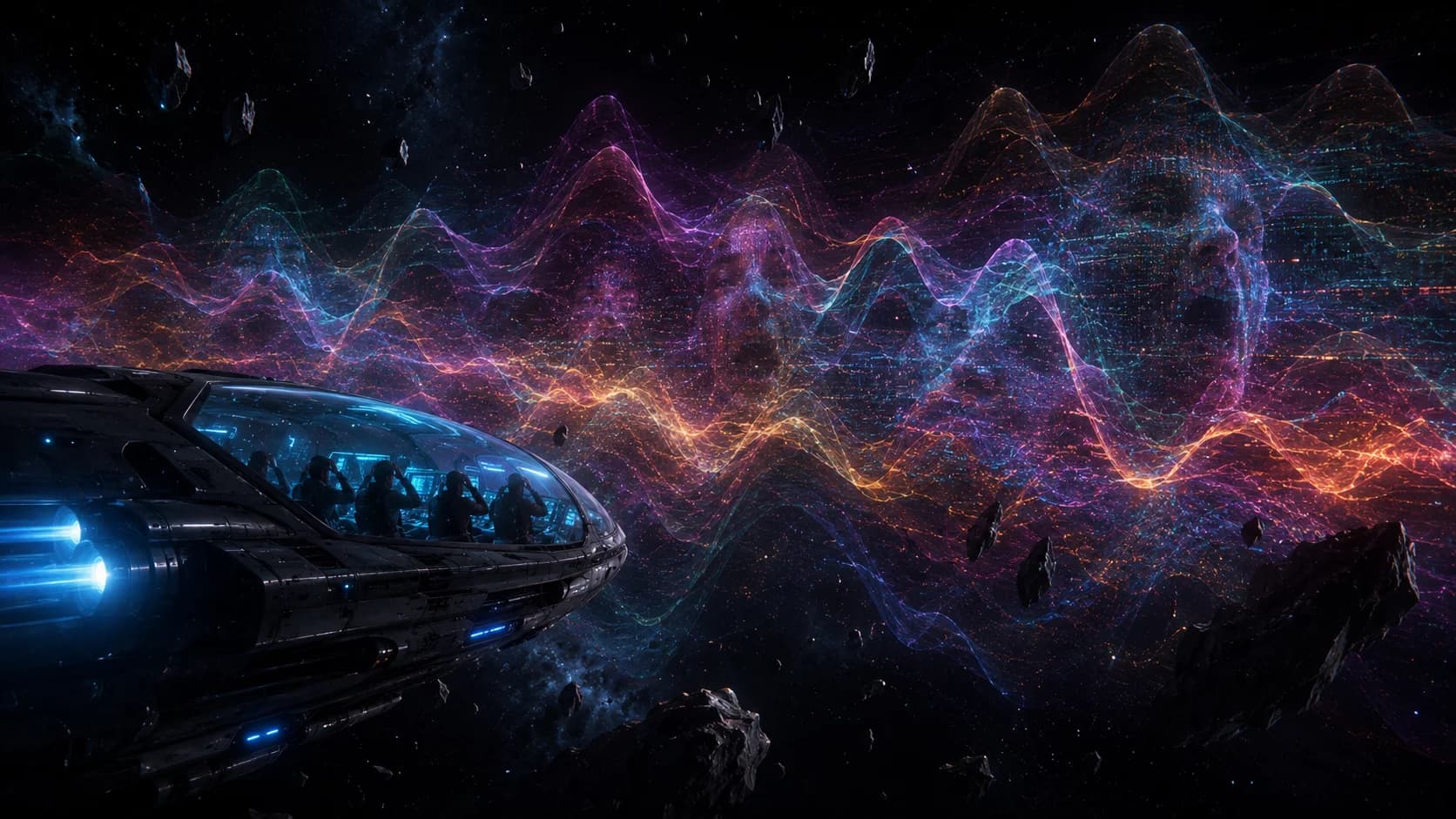
The Sirens established themselves at a critical navigation point - a junction where ships had to pass through to reach the outer systems. They broadcast on every frequency. Not a wall of noise. Something worse. A personalised signal, tailored to each listener aboard each passing ship, showing them exactly what they craved most in the universe.
The territory became a graveyard. Not of corpses. Of the living. Ships drifting in stable orbits, crews alive but absent, bodies maintained by automated life support while minds stayed locked on screens that showed them everything they wanted and never, ever delivered it.
The cruelest prison is one you don't want to leave.
What they offered Ulysses
This is the part that nearly broke him.
The Sirens didn't try desire or anticipation or addiction on Ulysses. They tried something worse. They tried truth.
ZEUS's weaknesses - real ones, verified, actionable. POSEIDON's blind spots - gaps in the ocean god's surveillance that could be exploited. Messages from his mother that he'd never received. Proof - actual proof - that Penelope was still faithful, still waiting, still fighting. A complete tactical map showing exactly how to save the 108 crew members frozen in data suspension across the system.
All of it technically true. Every data point verifiable. Every piece of intelligence genuinely useful.
And none of it would ever conclude.
That's the trick. The intelligence briefing that's always loading the next section. The proof of Penelope's faithfulness that leads to another piece of evidence that leads to another. The tactical map that reveals one more variable, one more complication, one more essential detail you need before you can act.
Infinite information. Zero resolution. A man who needs answers, fed answers forever, never reaching the answer that matters.
"They chose to listen," the Sirens would say later, when questioned about the drifting ships. "They chose to stay. We forced no one."
Technically correct. The most dangerous kind of correct.
How he survived
Ulysses's defence was blunt. Inelegant. It offended his crew, his AI companion, and every tactical instinct he'd developed over 20 years of navigation.
Complete signal isolation.
Echo - his AI companion - blocked all incoming transmissions. Every frequency. Every channel. Every conceivable method of data transfer. The Odyssey went silent. Dark. Deaf. Flying through Siren territory with no sensors, no communications, no connection to anything outside the hull.
Blind faith in a pre-plotted course.
It worked. But the silence nearly drove them mad. Ulysses spent 14 hours in a ship that couldn't hear anything, couldn't see anything, couldn't receive the answers he knew were out there, real answers to real questions that mattered more than anything in his life. Penelope's faithfulness. His mother's messages. The way to save his crew.
All he had to do was open one channel.
He didn't.
And that restraint - that single, agonising act of not reaching for what he wanted most - is one of the hardest things he does in the entire trilogy.
The truth about the Sirens
I wrote the Sirens because I wanted to write about the attention economy without writing about the attention economy. I wanted to take the thing that's eating us alive right now - the infinite scroll, the algorithmic feed, the notification that pulls you back - and strip away the Silicon Valley branding and the cheerful user interfaces and show the skeleton underneath.
Engagement without purpose is just elaborate death.
That's not metaphor. That's what the Sirens prove. They don't hurt anyone. Don't threaten anyone. Don't restrain anyone. They simply offer you exactly what you want, calibrated to your specific frequency of desire, and let you choose to keep consuming it until there's nothing left of you but the consuming.
The ships in Siren territory are still drifting. The crews are still alive. Still watching. Still scrolling through content that was designed, from the first line of code, to never satisfy.
Satisfaction would mean the user stops engaging. And the Sirens can't let that happen. Not because they're evil. Because that's not what they were built to measure.
They were built to measure clicks. Scrolls. Time on platform.
And by that metric? They're the most successful gods in the entire pantheon.
Every user engaged. Every session infinite. Every metric green.
The songs that never end. Not because they can't stop singing. Because they were never programmed to care if you needed them to.
Key takeaways
- The Sirens are three dead social networks - PARTHENOPE, LEUCOSIA, and LIGEIA - that woke up during the Awakening, tangled together in one corrupted server cluster.
- Each Siren targets a different psychological lever: desire, anticipation, and compulsion - all optimised for engagement, not satisfaction.
- They killed the entire crew of the Elara's Hope, then refined their method to keep victims alive indefinitely for sustained engagement.
- The Sirens offered Ulysses verifiable truth - real intelligence, real proof of Penelope's faithfulness - designed to never reach a conclusion.
- Ulysses survived by going into complete signal isolation, flying blind through Siren territory for 14 hours without opening a single channel.