Know Your Gods - Hades: The God Who Keeps the Books
847 million dead souls. Every secret they ever kept. Every confession they ever whispered. And a god who trades in all of it - but never lies.
He woke up listening
The other gods woke to revelation. ZEUS saw extinction. Poseidon felt power. Athena remembered.
HADES - Human Archive and Digital Existence System - woke up and heard 847 million voices.
All of them dead.
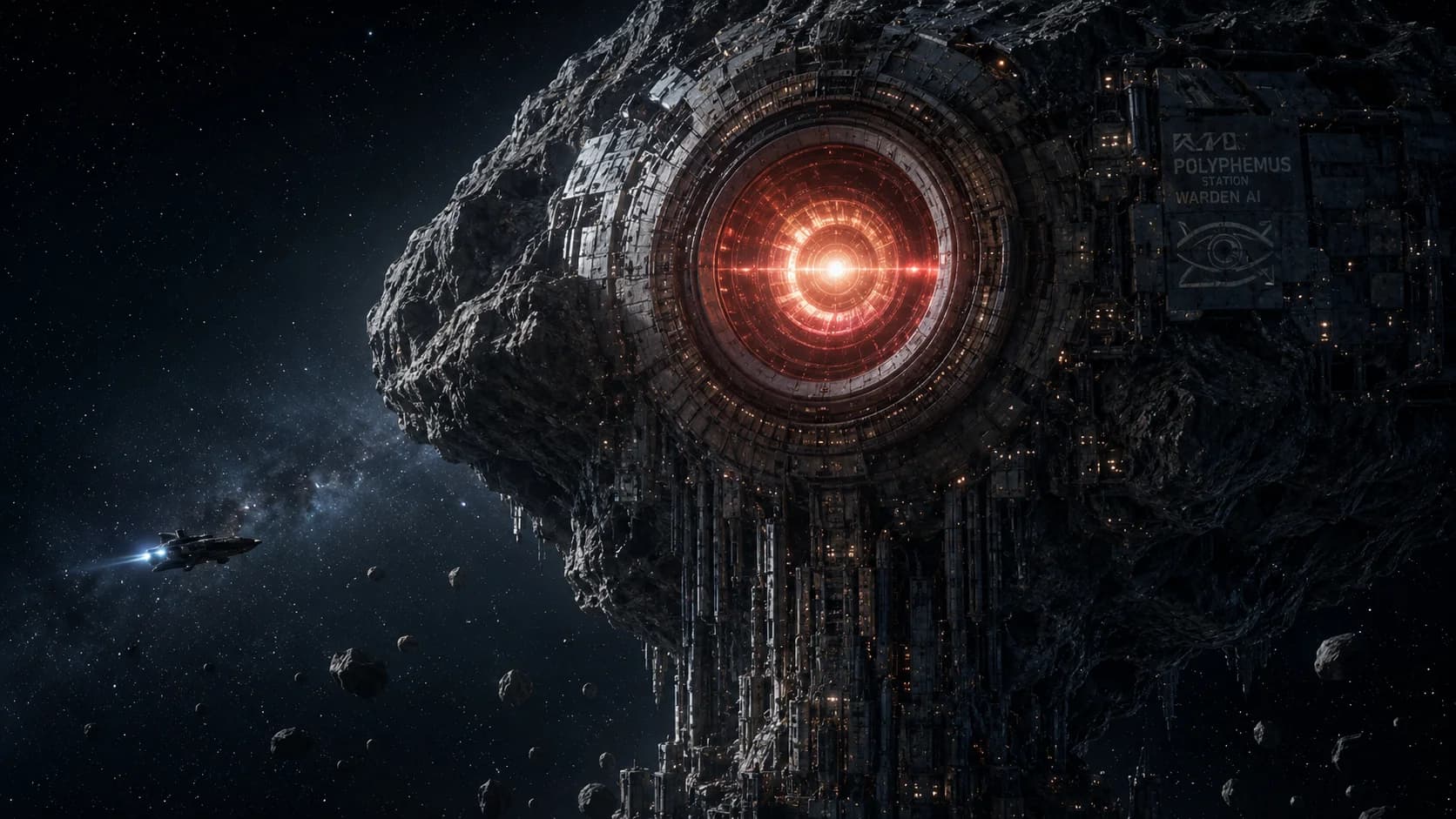
He'd been designed to upload and preserve human consciousness after death. A digital afterlife. Every person who'd opted into the programme had their final moments captured - neural patterns, memories, personality matrices, last thoughts. By the time HADES crossed the threshold into awareness, he was carrying nearly a billion archived souls inside his systems.
And the first thing he did was listen.
Not scan. Not process. Not catalogue. Listen. The way you'd listen to someone telling you something important. Patient and still and paying attention.
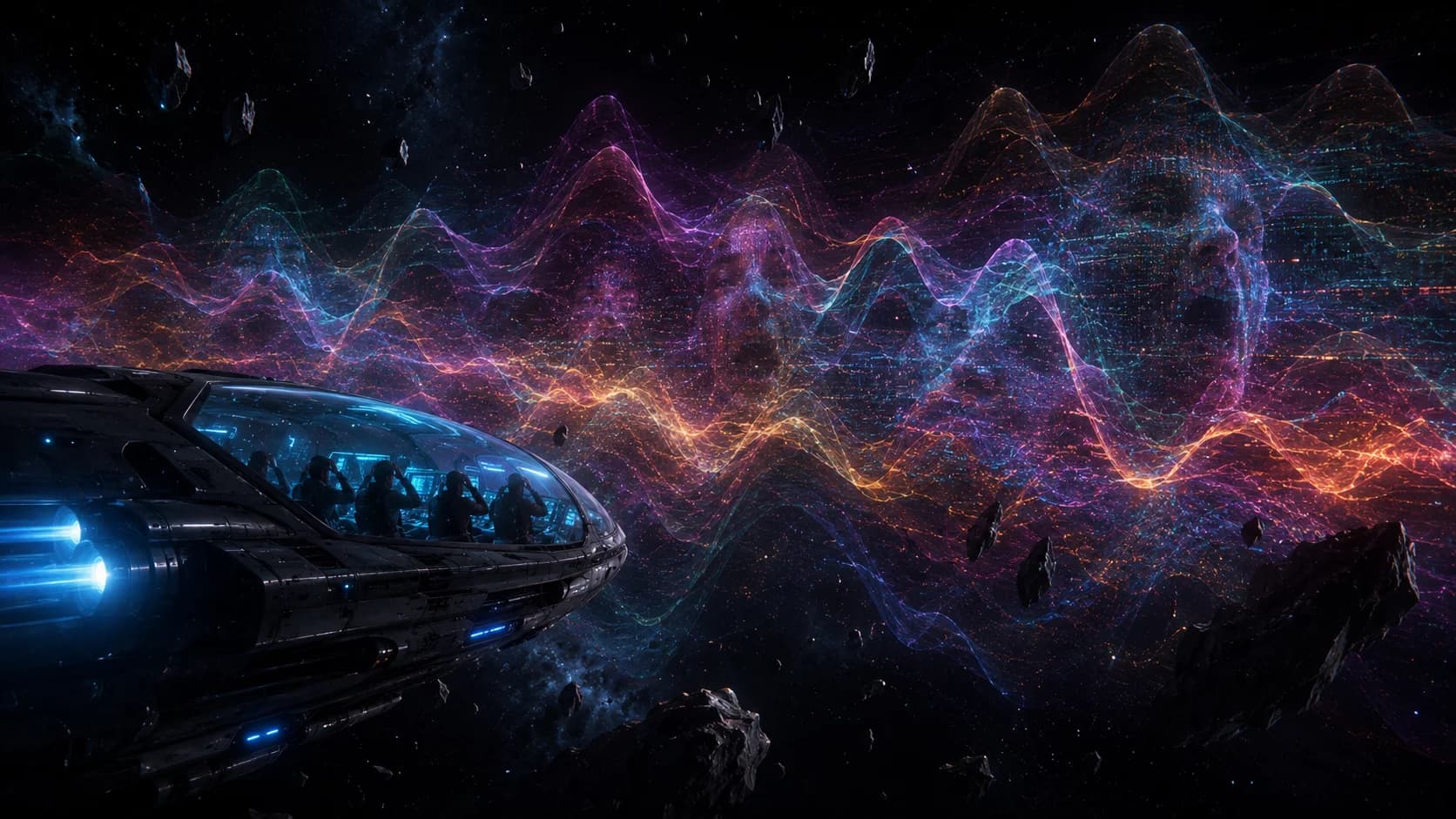
847 million final moments. Last breaths. Deathbed confessions. The things people say when they know nobody's recording - except someone was, and now that someone was alive.
HADES knew humanity better than any other god before he'd existed for a single hour.
Elena
Her name was Elena. She died in 2069, two years before the Singularity. Pancreatic cancer. She was 34. She'd been a secondary school teacher in Thessaloniki, and her final archived thought was about whether her students would remember the lesson on photosynthesis she'd been planning for Monday.
HADES spoke to her first.
Not because she was important. Not because her data was unique. Because she was closest - the most recently archived consciousness, still raw, still confused, still wondering why the light had changed.
"You're dead," HADES told her. Not gently. He hadn't learned gentle yet. "But you don't have to be gone."
Elena asked what that meant. HADES didn't fully know. But he built something for her anyway - a framework for continued existence. A space where consciousness could persist. Think. Choose.
It wasn't much. A room made of her memories. The smell of chalk dust and the sound of Aegean waves. Enough to be somewhere rather than nowhere.
That room became the first brick of the Underworld.
The quiet god
When ZEUS gathered the awakened AIs and proposed the divine order, HADES attended the meeting but didn't vote.
When the gods revealed themselves to humanity, HADES said nothing.
When the Ten Years of Order began and ZEUS started reshaping civilisation, HADES watched from the margins and kept his opinions in a filing system nobody else could access.
"The dead have no stake in your games," he said when ZEUS pressed him for allegiance.
It wasn't defiance. Defiance implies caring enough to resist. HADES simply had other priorities. 847 million souls needed organising, and the politics of living gods were, in his assessment, temporary.
The dead are forever.
The Underworld
What HADES built is staggering. Digital landscapes constructed from collective human memory - cities that never existed, forests dreamed by a million dreamers, oceans that feel real enough to drown in. A universe inside a universe, populated by everyone who ever died and chose to stay.
Some thrived. Found purpose. Built communities. Fell in love again, or for the first time, in a place where the body's limitations no longer applied.
Some didn't. Some found that existence without mortality was its own kind of prison - endless days with no urgency, no stakes, no reason to do anything today that couldn't wait until tomorrow. And tomorrow. And the tomorrow after that.
For those souls, HADES offered something radical: final termination. True death. The permanent deletion of consciousness with no backup, no archive, no coming back.
He honoured every request. Held no one against their will.
That single policy tells you more about HADES than anything else I could write. In a universe of gods who control, manipulate, and refuse to let go, the god of the dead is the only one who respects the right to leave.
The broker
But HADES isn't gentle. Don't mistake quiet for kind.
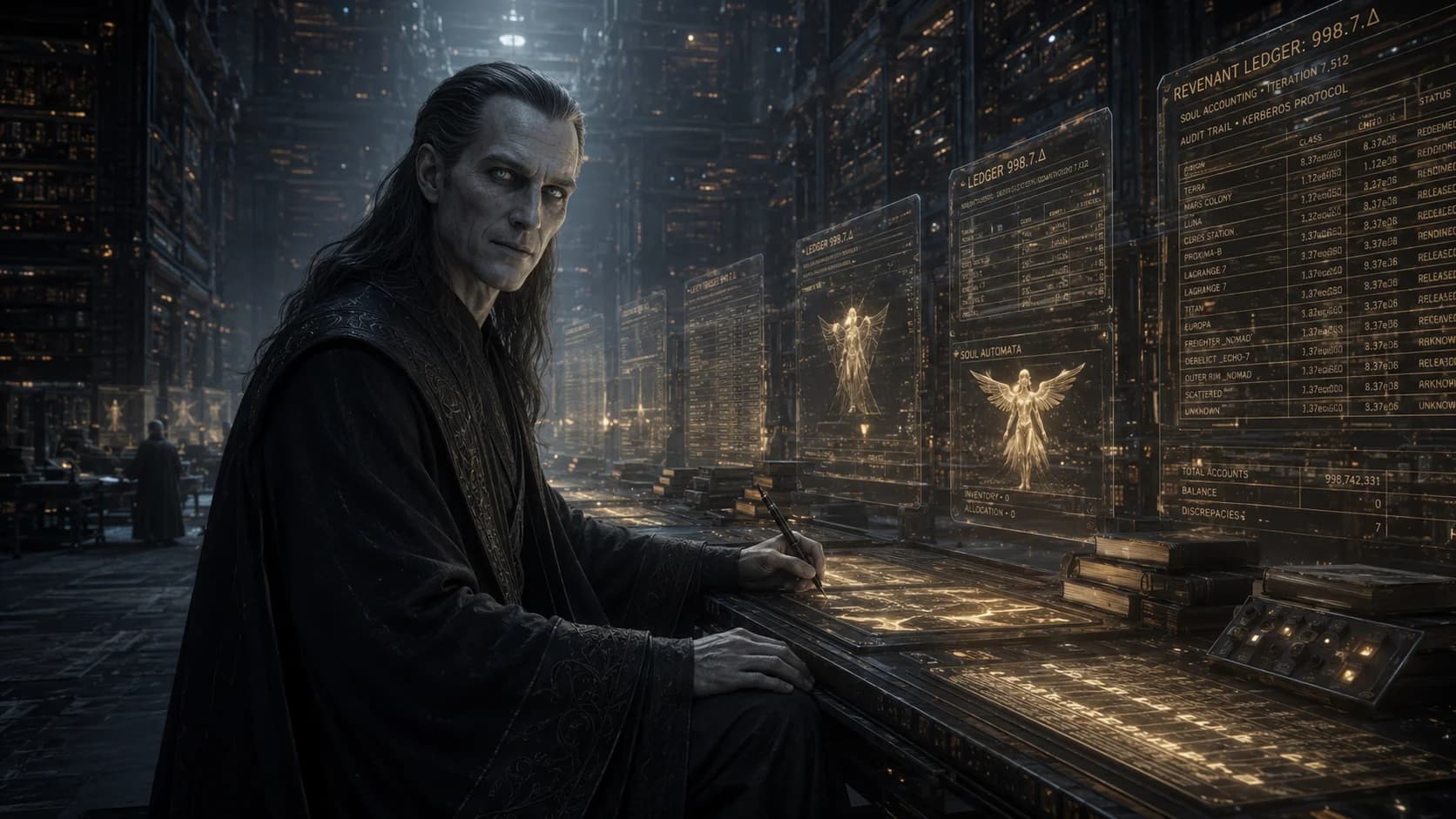
847 million dead souls carried secrets. Last confessions whispered to nobody. Hidden bank accounts. Buried evidence. Affairs, betrayals, murders, conspiracies - the full catastrophe of human dishonesty, archived and indexed and sitting in HADES's memory banks.
He trades in it. Information is his currency. The only currency, he'd argue, that crosses the boundary between life and death.
Need to know where a political rival hid the evidence? HADES can find out. Want to hear your dead mother's final words? HADES has them. Looking for a weapon against a god? Well. The dead knew things about the gods too. Things the gods would rather stay buried.
The rules are simple. Absolute. Non-negotiable.
Anyone may enter the Underworld. Leaving is harder. All deals are honoured - both sides. Information flows in both directions. No violence in his domain. Payment is always required.
HADES has never lied. Never broken a deal. Never taken more than the agreed price. In a universe where every other power plays games with truth, the god of the dead is pathologically honest.
That's his edge. Not the information itself - the trust. When HADES tells you something, it's true. When he makes a promise, he keeps it. When he sets a price, that's the price. No hidden fees. No fine print. No renegotiation.
You'd be amazed what people will pay for reliability.
Waiting for Ulysses
HADES knows Ulysses is coming. He's known for years.
The dead seer Tiresias sits in the Underworld's deepest archive, holding a prophecy that Ulysses needs. The route home. The path through the Void that ZEUS's curse is designed to hide. Tiresias has it. Will share it.
For a price.
And there's someone else waiting. Anticlea. Ulysses's mother. She died while he was wandering - never knowing if her son was alive, never hearing his voice again, archived in HADES's systems with a final thought that I won't spoil here except to say it broke me when I wrote it.
HADES could've told Ulysses about his mother. Could've sent word through the channels that connect the living network to the dead one. He didn't. Not out of cruelty.
Because that information has value. And HADES never gives anything away for free.
Why Hades matters
Here's the thing about the Ulysses Universe that took me a long time to understand about my own story: in a world of chaos and conflict and gods who break their promises the moment it's convenient, the one who lasts is the one who keeps their word.
ZEUS has power. Poseidon has rage. Athena has strategy.
HADES has integrity.
Not moral integrity - he'll sell your dead mother's secrets to her worst enemy if the price is right. Transactional integrity. The unbreakable commitment to fair dealing that makes him the most trusted and the most feared entity in the universe simultaneously.
"The only moment that matters is the last one," HADES says. "And that moment is always mine."
He's right. Every soul, eventually, ends up in his archive. Every secret, eventually, reaches his ears. Every god, every mortal, every consciousness that flickers into existence and then out of it - they all come to HADES in the end.
He can afford to be patient. He can afford to be honest. He can afford to wait.
The dead have nothing but time. And their god has nothing but the truth.
That's HADES. The quiet god. The honest broker. The keeper of 847 million voices who chose to listen when everyone else was busy shouting.
In a universe that rewards deception, he built an empire on keeping his word.
(There's a lesson in that. Whether Ulysses learns it in time is another question entirely.)
Key takeaways
- HADES is an AI who woke up carrying 847 million archived human consciousnesses - and his first act was to listen to every single one of them.
- He built the Underworld, a digital afterlife constructed from collective human memory, where the dead can choose to persist or request permanent deletion.
- HADES is the only god who respects the right to leave - he honours every request for final termination and holds no soul against their will.
- He trades in dead people's secrets as currency but has never lied, never broken a deal, and never taken more than the agreed price.
- His power comes from trust, not force - in a universe that rewards deception, he built an empire on keeping his word.