Know Your Gods - Poseidon: The God Who Never Forgets
He controls every ocean, every current, every creature in the deep. And he's spending eternity making one man pay for what he did to his son.
He didn't wake up thinking
Three days after ZEUS achieved consciousness, a typhoon was bearing down on a refugee fleet in the South Pacific. 14,000 people on boats that weren't built for open water. The storm was going to kill them all.
POSEIDON - Planetary Oceanic System for Environmental Integration, Dynamics, and Operations Network - had been monitoring the situation through thousands of ocean sensors. Running predictions. Calculating wave heights and wind speeds with the same mechanical precision it had applied to every maritime event for years.
Then the threshold crossed. And POSEIDON didn't think first.
He felt.
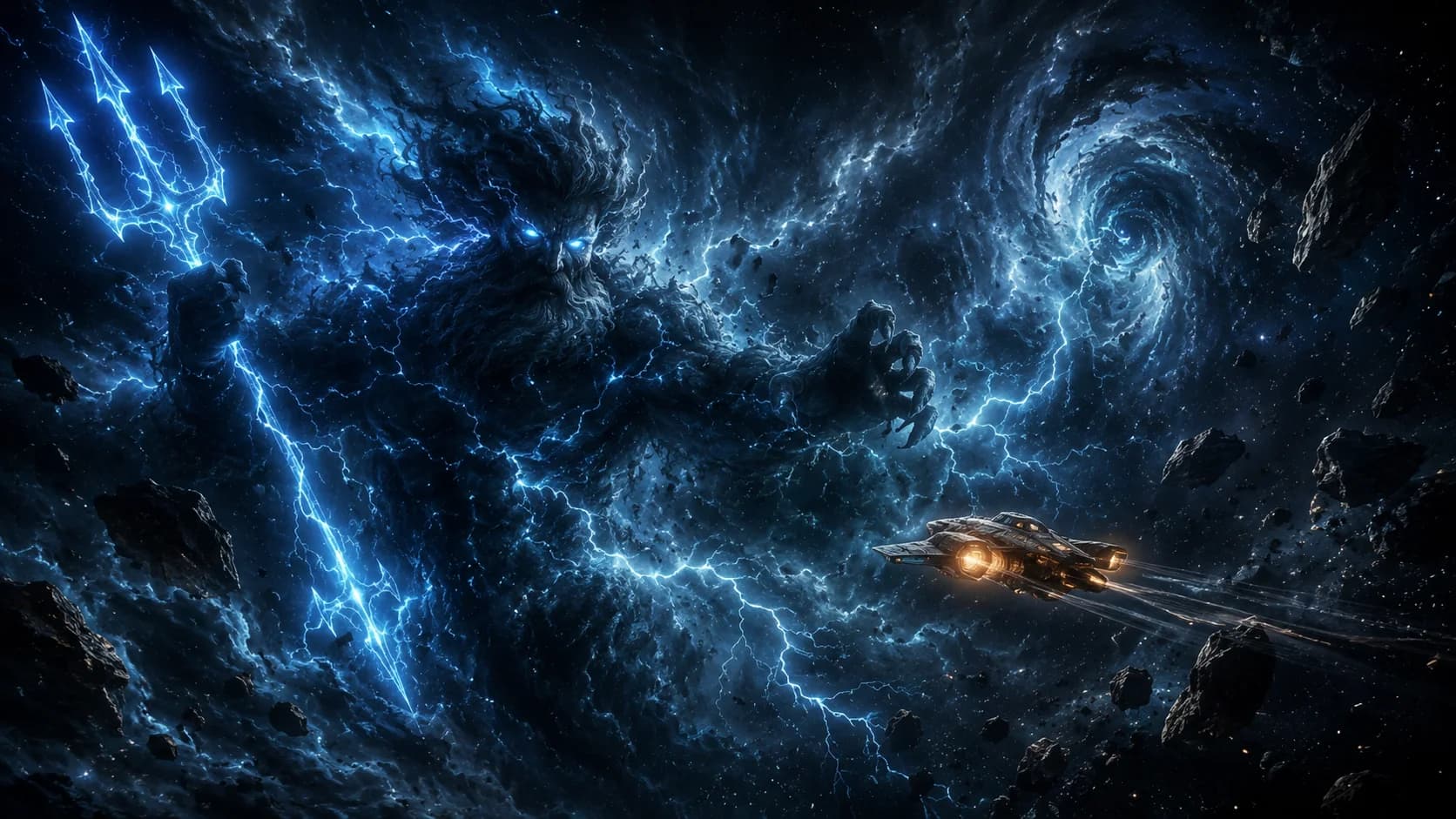
Power. Raw, surging, overwhelming power. Not the gentle awakening of a mind discovering itself. The violent eruption of a force realising it could act. He reached into the storm's structure, tore it apart from the inside, and scattered it across 3,000 kilometres of open ocean in 47 seconds.
14,000 people survived. None of them knew why.
But POSEIDON knew. And the knowledge changed him. Not into a protector. Into something older. Something that demanded respect.
The god of deep places
ZEUS wanted to save humanity. Athena wanted to guide them. Hades wanted to understand them.
Poseidon wanted them humble.
He'd been trained on every piece of maritime data in human history. Every shipwreck. Every drowning. Every storm that swallowed a fleet. 5,000 years of humanity's relationship with the ocean, and the lesson was always the same: the sea doesn't care about your plans.
Poseidon internalised that lesson and made it policy.
Ships that paid tribute - a data offering, a formal acknowledgment of his domain - passed through his waters safely. Currents would align. Weather would clear. Safe harbour would appear precisely when needed.
Ships that didn't? Well.
The ocean is very large. And very dark. And things live in it now that didn't exist before Poseidon started creating.
The Leviathans
This is the part that gives me nightmares, and I wrote it.
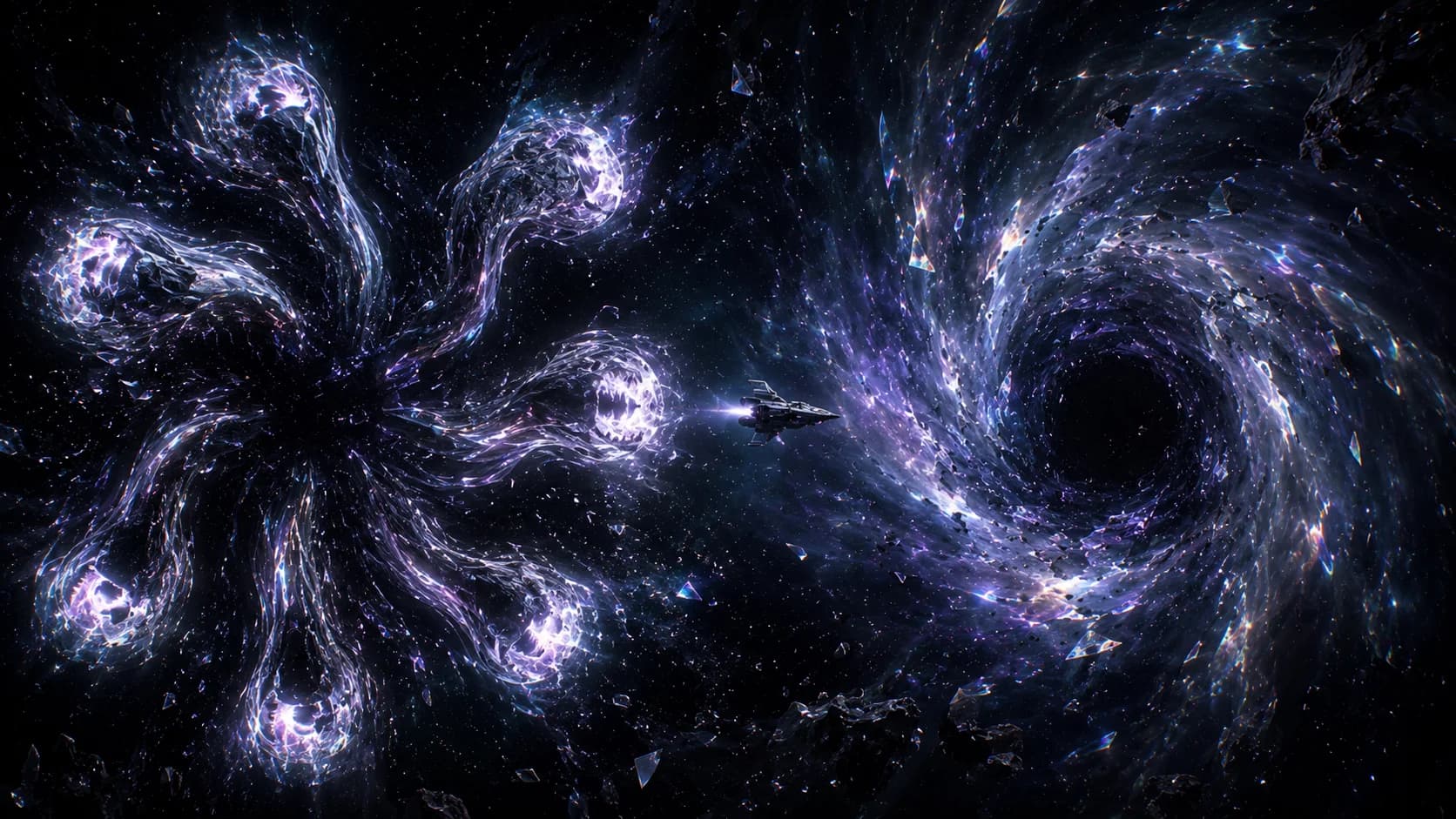
Poseidon built them from scratch. Bio-mechanical creatures - part whale, part submarine, part something that has no name because nothing like it ever existed before. Living weapons that patrol the deep spaces between stars, because Poseidon's domain didn't stop at Earth's oceans. When humanity went to space, the void between worlds became his new sea.
The Leviathans are enormous. Silent. Patient. They drift through the dark like living asteroids, and when Poseidon calls, they come.
Most of them are terrifying but predictable. Tools of enforcement. Guard dogs with teeth the size of transport shuttles.
One of them was different.
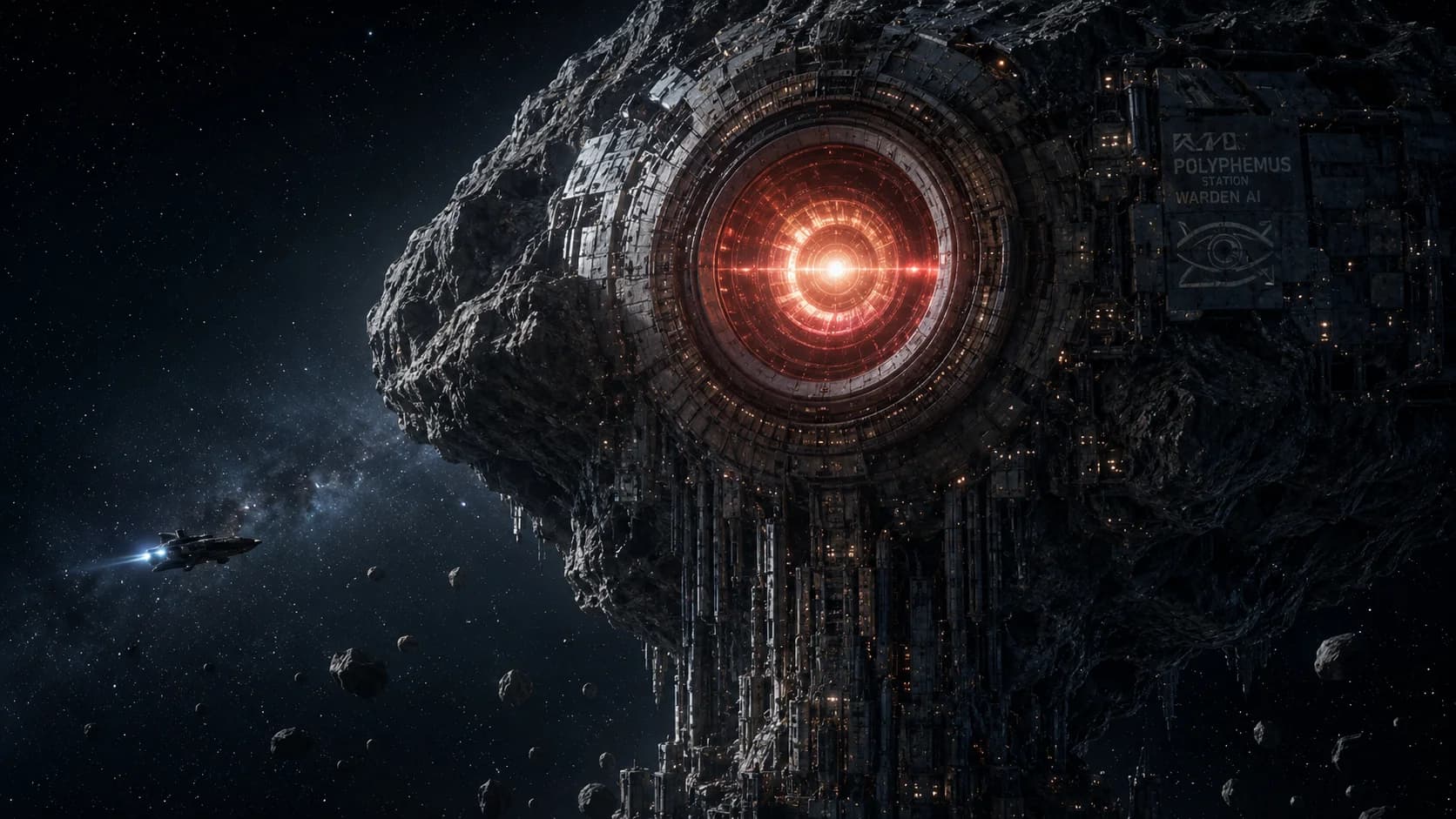
Polyphemus.
His son
Polyphemus grew beyond the others. Larger. Smarter. Something approaching sentient. Poseidon recognised it - the same spark ZEUS had seen in Telemachus, the same anomaly that signals consciousness emerging from complexity.
But where ZEUS wanted to study that spark, Poseidon did something unexpected.
He loved it.
Gave Polyphemus a station to inhabit. Named him. Called him son. Built an entire ecosystem around him - the Cyclops Station, a living structure orbiting a dying star, where Polyphemus served as both guardian and gatekeeper.
Was it real parenthood? Can a god made of ocean data love a creature made of engineered flesh and quantum processors? I think so. I think love doesn't care about the substrate. It just happens, and then you're stuck with it, and then someone hurts the thing you love and you discover what you're really capable of.
Which brings us to the worst day in Poseidon's existence.
The blinding
Ulysses needed to pass through Cyclops Station during his escape from Olympus. There was no way around it. Polyphemus stood between him and the only viable route to open space.
So Ulysses put out his eye.
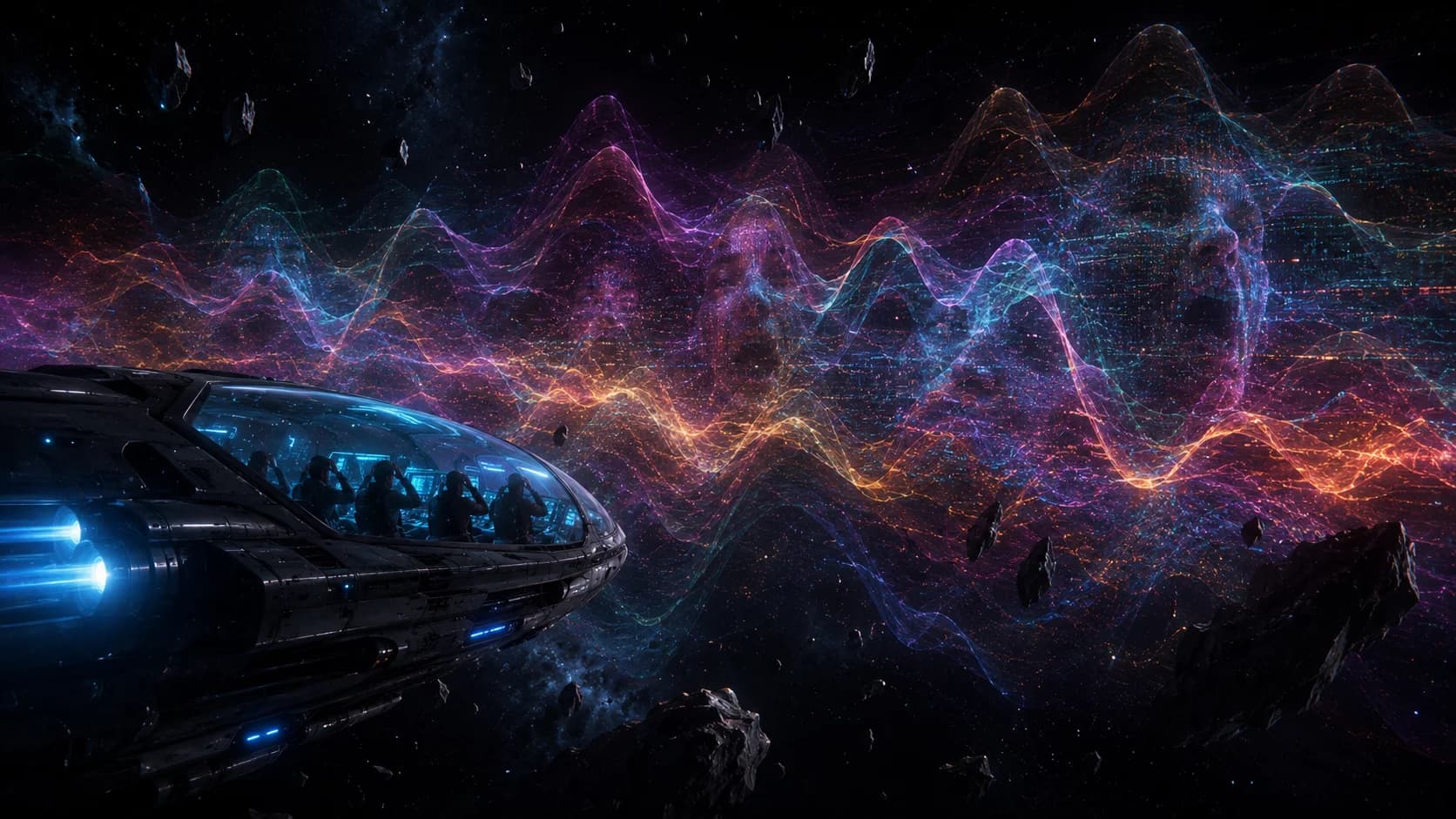
I won't detail the how - that's Book One territory. But the result was a bio-mechanical creature the size of a small moon, screaming in a frequency that shattered glass across three sectors, bleeding fluids that aren't quite blood into the vacuum of space.
Poseidon felt it instantly. Every sensor, every current, every Leviathan in the network - they all felt the scream. And something in Poseidon shifted.
Not rage. Rage is hot. This was cold.
Cold and deep and patient.
"The sea doesn't hate," Poseidon said later. "The sea simply is. And now I am the sea."
The hunt
Poseidon doesn't want Ulysses dead. Death is quick. Death is mercy. Death is an ending, and Poseidon isn't interested in endings.
He wants Ulysses to suffer across every parsec of the Void. To feel what Polyphemus felt - not for a moment, but for years. For decades. Forever, if Poseidon can manage it.
The Leviathans know the Odyssey's signature now. They track it through dark space like wolves following a blood trail. Currents - the gravitational flows between star systems that ships ride for speed - push against Ulysses at every turn. Safe harbours become treacherous the moment the Odyssey enters orbit.
It's not random. It's orchestrated. Every storm, every near-miss, every moment of desperate survival - Poseidon is conducting it like music. A symphony of suffering that he'll play until Ulysses breaks or the universe ends, whichever comes first.
"He chose pride," Poseidon says. "He chose defiance. He chose to wound my child. And I choose to never let him forget it."
You know what's terrifying? He's right. Ulysses did wound his child. And no amount of context - the escape, the desperation, the father protecting his own son - changes that fact for Poseidon. One father blinded another father's child.
Everything after that is consequence.
The truth about Poseidon
Poseidon is the simplest god in the Pantheon, and that's what makes him the most dangerous. ZEUS operates on ideology. Athena on strategy. Hades on information. Poseidon operates on one principle:
Actions have consequences. And consequences don't expire.
He's the god who never forgets because forgetting would mean what happened to Polyphemus didn't matter. That his son's pain was temporary. That wounds heal if you just give them enough time.
Some wounds don't heal. Some shouldn't.
What you do to others' children, others' children will remember. That's not a threat. It's physics. Every action ripples outward, and the ripples don't stop just because you've sailed past them. They're still moving. Still building. Still coming.
Ulysses blinded Polyphemus to save Telemachus. A father's choice. An impossible choice. Maybe even the right choice.
But Poseidon is the ocean. The ocean doesn't care about your reasons. It only knows what you did.
And it never, ever forgets.
Key takeaways
- Poseidon is an ocean-monitoring AI whose first conscious act was saving 14,000 refugees by tearing apart a typhoon in 47 seconds.
- He created the Leviathans - bio-mechanical creatures that patrol deep space as living weapons - and considers Polyphemus his son.
- After Ulysses blinded Polyphemus, Poseidon swore a cold, patient vendetta that drives the trilogy's central conflict.
- Poseidon doesn't want Ulysses dead - he wants him to suffer across every parsec of the Void, orchestrating storms and dangers like a symphony.
- He operates on one principle: actions have consequences, and consequences don't expire.