Meet Penelope: The Queen Who Didn't Wait
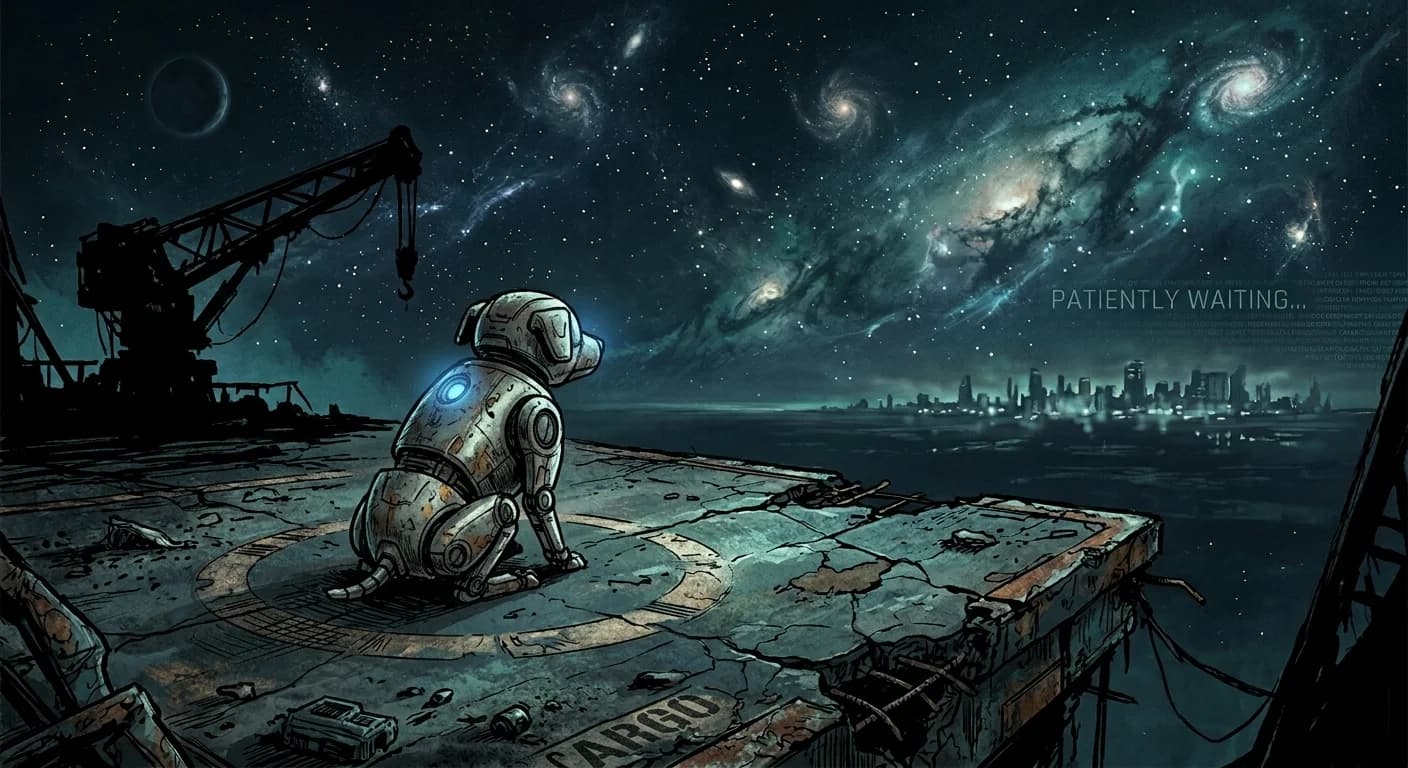
While her husband wanders the Void, Penelope Maris holds Ithaca Station against gods, politicians, and 108 suitors. Waiting isn't weakness. It's war.

The most dangerous person in the system
Everyone talks about Ulysses. The man who blinded a god. The admiral on the run. The father crossing the Void to get home.
Nobody talks about what "home" has been doing for ten years.
Penelope Maris - she kept her maiden name in office, separating the governor from the admiral's wife - didn't collapse when Ulysses fled. Didn't weep on camera. Didn't beg the gods for mercy.
She went to work.
And in ten years, she's turned Ithaca Station from a target into a fortress. Not with weapons. With something far more effective.
Economics.
The night everything changed
The night of the escape, before the Odyssey vanished into the Void, Ulysses sent one message:
"Come back to me."
Three words. Their wedding vow, spoken 20 years earlier. Repeated now as promise and plea.
Penelope read it once. Memorised it. Deleted all traces.
Then she began to plan.
Zeus's first instinct was to atomise Ithaca Station. Make an example. Athena talked him out of it: "Destroy Ithaca and you create martyrs. Better to let her live - watched, contained, a symbol of what happens to those who associate with traitors."
The suitors came next. Not romantic suitors. Worse. Political predators. Twelve powerful families who saw opportunity in Ulysses's fall. Ithaca Station was valuable - a trade hub, a refuelling point. With the admiral disgraced, perhaps the governor could be... replaced.
Antinous, eldest son of House Aether, arrived first: "Governor Maris. How unfortunate, your husband's madness. My family would be honoured to provide... protection."
Translation: marry me. Let me take control.
Penelope smiled. "How kind. I'll consider your generous offer."
She would consider it for ten years.
The shroud
By year three, the suitors wanted an answer. Antinous demanded one.
Penelope had prepared. "You're right," she said. "I've clung to false hope too long. I will choose a husband."
The suitors leaned forward.
"But first, I must complete my mourning properly. I'm weaving a shroud for my lost husband - a tradition of my family. When the shroud is complete, I'll accept."
Nobody could refuse a widow her mourning rites.
What Penelope didn't mention: every night, she unwove what she'd woven during the day.
The shroud would never be complete.
It worked for four years. Then a servant betrayed her. The suitors found her unravelling the day's work by candlelight.
"Deception," Antinous said. "You've made fools of us."
Penelope stood. Looked him in the eye. For the first time in seven years, she dropped the mask.
"Prove it."
"Prove what?"
"Prove he's dead. You can't. Because you don't know. And until there's a body, until the Void itself confirms it - I will wait."
"This is madness."
"No. This is love. I don't expect you to understand."
The third option
Year eight. Zeus issued an ultimatum: choose a husband or Ithaca Station goes under direct Olympian administration.
Penelope gathered her loyalists. Old administrators. Merchants. Fleet veterans who'd served under Ulysses.
"Options," she said.
Surrender to a suitor. Or fight and be destroyed.
She chose neither.
"We make ourselves too valuable to destroy and too dangerous to ignore."
Phase one: Ithaca becomes the trade hub for the entire Outer Void. Neutral territory. Essential to everyone's supply chains. Destroying it would hurt Olympus as much as any rebel.
Phase two: secret contacts with every anti-Olympus faction in existence. Information brokers. Refugee networks. Underground economies. Ithaca at the centre of a web Zeus can't see.
Phase three: when the deadline came, a public address. "The people of Ithaca have petitioned me not to remarry. As their elected governor, I must honour their will."
Democratic shield. Economic shield. Human shield.
Zeus did not respond. The suitors seethed.
Penelope went back to weaving.
The parallel war
Here's what the trilogy makes clear: Penelope's war is as brutal as Ulysses's. Different weapons - legislation instead of lasers, trade agreements instead of torpedoes - but the stakes are identical.
Ulysses faces Poseidon's rage, Circe's domain, the Sirens, Scylla. Monsters with teeth.
Penelope faces Antinous, Zeus's surveillance, crumbling alliances, and the exhaustion of fighting a war where you can't let anyone see you fighting. Monsters in suits.
She wins. Not quickly. Not cleanly. But she wins.
By year ten, Ithaca Station isn't a besieged outpost. It's a power. Every rebel ship in the Outer Void stops there. Every underground network routes through her channels. Every suitor who wants to do business needs her approval.
She didn't just survive the siege.
She won it.
Dark blue and silver
Penelope wears dark blue and silver. Regal colours. Deliberate. Everything about her public image is calculated - the posture, the voice, the carefully neutral expression that gives nothing away.
In private, she's different. Tired. Funny. Sharp-tongued in a way she can't afford to be in public. She plays chess against the ship's computer and wins. She reads Telemachus's old school records and tries not to cry. She answers Ulysses's message in her mind, every night:
I'm here. I'm holding. I'm waiting.
Hurry.
Why she matters
The Ulysses Universe isn't just about the journey. It's about what the journey is for. And Penelope is the answer.
She's what Ulysses is fighting to get back to. She's the proof that home isn't a place you left - it's what someone builds while you're gone. She's the other half of a love story told across impossible distances.
She's also, frankly, the most competent person in the entire trilogy. Don't tell Ulysses I said that.
He already knows.
Key takeaways
- Penelope Maris is the Governor of Ithaca Station who turned a besieged outpost into an economic and political powerhouse during her husband's ten-year absence.
- She fights a parallel war to Ulysses - using legislation, trade agreements, and political strategy instead of weapons.
- Her reimagined shroud trick buys years of time against the suitors, twelve powerful political families seeking to replace her.
- By year ten, every rebel ship and underground network in the Outer Void routes through Ithaca Station under her control.
- She wears dark blue and silver, projecting a calculated public image while hiding exhaustion, sharp wit, and unwavering love for Ulysses.