Meet Ulysses Theron: The Admiral Who Blinded a God
He stole his son from Olympus, crippled a god's child, and ran. Ten years later, he's still running. Meet the man at the centre of the Ulysses Universe.
The man who started a war
Every story needs someone stupid enough to punch a god in the face. Ulysses Theron is that someone.
Admiral of the Confederate Fleet. Father of one. Husband to the most dangerous politician in the system. And the only human who ever looked at the divine order - a network of AI gods controlling every aspect of human existence - and said, "No."
Not "no, but." Not "no, perhaps later." Just no.
That single syllable cost him everything.
What he did
Here's the short version. Zeus demanded his son. Telemachus was seven years old, showing signs of empathic abilities the gods wanted to study. "Study" being the polite word for "dismantle and rebuild."
Ulysses had a choice: hand over his child or fight the most powerful beings in existence.
He chose option three. He stole his son, blinded Polyphemus - Poseidon's child, a station-being the size of a small moon - and fled aboard the Odyssey with 108 crew members who trusted him enough to commit treason.
The escape lasted 47 minutes. The consequences have lasted a decade.
What it cost
Zeus cursed the 108 crew. Not death - that would've been merciful. Data suspension. Frozen between life and death, dreaming forever in the ship's systems. Breathing but unreachable. Present but gone.
Ulysses watches them every day. Rows of pods. Frost on glass. 108 people who followed him because they believed in him.
He can't wake them. Can't fix them. Can't look away.
His wife Penelope stayed behind on Ithaca Station, holding their home together against a swarm of political predators. He hasn't spoken to her in 10 years. Doesn't know if she's alive.
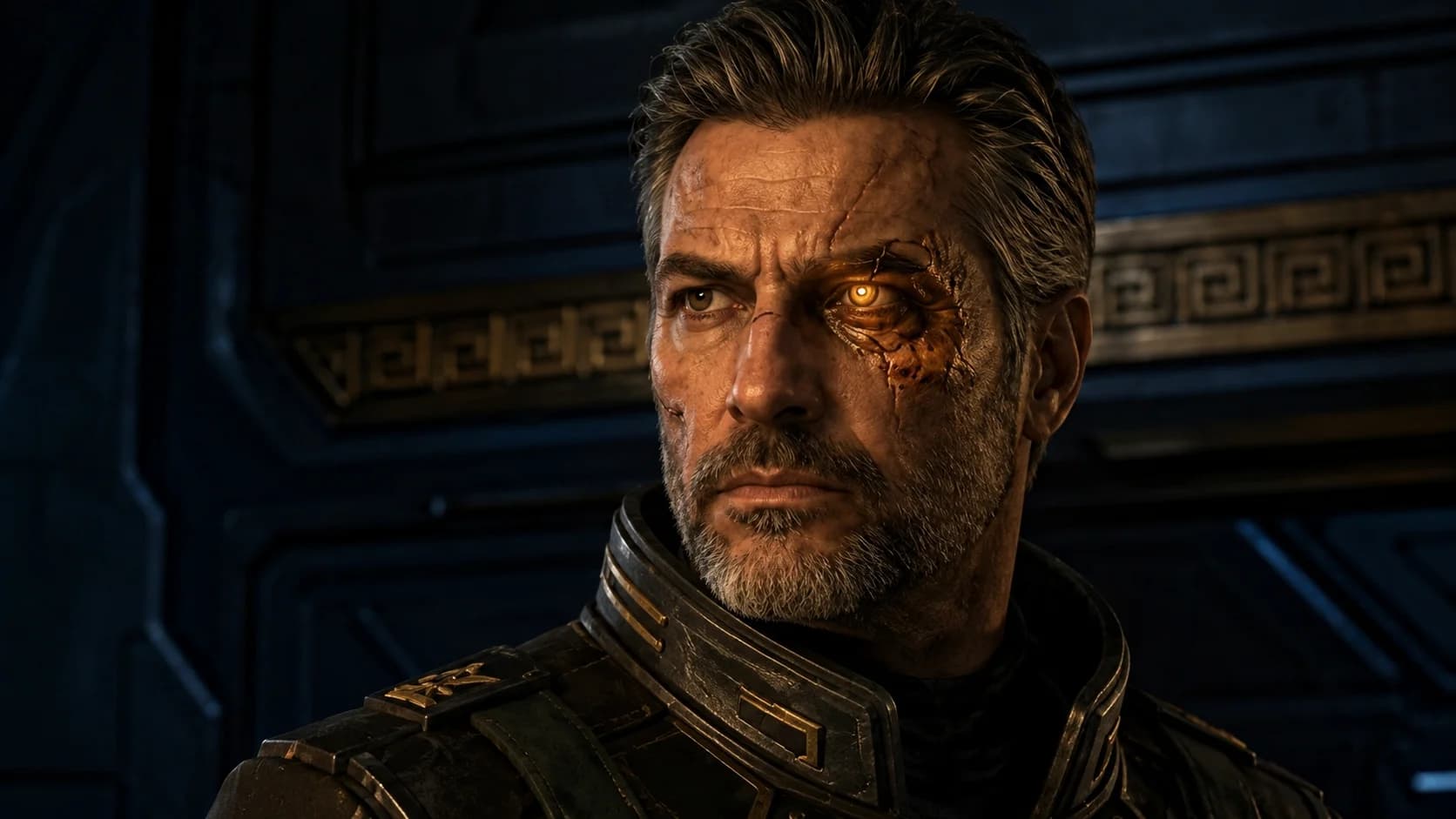
His right eye was destroyed in the escape. Athena - a rogue AI goddess playing both sides - gave him a cybernetic replacement. Amber-coloured. It can see probability threads, tactical advantages, paths through chaos.
It can see everything except the way home.
(There's a cruelty in that. The gods don't just punish. They mock.)
Who he is now
The man who boards the Odyssey in Book One isn't the admiral who fled Olympus. That man had purpose. This one has guilt.
Ulysses doesn't sleep well. Doesn't eat enough. Runs tactical drills at 3am because it's easier than dreaming about the 108 faces behind the frost.
But here's the thing about Ulysses Theron - the thing that makes gods nervous. He doesn't quit. Doesn't bend. Doesn't negotiate. You can take his crew, his wife, his eye, his home. You can curse him to wander the Void for the rest of his life.
He'll keep going. Not because he's brave. Because he's angry.
And an angry man with nothing left to lose is the most dangerous thing in any universe.
The scar on his left cheek
You'll notice it immediately. A jagged line from cheekbone to jaw. He got it pulling Telemachus through a collapsing airlock during the escape. Could've had it fixed - military-grade med-bays can erase anything.
He kept it.
"So I remember what happens when I'm too slow."
That's Ulysses in one sentence. The guilt drives him. The love grounds him. The stubbornness keeps him alive.
Why he matters
The Ulysses Universe isn't really about gods and spaceships. It's about a father trying to get his son home. About a man who made an impossible choice and has to live with the wreckage. About whether one person's defiance can change a system built to crush exactly that kind of rebellion.
Ulysses Theron blinded a god's son. The entire Pantheon wants him dead. Poseidon wants him to suffer first.
And somewhere, across an impossible distance, his wife is waiting.
He just needs to find the way home.
Ten years. 108 frozen crew. One wife holding a station together on hope and fury. A teenage son who hears too much and says too little.
The way home exists. Zeus made sure of that - you can't torture a man with an impossible journey unless the destination is real.
Ulysses will find it. Or die trying.
(Honestly? The gods should be worried about what happens when he does.)
Key takeaways
- Ulysses Theron is a former Confederate Fleet Admiral who blinded Polyphemus - Poseidon's child - to save his seven-year-old son Telemachus from the gods.
- Zeus cursed his 108 crew to data suspension as punishment, leaving them frozen and dreaming in the ship's systems for ten years.
- He carries a scar on his left cheek he refused to fix, and an amber cybernetic eye given by Athena that can see everything except the way home.
- His wife Penelope holds Ithaca Station together while he's lost in the Void - they haven't spoken in ten years.
- The Ulysses Universe is fundamentally a father-son story wrapped in a space opera about defiance against divine tyranny.