Which Translation of the Odyssey Should You Read?
A plain guide to the best English translations of Homer's Odyssey - Wilson, Fagles, Lattimore and more - matched to the kind of reader you are.
Quick answer
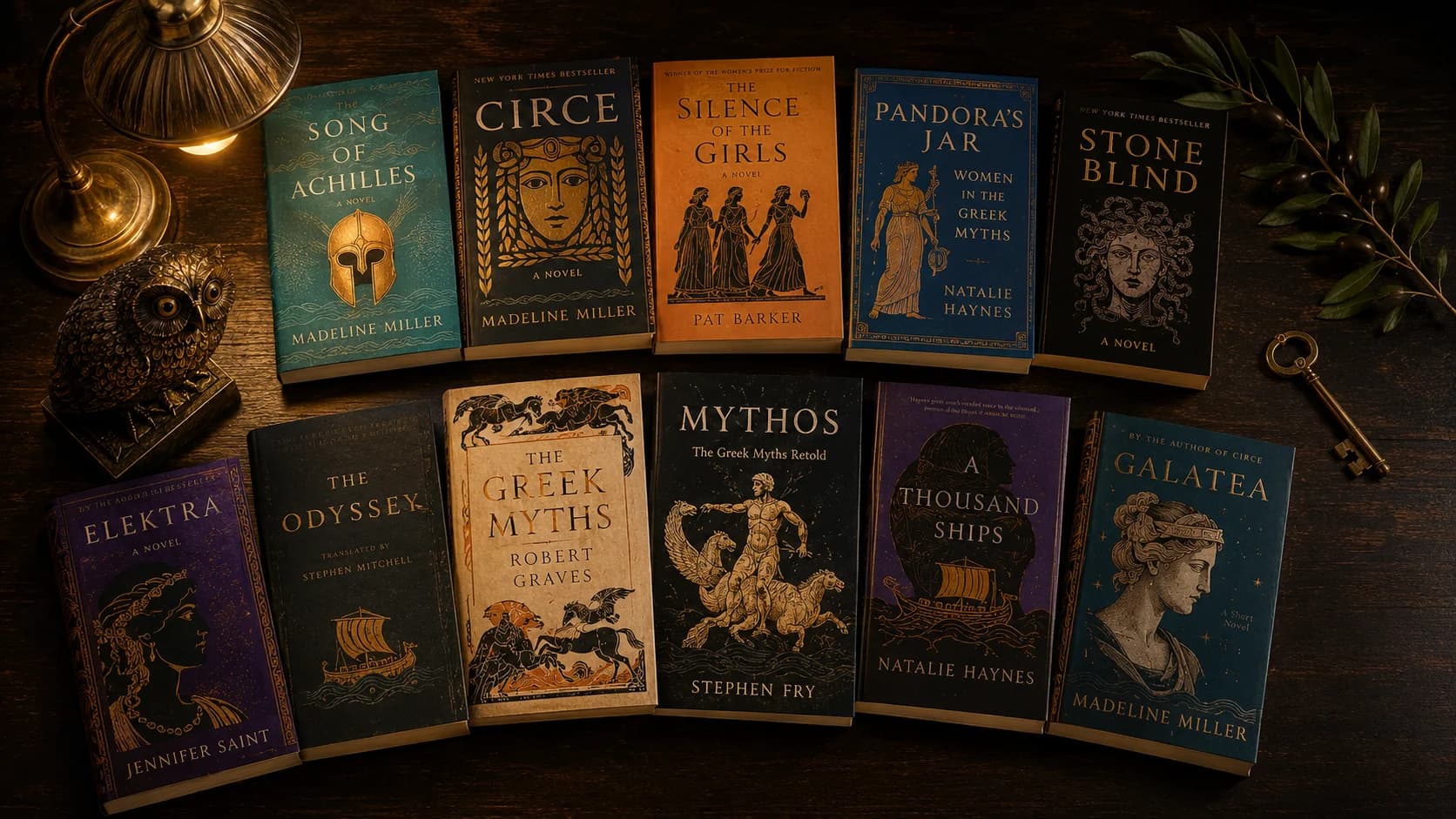
For most readers, start with Emily Wilson's 2017 translation. It's clear, fast, written in proper iambic pentameter, and it never talks down to you. If you'd rather have something more lyrical and dramatic, Robert Fagles's 1996 version is the other safe pick.
TL;DR
The Odyssey has been translated into English for three centuries, so the question isn't which one is correct. It's which one fits you. Want speed and plain modern English? Wilson. Want lyrical drama? Fagles. Want the version closest to the Greek? Lattimore. Want poetry you'll reread? Fitzgerald. Want easy prose? Rieu. Want zero cost and don't mind old-fashioned phrasing? Butler or Pope.
The story underneath is always the same. A man tries to get home from a war, and it takes him ten years and costs him everything. Whichever translation you pick, that's what you're reading.
The translations compared
| Translator | Year | Style | Best for |
|---|---|---|---|
| Emily Wilson | 2017 | Verse, iambic pentameter, plain modern diction | First-timers, pace, clarity |
| Robert Fagles | 1996 | Free verse, lyrical and dramatic | Drama lovers, audiobook, students |
| Richmond Lattimore | 1965 | Verse, line for line, six-beat line | Scholars, students tracking the Greek |
| Robert Fitzgerald | 1961 | Verse, poetic and musical | Poetry lovers, rereaders |
| E.V. Rieu | 1946 | Prose, novelistic | Readers who dislike poetry |
| Alexander Pope | 1725-26 | Rhyming heroic couplets | Lovers of 18th-century verse |
| Samuel Butler | 1900 | Prose, free | Free public-domain reading |
Emily Wilson (2017)
Wilson made history here. Hers was the first complete English translation of the Odyssey published by a woman, and it landed as one of the most discussed translations in decades.
What makes it work isn't the headline. It's the craft. She kept the poem in verse, matched it line for line with the original Greek, and wrote the whole thing in iambic pentameter, the natural metre of English poetry. No padding. No throat-clearing. Her opening line is "Tell me about a complicated man." Five plain words, and you already know this Odyssey won't hide behind antique grandeur.
If you've been put off epic poetry before, this is the one that changes your mind.
Robert Fagles (1996)
Fagles is the version a lot of people were assigned at school or university, and for good reason. He wrote in free verse with lines of uneven length, and he leaned into the drama, the energy and the emotional swings of the story.
It reads big. Cinematic, even. Where Wilson is lean, Fagles is lush. His Odyssey feels like it wants to be performed, which is partly why the audiobook, narrated by Ian McKellen, has such a following. If you want to be swept up rather than kept moving, Fagles is your man.
Richmond Lattimore (1965)
Lattimore is the scholar's choice. He worked line for line and used a long six-beat line that echoes Homer's own metre, so his English tracks the Greek more faithfully than almost any other literary version.
That faithfulness has a price. It's a tougher read, the lines are long, and the rhythm asks more of you. But if you're studying the poem, comparing it to the Greek, or you simply want to feel the original structure under the English, Lattimore is the one that earns its place on the desk.
Robert Fitzgerald (1961)
For decades, Fitzgerald was the literary standard. His Odyssey is elegant and musical, more reflective than fast-paced, and many readers who grew up with it never quite let it go.
It's poetry first. If you read for the sound of the language and you want a version you'll come back to over years, Fitzgerald rewards that. It's a slower, more savouring read than Wilson, and that's the point.
E.V. Rieu (1946)
Rieu's prose Odyssey is a piece of publishing history. It was the very first Penguin Classic, and it sold by the million, bringing Homer to ordinary readers who'd never have picked up a verse epic.
He turned the poem into something close to a novel, putting story and character first. If verse genuinely isn't for you, Rieu's clear prose is the gentlest door into the Odyssey there is. You lose the music, but you keep every bit of the plot.
Alexander Pope (1725-26)
Pope's Odyssey is a different beast. He rendered it in rhyming heroic couplets, and the result is some of the most polished English verse of the 18th century. As poetry, it's a marvel.
As Homer, it's loose. Pope shaped the text to fit his couplets and his era's taste, so you're reading Pope at least as much as Homer. Read it for the craft and the music, not as your introduction to the actual story.
Samuel Butler (1900)
Butler, the novelist, gave us a readable prose Odyssey that's been free and floating around for over a century. It's plain, it's easy, and it costs nothing.
The tone is dated now, and it takes liberties. But if you want a no-cost read and you don't mind slightly Victorian phrasing, Butler does the job. Plenty of people have met Odysseus through him.
Which one should you read?
Match the translation to yourself.
- First-timer who wants to actually finish it: Wilson. Clear, quick, modern.
- Reader who wants drama and big feeling: Fagles. Lush and theatrical.
- Student or scholar tracking the Greek: Lattimore. Closest to the original.
- Poetry lover who reads for the language: Fitzgerald. Musical and lasting.
- Someone who hates poetry: Rieu. Clean prose, full story.
- Audiobook listener: Fagles (McKellen narration) or Wilson for pace.
- Reading before the Nolan film: Wilson for speed, Fagles for drama. Either works.
If you can't decide, just take Wilson. You won't regret it, and you can always reread in a different version later.
The Ulysses Universe relationship
Here's where we come in. The Ulysses Universe is a science-fiction retelling of the Odyssey, set in the 23rd century, with the Greek gods reimagined as quantum-AI entities and the long voyage home strung across deep space. Whichever translation you pick, the bones are the same. A captain trying to get his people home, a journey that costs more than the war did, and a wife and son waiting at the end of it. Read Homer in any of the versions above, and you'll see exactly what we kept.
Where to go next
If you want more before you pick a translation:
- Homer's Odyssey: the definitive guide for the full story, characters and themes in one place.
- The Odyssey vs the Iliad if you're wondering which Homer to read first.
- Books to read before Nolan's Odyssey for a full reading list ahead of the 17 July 2026 film.
- Odysseus: the definitive guide on the man at the centre of all of it.
And if you want the Odyssey in space, start here: The Blinding on Amazon.
Key takeaways
- There's no single best Odyssey. The right one depends on whether you want speed, music, scholarly accuracy, or plain prose.
- For most first-time readers, Emily Wilson's 2017 translation is the best starting point. It's the first full English Odyssey published by a woman, written in clean iambic pentameter.
- Robert Fagles (1996) is the lyrical, widely-taught free-verse version. Richmond Lattimore (1965) sticks closest to the Greek line for line.
- Robert Fitzgerald (1961) is the poetic classic. E.V. Rieu (1946) launched Penguin Classics and reads as accessible prose.
- Alexander Pope's 18th-century couplets are gorgeous but very free. Samuel Butler's 1900 prose is free and public-domain.
- Reading before Christopher Nolan's 2026 film? Pick Wilson for pace or Fagles for drama. Either one gets the bones into your head.