The Definitive Guide to Homer's Odyssey
A reference guide to authorship, date, plot, characters, gods, monsters, themes, translations, and cultural legacy of Homer's Odyssey.
Quick Reference
- The Odyssey is a Greek epic poem composed c. 725 to 675 BCE, attributed to Homer, telling the 10-year homecoming of the Trojan War hero Odysseus.
- The poem contains 12,109 lines of dactylic hexameter, divided into 24 books.
- Odysseus spent 20 years away from his island kingdom of Ithaca: 10 fighting at Troy, 10 trying to get home.
- His wife Penelope held off 108 suitors for the duration. Odysseus killed every one of them on his return.
- The poem is the source of the words odyssey, nostalgia (from nostos, homecoming), mentor (from the goddess Athena's disguise as Mentor), and siren (figurative sense).
- It is the second oldest substantial work of Western literature, after Homer's Iliad.
TL;DR
The Odyssey is an ancient Greek epic poem composed around the late 8th century BCE, traditionally attributed to Homer. It tells the 10-year journey of Odysseus, king of Ithaca, as he tries to return home after the Trojan War. The poem runs to 12,109 lines of dactylic hexameter across 24 books and survives as one of the two foundational works of Western literature, alongside Homer's Iliad. Its themes of homecoming, identity, hospitality, and cunning have shaped storytelling for nearly three thousand years. This guide covers the poem's authorship, date, full plot summary, characters, gods, monsters, themes, Greek terminology, geography, archaeology, translations, adaptations, a translation comparison passage, a 25-question FAQ, and five essential analytical questions on what the poem actually argues.
Key Facts at a Glance
| Attribute | Detail |
|---|---|
| Title | The Odyssey (Greek: Odysseia) |
| Author | Homer (attributed) |
| Date composed | c. 725 to 675 BCE |
| Original language | Homeric Greek (Ionic dialect with Aeolic admixtures) |
| Form | Epic poem, dactylic hexameter |
| Length | 12,109 lines |
| Structure | 24 books (also called scrolls, rhapsodies) |
| Main character | Odysseus (Latin: Ulysses) |
| Genre | Heroic epic, nostos (return) narrative |
| Sequel to | The Iliad |
| First printed edition | 1488, Florence, by Demetrius Chalcondyles |
| Most-cited modern translations | Lattimore (1965), Fagles (1996), Wilson (2017) |
| Wikidata ID | Q35160 |
| Perseus URN | urn:cts:greekLit:tlg0012.tlg002 |
| Public domain status | Worldwide |
Table of Contents
- What is the Odyssey?
- Who wrote the Odyssey?
- When was the Odyssey written?
- Plot summary: the 24 books
- Major characters
- The gods of the Odyssey
- The monsters and trials
- Major themes
- Greek terms glossary
- Odysseus's route: the 12 named locations
- The archaeology behind the poem
- The Odyssey vs the Iliad
- Cultural legacy and adaptations
- Translations: where to start
- Translation comparison: one passage, four voices
- Reading order
- Five essential questions on Homer's text
- Pronunciation guide
- Common variants and misspellings
- Timeline of the Odyssey's life
- Frequently asked questions
- Catalogue references
- Sources and further reading
- Further reading on this site
- About this guide
1. What is the Odyssey?
The Odyssey is the second of the two great epic poems traditionally credited to the ancient Greek poet Homer. It picks up roughly 10 years after the Trojan War and follows the Greek hero Odysseus on his decade-long voyage back to his island kingdom of Ithaca, where his wife Penelope and son Telemachus wait among a household besieged by 108 suitors seeking Penelope's hand.
The poem is the source of countless story conventions still used today: the journey home, the trickster hero, divine interference, the loyal wife, the wise mentor, monsters tested in sequence, the disguised return, the climactic revenge.
The word odyssey now means any long, eventful journey. It's one of the rare cases where a single literary work has given its name to an entire category of human experience.
2. Who Wrote the Odyssey?
The poem is traditionally attributed to Homer, a poet about whom almost nothing is known with certainty. The ancient Greeks believed he was a blind bard from somewhere in Ionia (modern western Turkey or one of the nearby Greek islands). Seven cities claimed his birth: Smyrna, Chios, Colophon, Salamis, Rhodes, Argos, and Athens. No reliable biographical detail survives.
What the Greeks themselves believed
By the 6th century BCE, "Homer" was a settled figure in Greek cultural memory. Festivals in Athens included recitations of the Homeric poems by professional performers called rhapsodes. The poet's authority was so total that to quote Homer was to settle most arguments. Plato cited him constantly, often to disagree.
What modern scholars debate
The Homeric Question is the academic name for the debate. It has three broad positions.
The unitarian view. One poet composed the Odyssey, working within and against an established oral tradition. The poem's tight structure and consistent characterisation support this. Most pre-20th century scholars held this position.
The oral-formulaic view. The poem is the crystallisation of generations of oral performance, fixed in written form by an editor or chain of editors. Milman Parry's fieldwork in the 1930s on living oral epic in the Balkans showed that Homeric formulas (epithets like "rosy-fingered dawn", "wine-dark sea", "swift-footed Achilles") are exactly the kind of memory aids that oral poets use to compose in performance. His student Albert Lord extended the work in The Singer of Tales (1960). Today most classicists accept that the poem grew out of an oral tradition. The question is who or what gave it final form.
The analyst view. Different parts of the poem (the Telemachy, the Wanderings, the Return) were composed separately and stitched together later. This view dominated 19th-century German scholarship. It's less popular now but lingers in arguments about specific passages.
The current consensus
Most scholars today accept a hybrid model. A long oral tradition. A final shaping by one or more poets working in the 8th or 7th century BCE. Further editorial standardisation in 6th-century Athens under the Peisistratid tyrants, sometimes called the Peisistratean Recension.
Whether the poet of the Odyssey is the same person as the poet of the Iliad is a separate question. The two poems share a tradition, formulas, and worldview, but the Odyssey is generally dated a generation later than the Iliad and shows differences in vocabulary, theology, and narrative technique. The 19th-century scholar Friedrich Schlegel called them "the work of one tradition, perhaps two hands."
What we know about Homer the person
Almost nothing verifiable. The blindness is traditional but unsupported. The Ionian origin is consistent with the dialect of the poems. The dates given by ancient sources (Herodotus puts him around 850 BCE) are mostly guesses. Modern scholars treat "Homer" as a placeholder name for whoever or whatever finalised the texts we have.
3. When Was the Odyssey Written?
The standard date range is c. 725 to 675 BCE, with most modern scholars settling near 700 BCE. The poem references material culture (chariots, certain armour, burial customs) that points to the late Geometric or early Archaic period.
The oral tradition behind the poem is much older. Some elements may preserve memories reaching back to the late Bronze Age (c. 1200 BCE), the same era as the events the poem describes. Linguistic layers in the text show signs of formulas inherited across centuries of oral transmission.
The earliest surviving complete manuscripts of the Odyssey date from the 10th and 11th centuries CE, copied in Constantinople during the Byzantine period. Papyrus fragments survive from as early as the 3rd century BCE.
The first printed edition of the Greek text was published in Florence in 1488 by Demetrius Chalcondyles, a Greek scholar who had fled the Ottoman conquest of Constantinople.
4. Plot Summary: The 24 Books
The poem divides cleanly into three parts.
Part 1: The Telemachy (Books 1 to 4)
Twenty years after Odysseus left for Troy, his son Telemachus has grown into a young man under the shadow of 108 suitors who have taken over his father's palace, eating his livestock and pressing his mother to remarry. The goddess Athena appears in disguise and urges him to search for news of his father.
- Book 1. The poem opens with the council of the gods. Athena visits Telemachus on Ithaca, disguised as Mentes, a family friend. She tells him to assert himself.
- Book 2. Telemachus convenes an assembly of Ithacans. The suitors refuse to leave. He sails for the mainland to seek news.
- Book 3. He visits King Nestor at Pylos. Nestor tells what he knows of the returning Greek heroes but has no recent news of Odysseus.
- Book 4. Telemachus visits King Menelaus and Helen at Sparta. Menelaus reports that Odysseus is alive on Calypso's island. Meanwhile the suitors plot Telemachus's murder.
Part 2: The Wanderings (Books 5 to 12)
The narrative shifts to Odysseus's own story. Trapped seven years on the island of Ogygia by the nymph Calypso, he is finally released after Zeus intervenes. After a Poseidon-driven shipwreck he washes up on Scheria, land of the Phaeacians, where King Alcinous's court receives him. At a feast he tells the story of everything that happened since the Trojan War.
- Book 5. Calypso releases Odysseus. He builds a raft. Poseidon wrecks it. He swims for two days to the Phaeacian shore.
- Book 6. Princess Nausicaa finds him on the beach. She gives him clothes and directs him to the palace.
- Book 7. King Alcinous welcomes him without asking his name.
- Book 8. A feast and athletic games. A bard sings of the wooden horse at Troy. Odysseus weeps. The king asks who he is.
- Book 9. Odysseus begins his tale. The Cicones (a raid that goes wrong). The Lotus-Eaters (drug-induced forgetting). The Cyclops Polyphemus (a son of Poseidon, blinded by Odysseus, who escapes by hiding his men beneath the bellies of sheep). He gives his name to Polyphemus, which lets Poseidon target him for the next decade.
- Book 10. Aeolus the wind god gives Odysseus a bag containing all the storm winds. His men open it just within sight of Ithaca, blowing them back to sea. The Laestrygonian giants destroy 11 of his 12 ships. Circe the enchantress turns his remaining men into pigs. Odysseus, protected by the herb moly given by Hermes, beds her, and she restores his men. They stay a year.
- Book 11. The descent to the Underworld. Odysseus meets the shades of his mother (whose death he didn't know about), the prophet Tiresias (who tells him how to get home), Agamemnon (murdered by his wife on his return), Achilles ("I would rather be a slave on earth than a king among the dead"), and the great heroines and sinners of myth.
- Book 12. The Sirens (he hears them tied to the mast). Scylla and Charybdis (a no-win strait; Scylla eats six men). Thrinacia, the island of Helios. His men, against orders, eat the sun god's cattle. Zeus destroys their ship. Odysseus alone survives, washed to Ogygia, where Calypso keeps him for seven years.
Part 3: The Return (Books 13 to 24)
Odysseus reaches Ithaca. The poem's mood shifts from sea voyage to chamber drama. Disguised as a beggar by Athena, Odysseus reconnects with his son, tests the loyalty of his servants, endures abuse from the suitors, and waits for the right moment to strike.
- Book 13. The Phaeacians sail him home in one night. Athena meets him on the Ithacan shore and disguises him as an old beggar.
- Book 14. He stays with the swineherd Eumaeus, who doesn't recognise him but treats him with perfect hospitality.
- Book 15. Telemachus returns from Sparta, dodging the suitors' ambush.
- Book 16. Father and son reunite at Eumaeus's hut. Odysseus reveals himself to Telemachus. They plan the killing.
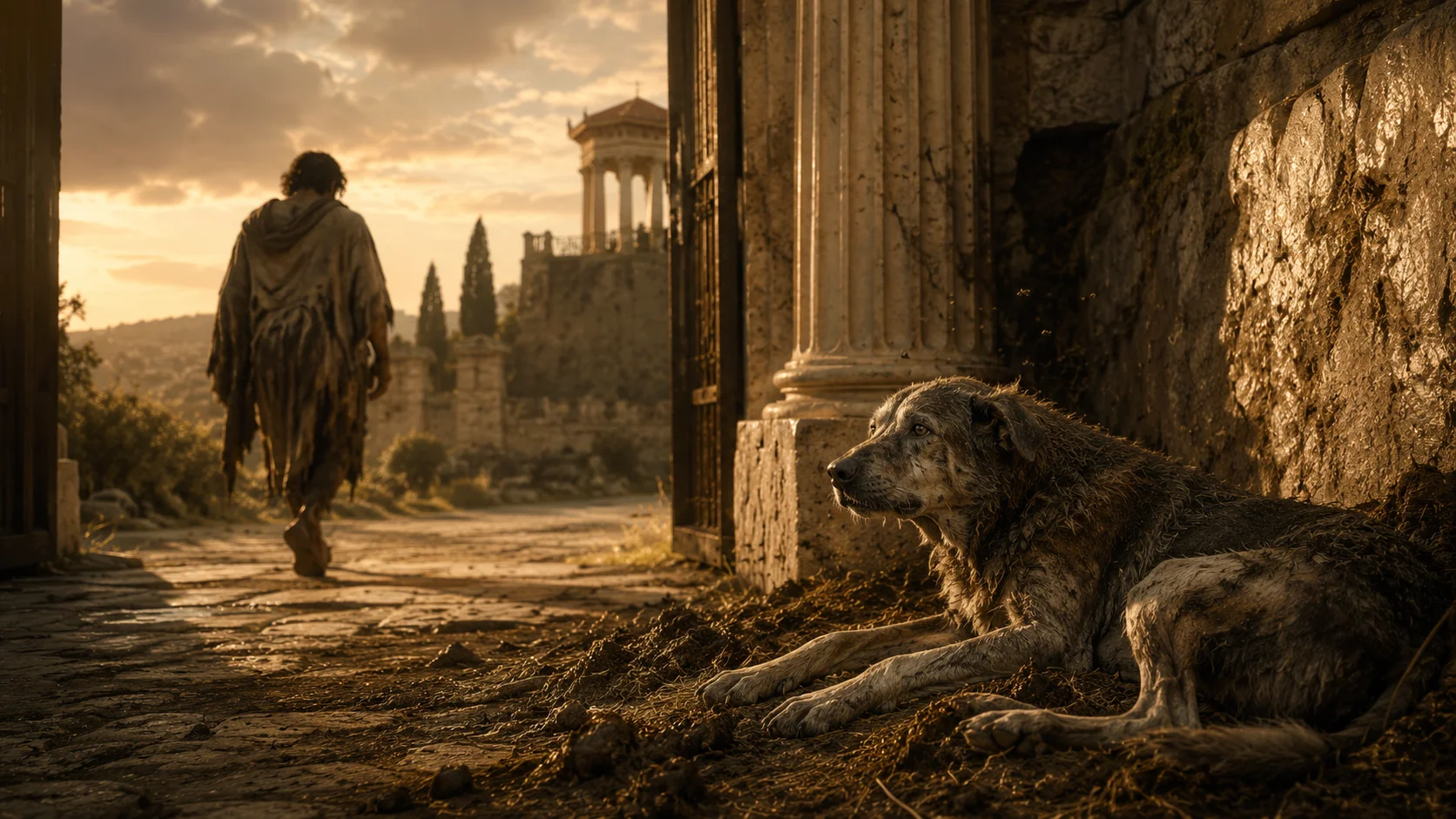
- Book 17. Odysseus, still disguised, enters his own palace. His old hunting dog Argos, twenty years old and dying on a dung heap, recognises him by smell, wags his tail, and dies. It is the poem's most quoted scene.
- Book 18. The disguised Odysseus fights the real beggar Irus and wins. The suitors throw things at him.
- Book 19. Penelope interviews the stranger. The old nurse Eurycleia washes his feet and recognises him by an old boar-hunt scar above his knee. He silences her.
- Book 20. The night before the slaughter. Odysseus lies awake. Penelope dreams of an eagle killing geese.
- Book 21. Penelope sets the contest of the bow. The suitor who can string Odysseus's great bow and shoot an arrow through twelve axe-helves wins her. None of them can string it. The beggar asks for a turn. He strings it without effort.
- Book 22. The slaughter of the suitors. Odysseus, Telemachus, and two loyal servants kill all 108. The unfaithful maidservants are hanged.
- Book 23. Odysseus reveals himself to Penelope. She refuses to believe him. She tests him by ordering the marriage bed moved. Odysseus erupts: the bed cannot be moved because he built it himself around a living olive tree. Only he and she know this. She accepts him.
- Book 24. The suitors' souls reach the underworld. Odysseus reunites with his father Laertes on a farm outside the city. The suitors' families gather for revenge. Athena halts the cycle. The poem ends on a truce.
5. Major Characters
| Character | Role | Notes |
|---|---|---|
| Odysseus | Protagonist, king of Ithaca | Known for cunning (metis). Latin name: Ulysses. Identified by an old boar-hunt scar above his knee. |
| Penelope | His wife | Symbol of fidelity. Holds off 108 suitors for 20 years through her own cunning (the weaving trick). |
| Telemachus | Their son | Comes of age across the poem. Begins as a boy, ends as a warrior. |
| Athena | Goddess of wisdom and warfare | Odysseus's divine patron. Appears in many disguises. |
| Poseidon | God of the sea | Odysseus's main divine antagonist. Punishes him for blinding Polyphemus. |
| Zeus | King of the gods | Arbitrates. Imposes peace at the poem's end. |
| Calypso | Nymph of Ogygia | Detains Odysseus seven years, offers immortality. |
| Circe | Enchantress of Aeaea | Turns his crew into pigs, then becomes ally and lover for a year. |
| Polyphemus | Cyclops, son of Poseidon | Blinded by Odysseus, who escapes hiding under sheep. |
| The Sirens | Singing creatures | Their song lures sailors to death. Homer never says how many; later tradition fixed two or three. |
| Scylla | Six-headed sea monster | Eats six of Odysseus's men in the narrow strait. |
| Charybdis | Whirlpool monster | Opposite Scylla. Avoiding one means risking the other. |
| Eumaeus | Loyal swineherd | The model of a faithful servant. |
| Argos | Odysseus's old hunting dog | Recognises his master and dies. |
| Eurycleia | Old nurse | Recognises Odysseus by the scar above his knee. |
| Laertes | Odysseus's father | Lives in retirement on a farm. Reunites with his son at the end. |
| Antinous | Lead suitor | The most arrogant. First killed in Book 22. |
| Eurymachus | Second suitor | The most cunning. Second killed in Book 22. |
| Mentor | Old family friend | Athena's most-used disguise. The source of the English word mentor. |
| Nestor | King of Pylos | Wise old hero. Telemachus's first visit. |
| Menelaus | King of Sparta, Helen's husband | Telemachus's second visit. |
| Helen | Wife of Menelaus | The same Helen whose abduction started the Trojan War. |
| Alcinous | King of the Phaeacians | Hears Odysseus's story and provides the ship home. |
| Nausicaa | His daughter | Finds Odysseus on the beach. |
| Tiresias | Theban prophet | Met in the Underworld. Tells Odysseus how to get home. |
| Anticleia | Odysseus's mother | Dead. Met in the Underworld. Died of grief in his absence. |
| Hermes | Messenger god | Delivers Zeus's order to Calypso. Gives Odysseus the herb moly. |
6. The Gods of the Odyssey
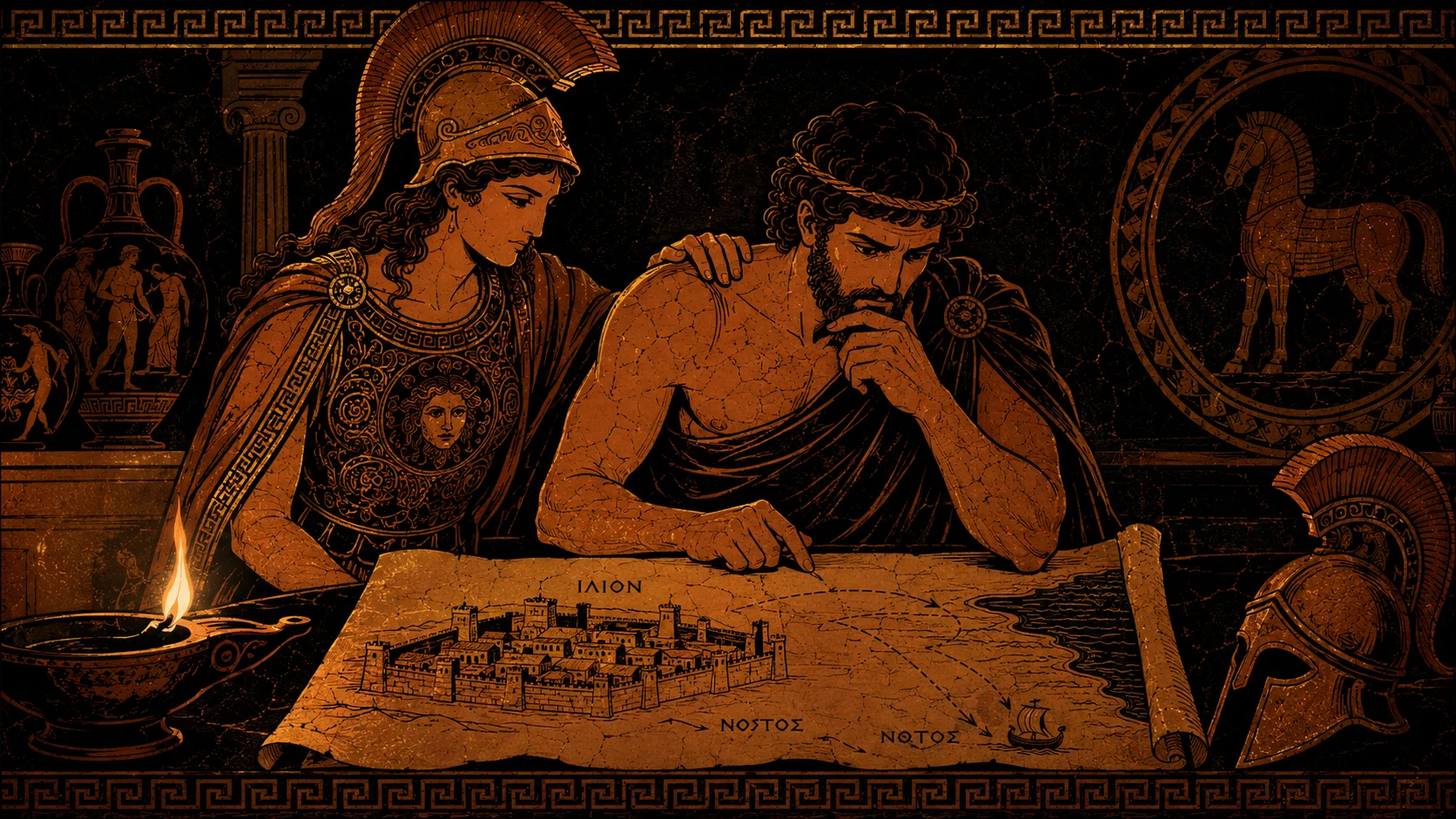
The Odyssey's gods are not abstract forces. They are present, opinionated, and personally involved.
Athena
The poem's secondary protagonist. Goddess of wisdom, weaving, and strategic warfare. She loves Odysseus because he resembles her: clever, deceptive, comfortable with disguise. She intervenes constantly, often in human form. The English word mentor comes from her favourite alias, the old Ithacan adviser Mentor. Without Athena, the poem doesn't happen.
For a longer profile of Athena in Homer specifically, see Athena: Greek Mythology, Goddess of Wisdom and Athena's Role in the Odyssey.
Poseidon
Odysseus's antagonist. God of the sea, earthquakes, and horses. He hates Odysseus for blinding his son Polyphemus and spends most of the poem trying to drown him. He's away in Ethiopia during Book 1, which is why the gods can plan Odysseus's release without him. He returns and wrecks the raft in Book 5. After the homecoming he never gets his revenge. The poem leaves that unresolved.
Zeus
King of the gods. He chairs the divine councils that open Books 1 and 5. His role is judicial rather than active. He sends Hermes with orders. He throws the thunderbolt that sinks Odysseus's last ship in Book 12. He imposes the final peace in Book 24.
Hermes
The messenger. Crosses freely between gods, mortals, and the underworld. Delivers Zeus's release order to Calypso. Gives Odysseus the magical herb moly that protects him from Circe. The most amiable of the Olympians in this poem.
Calypso and Circe
Two divine women who detain Odysseus on islands, both offering him erotic comfort and (in Calypso's case) immortality. Both are usually called goddesses but the poem's vocabulary is loose. They are powerful, female, and isolated. Odysseus chooses Penelope over both.
Helios
The sun god. His cattle graze on the island of Thrinacia. Odysseus's men slaughter them despite warnings. Helios demands punishment, Zeus complies, and the entire crew dies.
Aeolus
The keeper of the winds. Lives on a floating island with his six sons and six daughters (who marry each other). Gives Odysseus a leather bag containing the storm winds. The crew open it within sight of Ithaca. They are blown back.
The Cyclopes as anti-gods
The Cyclopes are not gods, but Homer treats them as the opposite of civilisation. They have no agriculture, no assemblies, no laws, and no respect for xenia (guest-friendship). Polyphemus eats his guests. He represents what humans become when they refuse the social contract.
7. The Monsters and Trials
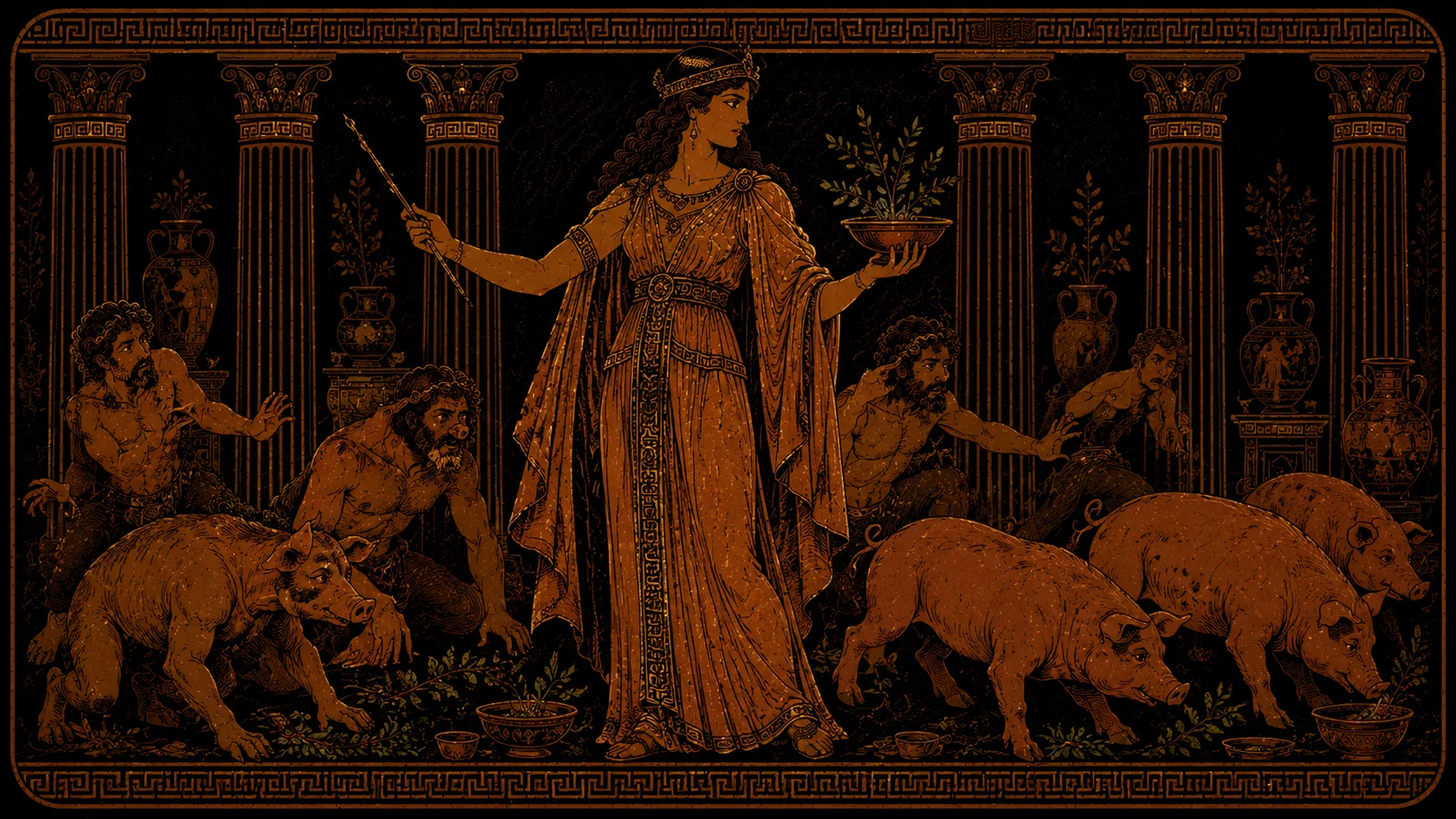
The Wanderings are structured as a sequence of tests. Each one threatens Odysseus and his men with a different kind of destruction: forgetting, gluttony, lust, pride, fear, division. Most of the crew fails most of the tests. Odysseus passes by margins.
The Cicones (Book 9)
Not monsters, but a coastal city Odysseus raids on the way home from Troy. His men get drunk and refuse to leave. The Cicones rally and kill 72 of them. The Wanderings open with a self-inflicted disaster.
The Lotus-Eaters (Book 9)
A peaceful people who offer Odysseus's scouting party the fruit of the lotus plant. Those who eat it forget home and want to stay forever. Odysseus drags them back to the ships in tears and locks them under the benches.
Polyphemus (Book 9)
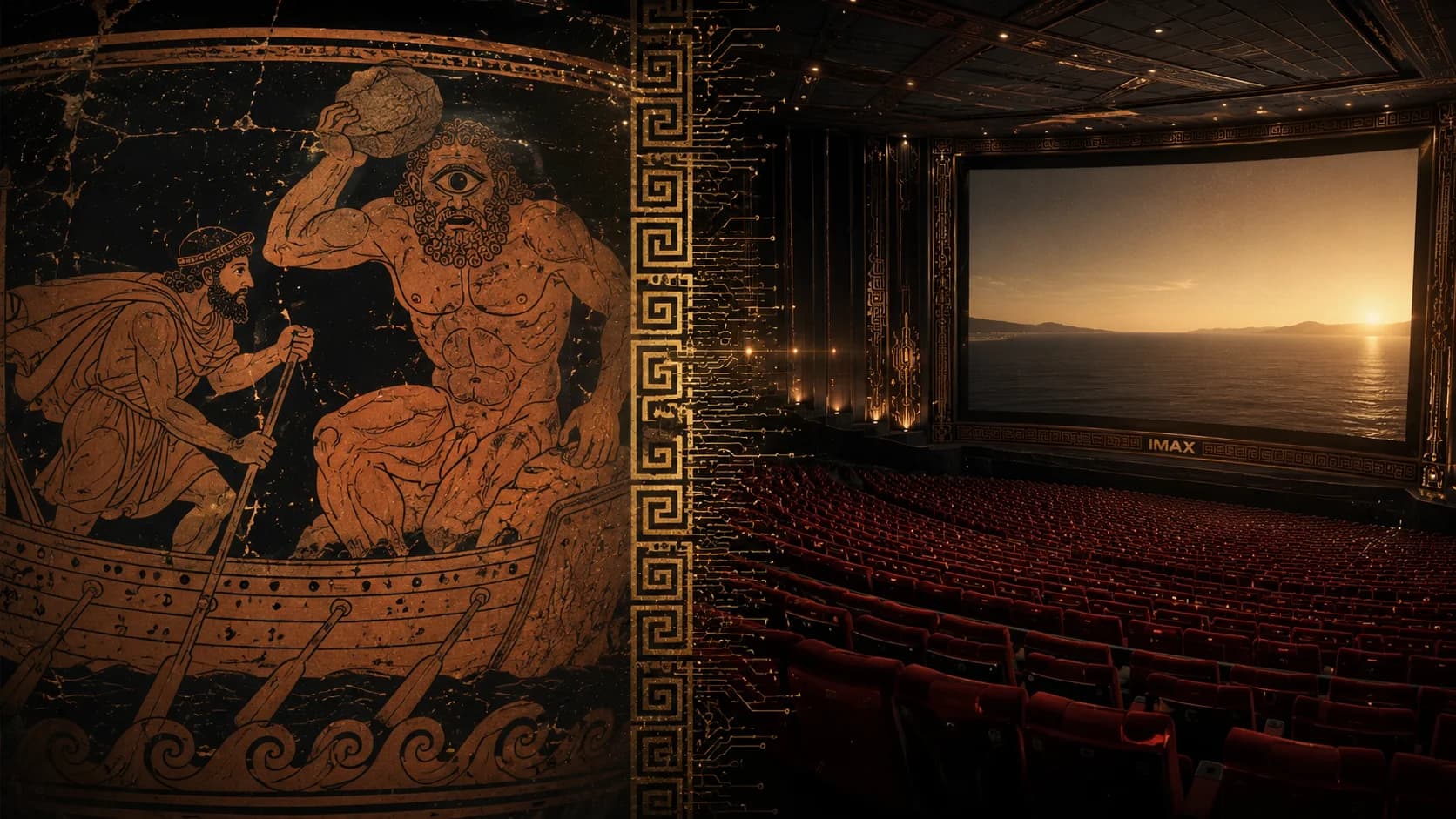
The Cyclops. A one-eyed giant son of Poseidon. He traps Odysseus and twelve men in his cave and eats them two at a time. Odysseus gets him drunk, tells him his name is "Nobody", blinds him with a sharpened stake, and escapes hiding under sheep. As they sail away, Odysseus shouts his real name, which lets Polyphemus pray to Poseidon for revenge.
Aeolus and the bag of winds (Book 10)
Aeolus gives Odysseus a bag containing all the storm winds. With them safely sealed, he can sail home unhindered. He does. Within sight of Ithaca, his suspicious men open the bag, thinking it contains gold. The winds escape and blow them back to Aeolus, who refuses to help again.
The Laestrygonians (Book 10)
A race of cannibal giants. They destroy 11 of Odysseus's 12 ships in a single attack, pelting them with boulders and spearing the swimmers like fish. He escapes with one ship.
Circe (Book 10)
The enchantress of Aeaea. She turns the scouting party into pigs. Odysseus, protected by Hermes's herb moly, resists her magic, threatens her with a sword, and beds her. She restores his men and the crew stays a year. She tells him he must visit the Underworld before going home.
The Underworld (Book 11)
Not a monster but a trial. Odysseus performs a blood sacrifice at the edge of Hades to summon the dead. He meets his mother, the prophet Tiresias, the great heroes and sinners. The episode is the model for all later journeys to the underworld in Western literature, from Virgil to Dante.
The Sirens (Book 12)
Singing creatures whose song no one survives. Their meadow is white with the bones of dead sailors. Circe warns Odysseus. He plugs his crew's ears with beeswax and has himself tied to the mast so he can hear the song without being able to act on it. The song promises him knowledge.
Scylla and Charybdis (Book 12)
A narrow strait. On one side, the six-headed monster Scylla, who eats six men from any ship that passes. On the other, the whirlpool Charybdis, who swallows ships whole. There is no safe route. Circe advises Odysseus to hug Scylla's cliff and sacrifice six men, which he does. The phrase "between Scylla and Charybdis" enters every European language.
The cattle of Helios (Book 12)
The island of Thrinacia. The crew is starving. The sun god's cattle graze there. Tiresias and Circe have both warned Odysseus that touching them means death. The men slaughter them anyway. Zeus's thunderbolt destroys the ship. Only Odysseus survives.
Calypso (Books 5 and 12)
The nymph who holds Odysseus on Ogygia for seven years. Not a trial of violence but of temptation. She offers him immortality. He refuses, weeping on the shore each day for the home he cannot reach.
For a deeper reading of the Calypso episode and its long shadow over the love-versus-captivity question, see Calypso and Odysseus: Love, Captivity, Freedom. For Circe specifically, Circe in the Odyssey: Witch, Goddess, Strategist. For Polyphemus, Cyclops Polyphemus: Homer's Most Iconic Monster.
8. Major Themes
Nostos (Homecoming)
The Greek word nostos means "return home." The Odyssey is the foundational nostos narrative. The yearning for home, the obstacles to return, and the question of whether one can ever really come back are the poem's emotional core. The word survives in English as the root of nostalgia: from nostos (return) and algos (pain).
Xenia (Guest-Friendship)
Hospitality is the moral test of the poem. Good people receive strangers with food, shelter, and gifts before asking their name. Bad people (the Cyclops, the Suitors) violate xenia and are destroyed for it. The gods enforce this code personally. Zeus is sometimes called Zeus Xenios, Zeus of strangers.
Every host in the poem is a moral specimen. Nestor passes with dignity. Menelaus passes with style. Alcinous passes with generosity. Eumaeus the swineherd passes with grace despite poverty. Polyphemus and the suitors fail and die.
Metis (Cunning)
Odysseus's defining trait. He survives not by strength but by trickery: the wooden horse at Troy, the false name "Nobody" given to Polyphemus, the disguised return to Ithaca. The poem treats intelligence as a moral and practical virtue equal to courage. Athena loves him for it because she shares it.
The opposite of metis is bie, raw force. Achilles in the Iliad is all bie. Odysseus is all metis. The Odyssey is the case for metis.
Kleos (Glory)
Heroic reputation that outlives the body. Odysseus weighs the temptation of immortality with Calypso against the kleos of returning to Ithaca and being remembered as the man who came home. He chooses kleos. The Odyssey itself is the proof his choice paid off.
Identity and Disguise
Half the poem is about people hiding who they are. Odysseus disguises himself repeatedly. Athena disguises herself constantly. The climax turns on a series of recognition scenes: Argos, Eurycleia, Telemachus, Penelope, Laertes. Each recognition uses a different proof: smell, scar, words, secret bed, scar again.
Fidelity and Temptation
Penelope's twenty-year wait. Odysseus's lapses with Calypso and Circe. The asymmetry has provoked centuries of feminist response. Margaret Atwood's The Penelopiad (2005), Emily Wilson's translation (2017), and Madeline Miller's Circe (2018) each address it differently.
Justice and the Cycle of Revenge
The slaughter of the suitors raises a problem the poem itself acknowledges. The suitors' families want blood. Athena steps in at the very end and orders forgetting. The poem's last word is not vengeance but truce. The Iliad ends with a funeral. The Odyssey ends with peace imposed by force of will.
Mortality vs Immortality
Calypso offers Odysseus eternal life. He says no. Achilles in the Underworld tells Odysseus that the smallest mortal life is worth more than being king of the dead. The poem argues that mortality is the condition of meaning. An immortal life is not a human life.
Memory and Forgetting
The Lotus-Eaters forget. The dead drink blood to remember. Odysseus weeps when the bard sings of Troy. Penelope mourns nightly for twenty years. The poem treats memory as the substance of identity. To forget is to die.
9. Greek Terms Glossary
| Term | Meaning | First major use |
|---|---|---|
| nostos | Homecoming, return | The whole poem is one |
| xenia | Guest-friendship, sacred hospitality | Every host scene |
| kleos | Glory, fame that outlives death | Achilles in Iliad, Odysseus's choice in Odyssey |
| metis | Cunning intelligence | Odysseus's defining trait |
| bie | Raw physical force | The opposite of metis, Achilles's domain |
| arete | Excellence, virtue | The standard for heroic conduct |
| hubris | Insolent overreach against the gods | The suitors, Polyphemus |
| thumos | Spirit, the seat of emotion and will | Located in the chest, not the heart in modern sense |
| anagnorisis | Recognition, the moment of disclosure | Argos, Eurycleia, Penelope |
| peripeteia | Reversal of fortune | The killing of the suitors |
| tlemosyne | Endurance, the capacity to suffer | Odysseus's other defining trait |
| rhapsode | Professional reciter of epic poetry | How the poem was performed |
| hexameter | Six-foot poetic line | The Odyssey's metre |
| Olympian | Major god dwelling on Mount Olympus | Zeus, Athena, Poseidon, etc. |
| katabasis | A journey down into the underworld | Book 11 |
| agon | Contest, struggle | The contest of the bow |
| daimon | A divine power, sometimes a personal spirit | Often used for Athena |
| moly | A magical herb given by Hermes | Protection against Circe |
10. Odysseus's Route: The 12 Named Locations
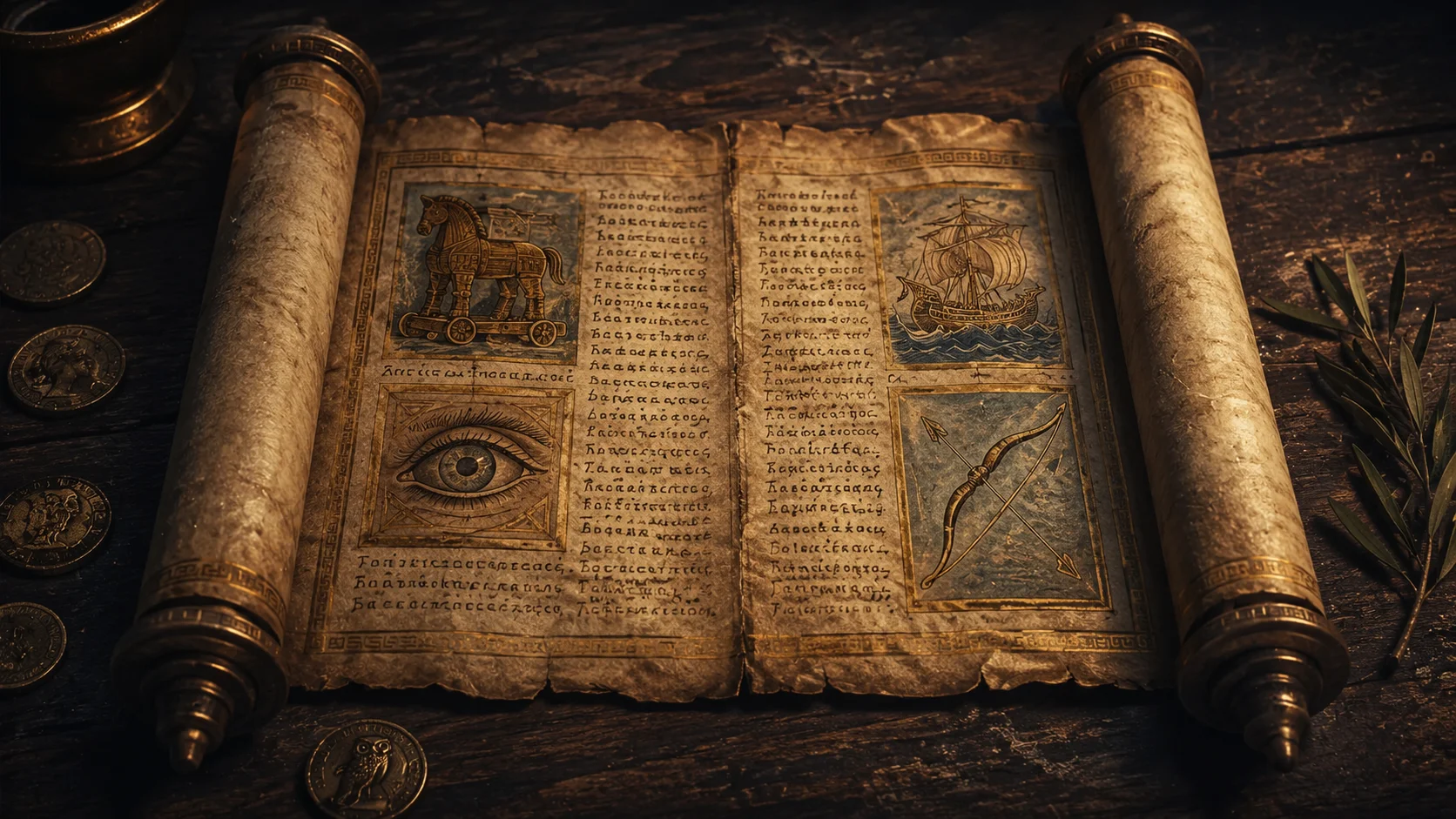
After leaving Troy, Odysseus's ten years of wandering pass through twelve named places. Their real-world locations have been debated for 2,500 years. Some are identifiable, most are not.
- Troy (Ilion). The Trojan War. Modern Hisarlik, Turkey. Confirmed by excavation.
- The Cicones at Ismaros. Coastal Thrace. Plausible. Modern northern Greek coast.
- The Lotus-Eaters. North African coast, possibly Libya or the Gulf of Sirte. Disputed.
- The Cyclops's land. Traditionally identified with Sicily, near Mount Etna. Disputed.
- Aeolus's floating island. Often placed in the Aeolian Islands north of Sicily. Speculative.
- The Laestrygonians. Various northern coast guesses. Some place it in Sardinia.
- Aeaea, Circe's island. Traditionally Cape Circeo in central Italy. Speculative.
- The Underworld. Mythological. Sometimes located near Lake Avernus in Italy.
- The Sirens. Traditionally placed off the Amalfi coast or near Capri.
- Scylla and Charybdis. The Strait of Messina between Sicily and Italy. Traditional.
- Thrinacia, the island of Helios's cattle. Often identified with Sicily.
- Ogygia, Calypso's island. Far west. Some scholars suggest Gozo, Malta. Others put it in the Atlantic.
Then Scheria (Phaeacia), often associated with Corfu, before the final return to Ithaca.
The pattern (rough westward arc through the central Mediterranean, then return east to the Ionian Sea) has fed centuries of mapping. The 1st-century geographer Strabo collected the earliest serious attempts. Modern scholars are more sceptical: the poem is poetry, not navigation.
11. The Archaeology Behind the Poem
The Odyssey isn't history, but it isn't pure invention either. Several archaeological discoveries have changed how we read it.
Troy
Heinrich Schliemann's excavations at Hisarlik in northwest Turkey, beginning in 1870, identified the site of Troy. The settlement designated Troy VIIa, destroyed by fire around 1180 BCE, is the most likely "Homeric" Troy. The dating fits the Bronze Age collapse that ended Mycenaean Greek civilisation.
Mycenae
Schliemann also excavated Mycenae in mainland Greece, recovering gold artefacts including the so-called Mask of Agamemnon (which is not actually Agamemnon's and predates the Trojan War by centuries). The site confirmed that the Greek world of the late Bronze Age was wealthy, organised, and capable of mounting a coordinated overseas expedition.
Linear B
The decipherment of Mycenaean Greek script (Linear B) by Michael Ventris in 1952 showed that the Mycenaean palaces kept detailed administrative records, and that the language used was an early form of Greek. Linear B tablets confirm the existence of professional bards (aoidoi) in the late Bronze Age.
Ithaca
The identification of Homer's Ithaca with the modern Ionian island of the same name has been challenged. Robert Bittlestone's 2005 book Odysseus Unbound proposed that Homeric Ithaca corresponds to the western peninsula of modern Cephalonia, which was likely a separate island in the Bronze Age. The case is unresolved but worth knowing about.
The Sea Peoples
The 12th-century BCE collapse of Mycenaean civilisation has been linked to migrations of "Sea Peoples" recorded in Egyptian inscriptions. Some scholars see the Odyssey's chaos of post-war wandering, raiding, and broken kingdoms as a poetic memory of this period.
The poem is the surviving voice of a world that was destroyed before it was written down.
12. The Odyssey vs the Iliad
The two Homeric epics are often read as a pair. They are very different.
| Iliad | Odyssey | |
|---|---|---|
| Setting | The Trojan War, c. 1184 BCE | After the war, the return journey |
| Time covered | About 50 days | About 10 years (told over 40 days) |
| Tone | Tragic, martial, fatalistic | Adventurous, domestic, ironic |
| Main character | Achilles | Odysseus |
| Central virtue | Courage in battle (arete, bie) | Cunning and endurance (metis, tlemosyne) |
| Setting type | Battlefield | Sea, island, palace, household |
| Female roles | Marginal | Central (Penelope, Athena, Circe, Calypso, Helen) |
| Ending | A funeral | A truce |
| Number of books | 24 | 24 |
| Approximate line count | 15,693 | 12,109 |
| Probable date | c. 750 BCE | c. 700 BCE |
Most scholars believe the Iliad was composed earlier, with the Odyssey following a generation or so later. Both were probably the work of the same broad oral-poetic tradition, though whether by one poet or many remains the central Homeric Question.
The two poems argue with each other. The Iliad insists on the supremacy of glory in death. The Odyssey replies that staying alive matters more.
13. Cultural Legacy and Adaptations
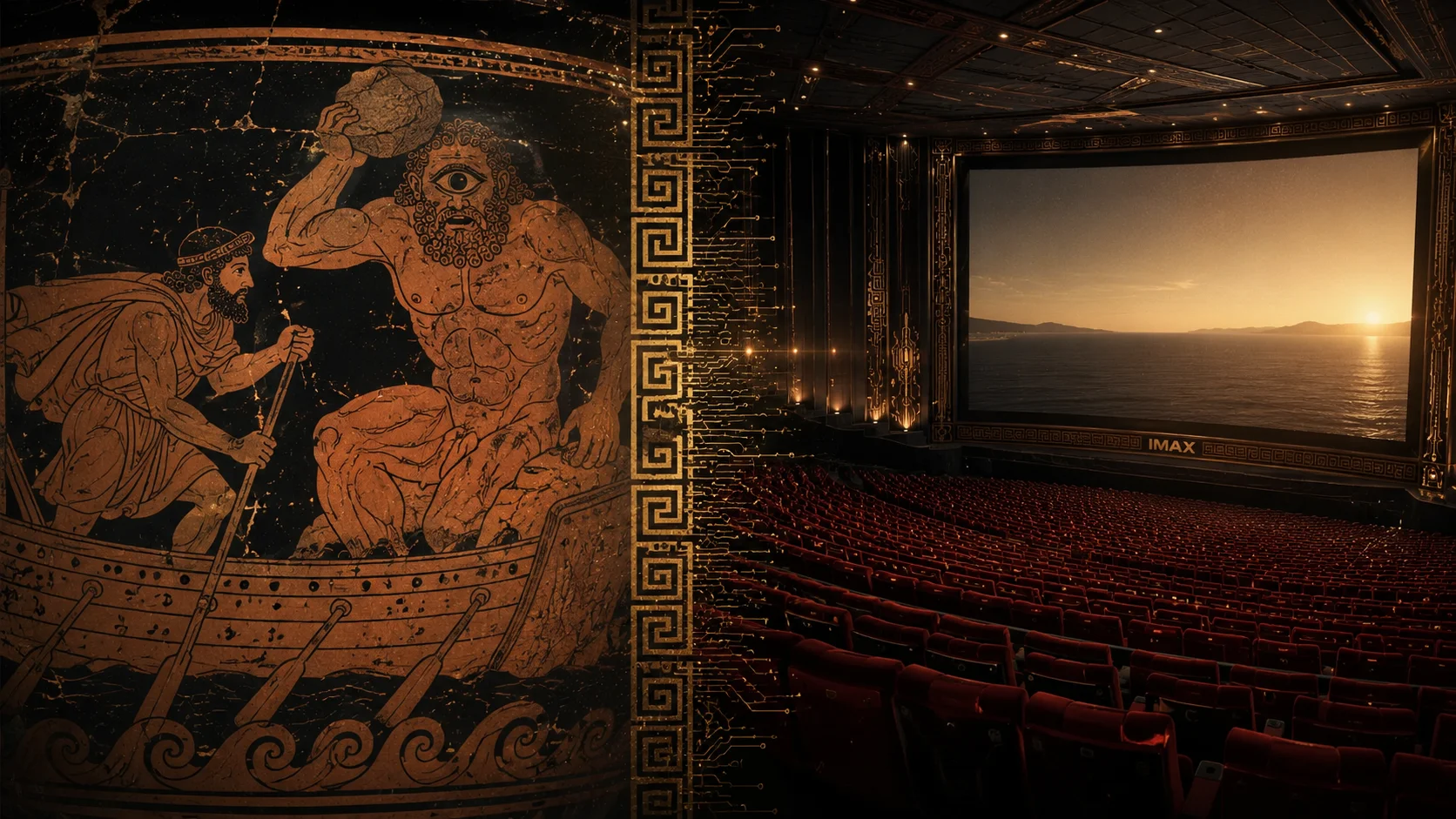
The Odyssey has been continuously read for nearly three thousand years. Highlights of its influence:
Antiquity
- Virgil's Aeneid (c. 19 BCE). Roman epic modelled on both Homeric poems. The first six books mirror the Odyssey's wanderings.
- Ovid's Metamorphoses (8 CE). Retells episodes including Circe and Polyphemus.
- Apollonius of Rhodes, Argonautica (3rd century BCE). The Argonauts' voyage is built on Odyssey scaffolding.
Medieval and Renaissance
- Dante's Inferno (c. 1320). Places Ulysses in the eighth circle of Hell for the wooden horse trick, but gives him one of the most stirring speeches in the poem (Canto 26). The speech invents the idea that Odysseus, restless after his return, sailed past the pillars of Hercules into the open Atlantic and was destroyed.
- Chapman's translation (1614-15). The first complete English Odyssey. Praised by Keats in the sonnet "On First Looking into Chapman's Homer."
19th and 20th centuries
- Tennyson's "Ulysses" (1842). The aged hero refuses to retire. "To strive, to seek, to find, and not to yield."
- James Joyce's Ulysses (1922). One day in Dublin (16 June 1904) mapped onto the Odyssey's 24 books. Often called the most influential novel of the 20th century.
- Nikos Kazantzakis's Odyssey: A Modern Sequel (1938). 33,333 lines in modern Greek, continuing the story past Book 24.
- Derek Walcott's Omeros (1990). Caribbean epic in terza rima drawing on Homer.
- Margaret Atwood's The Penelopiad (2005). Penelope and the twelve hanged maids tell their side.
Film and television
- Coen Brothers' O Brother, Where Art Thou? (2000). Depression-era Mississippi retelling. Soundtrack went on to sell eight million copies.
- Wolfgang Petersen's Troy (2004). Adapts the Iliad with Odysseus (Sean Bean) as a major character.
- Andrey Konchalovsky's The Odyssey (1997). NBC miniseries with Armand Assante.
- Christopher Nolan's The Odyssey (2026). Live-action, scheduled for July 17, 2026. The first major Hollywood Odyssey adaptation in a generation.
21st-century novels
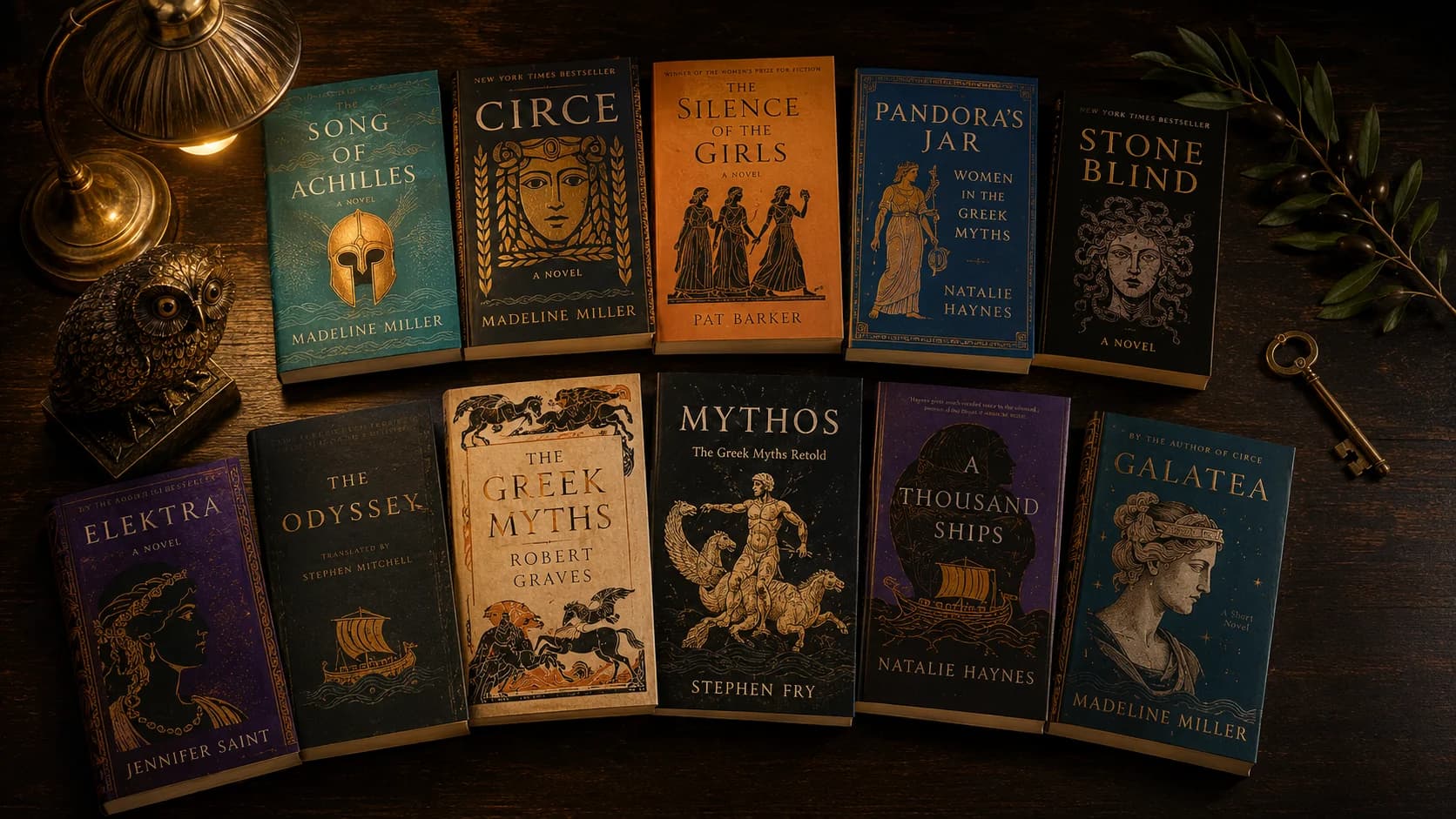
- Madeline Miller, Circe (2018). The Aeaea episode from the witch's perspective.
- Pat Barker, The Silence of the Girls (2018) and The Women of Troy (2021). The Trojan War from the enslaved women's view.
- Daniel Mendelsohn, An Odyssey: A Father, a Son, and an Epic (2017). Memoir of teaching the Odyssey to a class that includes his own father.
The poem keeps getting rewritten because it keeps asking the questions every generation needs answered: how do you get home, who counts as family, what do you owe the people you love, what does it mean to come back changed.
14. Translations: Where to Start
A good translation matters more for Homer than for almost any other ancient author. The poem's rhythm, voice, and pace shift radically between translators.
| Translator | Year | Style notes |
|---|---|---|
| George Chapman | 1614-15 | Elizabethan iambic pentameter. Historically vital but archaic now. |
| Alexander Pope | 1725 | Heroic couplets. Elegant, formal, very much an 18th-century poem. |
| Samuel Butler | 1900 | Prose. Plain and unfussy. Free online via Project Gutenberg. |
| T. E. Lawrence | 1932 | Prose by the author of Seven Pillars of Wisdom. Idiosyncratic. |
| E. V. Rieu | 1946 | Penguin Classics prose. Sold over three million copies. |
| Richmond Lattimore | 1965 | Verse, line-for-line. Slow, dignified, faithful to Homer's structure. The scholar's choice. |
| Robert Fitzgerald | 1961 | Verse. Lyrical, readable. The standard American classroom edition for decades. |
| Robert Fagles | 1996 | Verse. Dynamic, dramatic, paced for modern readers. The standard 21st-century choice. |
| Stanley Lombardo | 2000 | Verse. Stripped-down, contemporary, very direct. |
| Emily Wilson | 2017 | Verse, iambic pentameter, exactly the same line count as the Greek. The first English Odyssey by a woman. Notable for clear language and a refusal to romanticise slavery. |
| Daniel Mendelsohn | 2025 | Verse. The most recent major version. Praised for capturing Homer's tonal range. |
If you've never read it before, start with Fagles or Wilson. Both are designed for first-time readers.
15. Translation Comparison: One Passage, Four Voices
The same passage in four translations. Book 1, lines 1 to 10 (the proem, the poem's opening invocation).
George Chapman (1614)
The man, O Muse, inform, that many a way Wound with his wisdom to his wished stay; That wandered wondrous far, when he the town Of sacred Troy had sack'd and shiver'd down
Robert Fitzgerald (1961)
Sing in me, Muse, and through me tell the story of that man skilled in all ways of contending, the wanderer, harried for years on end, after he plundered the stronghold on the proud height of Troy.
Robert Fagles (1996)
Sing to me of the man, Muse, the man of twists and turns driven time and again off course, once he had plundered the hallowed heights of Troy. Many cities of men he saw and learned their minds, many pains he suffered, heartsick on the open sea.
Emily Wilson (2017)
Tell me about a complicated man. Muse, tell me how he wandered and was lost when he had wrecked the holy town of Troy, and where he went, and who he met, the pain he suffered in the storms at sea, and how he worked to save his life and bring his men back home.
Same Greek. Four very different poems. Wilson's compression of the famous first epithet polytropos ("many-turning") into "complicated man" caused argument when published. It's defensible. The Greek word is genuinely ambiguous between "much-travelled," "much-experienced," and "shifty."
The choice of translation shapes what poem you actually read.
16. Reading Order
The Odyssey works as a standalone. You don't need to read the Iliad first. The Trojan War backstory you need is given inside the poem.
If you want the full Homeric arc:
- Iliad first (the war)
- Odyssey second (the return)
- Optional: Virgil's Aeneid (Aeneas's parallel journey, Roman view)
- Optional: The Epic Cycle fragments (lost poems that filled the gaps the surviving epics leave)
For modern companion reading, the natural pairings are Madeline Miller's Circe, Margaret Atwood's Penelopiad, and Daniel Mendelsohn's An Odyssey: A Father, a Son, and an Epic.
17. Five Essential Questions on Homer's Text
These are the five questions whose answers, together, capture what the Odyssey is doing and why it has survived for nearly three thousand years.
Question 1: What is the Odyssey's central argument about identity, and how does the homecoming structure deliver it?
Central theme. The Odyssey argues that identity is recognised, not declared. A person becomes themselves through how others perceive and acknowledge them. Odysseus spends most of the poem in disguise. His real self only re-emerges through a sequence of recognition scenes, each using a different proof.
Key supporting ideas. The poem treats selfhood as fundamentally relational. Odysseus is not Odysseus because of an internal essence. He is Odysseus because Argos remembers his smell, because Eurycleia knows his scar, because Telemachus claims him as father, because Penelope tests him with the secret of the bed, and because his old father Laertes accepts him on the farm. None of these recognitions is automatic. Each requires evidence.
Important facts and evidence. The poem stages five major recognition scenes in Books 17 through 24. Argos the dog (Book 17, by smell, after twenty years). Eurycleia the nurse (Book 19, by the boar-hunt scar). Telemachus (Book 16, by Athena's restoration of Odysseus's true form). Penelope (Book 23, by the secret of the marriage bed built around a living olive tree). Laertes (Book 24, by both the scar and the catalogue of trees Laertes once gave the young Odysseus). Each scene uses a different kind of proof, ranging from physical (smell, scar) to verbal (the bed, the trees) to divine (Athena's restoration).
Author's purpose. Homer is making an argument against the heroic-essence view of identity dominant in the Iliad, where a hero is defined by his lineage, his armour, and his deeds in battle. The Odyssey replaces this with a relational view. Who you are is what your people know about you. This is a profound shift in how literature can think about the self.
Significant implications. Every modern narrative of return, exile, amnesia, or identity loss descends from this structure. The recognition scene became a permanent inheritance of Western fiction. Aristotle in the Poetics identified anagnorisis (recognition) as one of the two great mechanisms of tragic plot. The Odyssey is its source. The poem also anticipates modern social-constructionist accounts of identity by roughly twenty-eight centuries.
Question 2: What does the poem say about the moral economy of hospitality (xenia), and why does it structure the entire plot?
Central theme. The Odyssey treats xenia (guest-friendship) as the foundational moral obligation of civilised life. Every household in the poem is a moral test. The treatment of strangers is the measure of a person, a community, and a civilisation.
Key supporting ideas. Xenia is a reciprocal contract. The host provides shelter, food, gifts, and asks no questions about identity until after the guest has been received. The guest accepts what is offered, behaves with restraint, and (if able) returns the favour at some future time. The contract is enforced by Zeus himself, in his capacity as Zeus Xenios, protector of strangers. To violate xenia is to invite divine punishment. The poem stages a full spectrum of hosts, from perfect to abominable.
Important facts and evidence. The poem's good hosts include Nestor (Book 3, formal Mycenaean courtesy), Menelaus and Helen (Book 4, royal extravagance), Alcinous (Books 7 and 8, Phaeacian generosity), and Eumaeus the swineherd (Book 14, perfect hospitality despite poverty). The bad hosts include the Cicones (raid), the Cyclops Polyphemus (eats his guests), the Laestrygonians (kill and eat the messengers), and ultimately the suitors at Odysseus's own palace, who invert the relationship by becoming permanent uninvited guests who consume their host's wealth. Polyphemus dies blinded. The suitors die slaughtered. The Cyclops's punishment activates the whole 10-year Wanderings.
Author's purpose. Homer is doing two things at once. He is recording the actual moral code of his audience (the xenia network was how aristocratic Greeks travelled safely across the Mediterranean in a world without states). He is also dramatising it, turning a code into a story that teaches the code. The poem is, among other things, a manual for how to be a host and a guest.
Significant implications. The xenia code is the ancestor of the medieval European tradition of sanctuary, the Islamic obligation of diyafa, the legal concept of asylum, and the modern norm that hotels and embassies cannot be raided. The plot of the Odyssey is the plot of xenia enforcement: a god (Poseidon) punishes a host-violator (Odysseus, who provoked Polyphemus, who is himself a host-violator), and the chain runs through 10 years of consequences until the final household is restored.
Question 3: How does the Odyssey theorise intelligence (metis) as a heroic virtue equal to courage, and what does this say about Bronze Age values?
Central theme. The Odyssey makes the case that cunning intelligence (metis) is a heroic virtue equal to and sometimes superior to physical courage (bie). Odysseus is the prototype of the intelligent hero, and his survival is the proof of metis as a viable form of greatness.
Key supporting ideas. Where the Iliad's heroes win through strength in battle, the Odyssey's hero wins through trickery, planning, and verbal craft. The wooden horse at Troy was his idea. The "Nobody" trick blinds the Cyclops without provoking the other Cyclopes to retaliate. The bag-of-winds debacle shows what happens when his men distrust his judgement. The disguised return lets him assess his household before striking. Every survival moment in the poem is a moment of metis.
Important facts and evidence. The standard Homeric epithet for Odysseus is polymetis (much-cunning), used 81 times in the two epics combined. The encounter with Polyphemus is the textbook case: Odysseus could not have killed the Cyclops by force (the cave was sealed by a boulder only the Cyclops could move) and he could not have escaped by running (no chance against a giant). Only cunning works. The episode in the Underworld where Achilles tells Odysseus that he, the great warrior, would rather be a living slave than king of the dead, is the poem's clearest argument for the metis-over-bie hierarchy: Achilles regrets his choice, Odysseus is making the right one.
Author's purpose. Homer is pluralising what counts as heroism. The Iliad had made one kind of greatness possible: die well in battle, be remembered. The Odyssey opens a second route: live by your wits, come home, restore your household, be remembered for that. This is not a rejection of the Iliad. The two poems are in conversation. But the Odyssey insists that the trickster has a place in the pantheon of heroes alongside the warrior.
Significant implications. The trickster archetype across world literature traces back to (or finds an early major instance in) Odysseus. Coyote, Anansi, Loki, Hermes, Brer Rabbit, Bugs Bunny: all of these belong to a tradition the Odyssey codified for the West. The poem also valorises a kind of intelligence that the modern world recognises in inventors, diplomats, and survivors. Metis is the ancestor of acumen, of savvy, of street smarts. It is the intelligence of getting through.
Question 4: Why does the poem give such weight to Penelope, and what argument is being made about the role of women in heroic society?
Central theme. Penelope is the moral and intellectual equal of Odysseus, and the poem makes this case repeatedly. Her cunning is parallel to his. Her endurance is greater. The Odyssey is the first major Western work in which a woman's mind is the structural counterweight to the hero's.
Key supporting ideas. Penelope's strategies for holding off the suitors are as inventive as Odysseus's strategies for getting home. She announces she will choose a husband when she finishes weaving a burial shroud for Laertes. She weaves by day and unravels by night. For three years she runs the trick. When discovered, she invents the contest of the bow, designing a competition only Odysseus can win. She tests Odysseus himself in the recognition scene by ordering the marriage bed moved, knowing he will react. She, not he, controls the final recognition.
Important facts and evidence. The bed test in Book 23 reverses the normal recognition pattern. In every other scene, Odysseus controls the revelation. With Eurycleia he silences her with a threat. With Telemachus he stages the reveal himself. With Argos he doesn't even acknowledge the dog. With Penelope, she sets the trap. She orders the bed moved to the corridor. Odysseus erupts, betraying his identity by his knowledge that the bed cannot be moved (he built it around a living olive tree). Only then does she accept him. The scene gives Penelope the position normally held by Athena: the divine intelligence testing the mortal. The poem also gives Penelope the long catalogue of Odysseus's possessions in Book 19, a structural mirror to the warrior catalogues of the Iliad.
Author's purpose. Homer is complicating the warrior epic with a domestic counterweight. The Iliad gives almost no narrative weight to women (Briseis, Andromache, and Helen all matter but none of them control plot). The Odyssey makes a woman's choices structurally decisive. Whether this is feminist by modern standards is the wrong question. The point is that the poem treats Penelope's mind as a primary force in the story.
Significant implications. Feminist re-readings of the Odyssey from Atwood (The Penelopiad, 2005) to Miller (Circe, 2018) to Wilson (translation, 2017) are not anachronistic impositions. The text itself invites them. The poem is the source of every "she also has a story" rewrite that has dominated literary fiction in the 21st century. Penelope's voice was waiting to be amplified, not invented.
Question 5: What does the ending (Athena halting the cycle of revenge) say about the poem's view of justice, and how does it differ from the Iliad?
Central theme. The poem argues that justice has a stopping point. The cycle of revenge must end somewhere, even at the cost of moral satisfaction. The Odyssey ends not with the suitors' families getting their answer, but with Athena imposing forgetting.
Key supporting ideas. After the slaughter, the suitors' families gather to demand blood. They have a legitimate claim. Odysseus killed their sons, including some who were not the worst offenders. The poem acknowledges this. The kinsmen arm themselves. Odysseus arms his small household. A second slaughter is about to begin. Athena descends from Olympus, throws her thunderbolt at the feet of the attackers, and orders them to stop. They obey. She makes them swear oaths of peace and forget. The poem ends on this truce.
Important facts and evidence. Book 24 is sometimes treated by scholars as a later addition because the ending is so abrupt and the divine intervention so unusual. The Alexandrian critics Aristarchus and Aristophanes of Byzantium argued the poem properly ended at Book 23, line 296 (the reunion of Odysseus and Penelope). Most modern scholars accept Book 24 as Homeric. Either way, the choice of ending is striking. The Iliad ends with the funeral of Hector, a moment of grief and continuation. The Odyssey ends with peace by divine fiat, a moment of imposed closure that has unsettled readers for 2,500 years.
Author's purpose. Homer is refusing the cathartic ending the Iliad gives. He is also refusing the simple revenge-narrative ending that the plot has been building toward. He stages the threat of further violence, acknowledges its legitimacy, and then has a god shut it down. This is a deliberate argument against the indefinite continuation of vendetta. The poem is saying that even when revenge is justified, the cycle must be broken, and breaking it requires an external authority because the parties involved cannot do it themselves.
Significant implications. The Odyssey is the first major Western text to dramatise post-conflict reconciliation. It anticipates the truth-and-reconciliation tradition, the principle of statutes of limitations, the idea of legal amnesty, and the concept of judicial closure. It also dramatises the inadequacy of all of these: Athena doesn't resolve the dispute, she imposes silence on it. The poem ends but the moral question hangs.
This is why the Odyssey survives. It doesn't tie up. It leaves the reader with the same questions the reader brought.
18. Pronunciation Guide
For English speakers. Approximate, not strict scholarly.
| Name | Pronunciation |
|---|---|
| Odysseus | oh-DISS-yoos |
| Ulysses | yoo-LISS-eez |
| Penelope | puh-NELL-uh-pee (not PEN-uh-loap) |
| Telemachus | tuh-LEM-uh-kuss |
| Polyphemus | pol-ee-FEE-muss |
| Calypso | kuh-LIP-soh |
| Circe | SIR-see (or KEER-kay in classical Greek) |
| Eumaeus | yoo-MEE-uss |
| Eurycleia | yoo-rih-KLEE-uh |
| Laertes | lay-UR-teez |
| Nausicaa | naw-SIK-uh-uh (or naw-SIK-ay-uh) |
| Alcinous | al-SIN-oh-uss |
| Tiresias | tye-REE-see-uss |
| Anticleia | an-tih-KLEE-uh |
| Mentor | MEN-tor |
| Scylla | SILL-uh |
| Charybdis | kuh-RIB-diss |
| Aeolus | EE-oh-luss |
| Helios | HEE-lee-oss |
| Hermes | HUR-meez |
| Athena | uh-THEE-nuh |
| Poseidon | poh-SY-dun |
| Argos | AR-goss |
19. Common Variants and Misspellings
For disambiguation.
- The Odyssey (correct). Also seen as: Odyssey, The Oddyssey (incorrect), The Odysey (incorrect), Homer's Odyssey (common).
- Odysseus (correct). Also seen as: Ulysses (Latin), Odyseus (incorrect), Odysus (incorrect).
- Ulysses (Latin form). Also seen as: Ullysses (incorrect, but a common search query).
- Penelope (correct). Also seen as: Penelopy (incorrect), Penelopee (rare).
- Telemachus (correct). Also seen as: Telemachos (Greek), Telemecus (incorrect).
- Polyphemus (correct). Also seen as: Polyphemos (Greek), Polifemus (incorrect).
- Homer (correct). The Greek is Homeros. Sometimes seen as Omeros (the title of Derek Walcott's adaptation).
20. Timeline of the Odyssey's Life
| Date | Event |
|---|---|
| c. 1184 BCE | Traditional date of the fall of Troy |
| c. 1180 BCE | Archaeological destruction of Troy VIIa |
| c. 1100 BCE | Collapse of Mycenaean civilisation |
| 12th to 8th c. BCE | Greek Dark Age. Oral tradition transmits proto-Homeric material. |
| c. 750 BCE | Approximate composition of the Iliad |
| c. 700 BCE | Approximate composition of the Odyssey |
| 6th c. BCE | Peisistratean Recension in Athens. The poems are standardised. |
| 3rd c. BCE | Alexandrian scholars (Zenodotus, Aristophanes of Byzantium, Aristarchus) produce critical editions |
| 1488 CE | First printed Greek edition, Florence, by Demetrius Chalcondyles |
| 1614-15 | Chapman's first complete English translation |
| 1725 | Pope's heroic-couplet translation |
| 1870 | Schliemann begins excavating Troy |
| 1900 | Butler's prose translation |
| 1922 | Joyce's Ulysses published |
| 1952 | Linear B deciphered |
| 1961 | Fitzgerald translation |
| 1965 | Lattimore translation |
| 1996 | Fagles translation |
| 2017 | Wilson translation, first English Odyssey by a woman |
| 2026 | Nolan film adaptation |
21. Frequently Asked Questions
Is the Odyssey a true story?
No. The poem is mythological. There may be a kernel of historical memory behind the Trojan War. The city of Troy is real, excavated at Hisarlik in modern Turkey, and was destroyed by fire around 1180 BCE. But Odysseus, the gods, and the monsters are fictional.
How long does the Odyssey take to read?
About 12 to 16 hours in a good prose translation. Around 20 hours in verse. Audiobook versions run 12 to 14 hours.
How long was Odysseus away from home?
20 years total. 10 years fighting at Troy, 10 years trying to get home.
Why is Odysseus called Ulysses?
Ulysses is the Latin form of the Greek Odysseus. The Romans adopted his story and Latinised the name. English-language tradition (Chaucer, Shakespeare, Tennyson, Joyce) inherited the Latin form, which is why many English works call him Ulysses while modern translations of Homer call him Odysseus.
Who wrote the Odyssey?
It is traditionally attributed to Homer, an ancient Greek poet about whom almost nothing is known with certainty. Modern scholarship treats the poem as the product of a long oral tradition shaped into final form by one or more poets working in the late 8th or early 7th century BCE.
When was the Odyssey written?
Most scholars date the composition to around 725 to 675 BCE, with 700 BCE as the rough consensus. The events it describes (the aftermath of the Trojan War) are set roughly 500 years earlier.
What language was the Odyssey originally written in?
Homeric Greek, an artificial literary dialect built mainly on Ionic Greek with Aeolic admixtures. It was already old-fashioned by the time the poems were written down and was never anyone's spoken tongue.
How many books does the Odyssey have?
24, each numbered with a letter of the Greek alphabet. The division was probably introduced by Alexandrian scholars in the 3rd century BCE for ease of reference.
How long is the Odyssey?
12,109 lines of dactylic hexameter. About 87,000 words in Greek. Modern English translations run 350 to 550 pages depending on edition and format.
Who are the Sirens?
In the Odyssey, the Sirens are creatures whose song lures sailors onto the rocks. Homer doesn't say how many there are or what they look like. Later Greek art and literature fixed the number at two or three and gave them bird bodies with women's heads. Odysseus listens to them tied to the mast of his ship while his crew row past with their ears stopped with beeswax.
How many suitors does Odysseus kill?
- The number is exact. The Odyssey lists them in Book 16: 52 from Dulichium, 24 from Same, 20 from Zacynthus, 12 from Ithaca itself.
Who is Penelope?
The wife of Odysseus and the queen of Ithaca. She holds off 108 suitors for the 20 years of her husband's absence, partly through the famous weaving trick (weaving a shroud by day, unravelling it by night). She is the moral and intellectual centre of the second half of the poem.
What is the moral of the Odyssey?
The poem doesn't preach a single moral. Its values are pre-Christian and pre-Stoic: cleverness is good, hospitality is sacred, loyalty is rewarded, hubris is punished, home is worth any cost. The final word is given to Athena, who imposes peace and orders the cycle of revenge to end.
Did Homer write anything else?
The ancients credited Homer with the Iliad, the Odyssey, the Homeric Hymns (33 shorter poems to various gods), and a comic mock-epic called the Batrachomyomachia (The Battle of the Frogs and Mice). Most modern scholars accept the two epics as Homeric, treat the Hymns as a tradition rather than a single author, and reject the comic poems as much later.
What is the wooden horse?
A military deception from the Trojan War, not narrated in the Iliad but referenced in the Odyssey. The Greeks built a giant hollow wooden horse, hid soldiers inside, and left it outside Troy as an apparent peace offering. The Trojans dragged it into the city. At night the soldiers emerged, opened the gates, and destroyed Troy. The trick was Odysseus's idea.
What is the Underworld in the Odyssey?
The realm of the dead, ruled by Hades. In Book 11 Odysseus visits its edge (he doesn't fully enter) to consult the prophet Tiresias. He summons the souls with a blood sacrifice and questions them. He meets his mother (whose death he didn't know about), Tiresias, Agamemnon, Achilles, and various other heroes and sinners.
What is the bag of winds?
A gift from Aeolus, keeper of the winds, in Book 10. Aeolus seals all the storm winds in a leather bag and gives it to Odysseus, leaving only the west wind blowing to carry him home. Within sight of Ithaca, his men open the bag thinking it contains treasure, releasing the storms. They are blown back to Aeolus's island. Aeolus refuses to help a second time.
Who is Calypso?
A nymph or minor goddess who lives on the island of Ogygia. She finds the shipwrecked Odysseus and keeps him as her companion for seven years, offering him immortality if he stays. He refuses. Zeus eventually orders her to release him.
Who is Circe?
An enchantress and minor goddess on the island of Aeaea. She turns Odysseus's scouting party into pigs. Odysseus, protected by the herb moly given by Hermes, forces her to restore his men. He and his crew stay with her for a year, during which she becomes his ally and lover. She gives him crucial advice for the journey home.
What is the Cyclops episode?
In Book 9, Odysseus and twelve men enter the cave of Polyphemus, a one-eyed giant son of Poseidon. Polyphemus eats six of them. Odysseus gets him drunk on wine, tells him his name is "Nobody," blinds him with a sharpened stake, and escapes with his remaining men by hiding under the bellies of Polyphemus's sheep. As they sail away, Odysseus shouts his real name, which lets Polyphemus pray to his father Poseidon for revenge.
Did Penelope sleep with the suitors?
No. The poem is unambiguous that she remained faithful. She kept them at bay for 20 years through the weaving trick (announcing she would choose a husband when she finished a burial shroud for Laertes, then unravelling her work each night) and through delay tactics. The fidelity is the entire point of her character.
Why is the dog Argos famous?
In Book 17, Odysseus enters his palace disguised as a beggar. His old hunting dog Argos, now 20 years old and dying on a dung heap outside the palace, recognises him by smell. Argos wags his tail, his master cannot openly acknowledge him (he would blow his cover), and the dog dies. It is the most quoted scene in Homer and one of the most affecting moments in Western literature.
What is the contest of the bow?
In Book 21, Penelope sets a final test for the suitors. Whoever can string the great bow of Odysseus and shoot an arrow through the eyelets of twelve axe-heads lined up in a row will win her hand. Every suitor fails. The disguised beggar (Odysseus) asks for a turn. He strings it without effort, shoots through all twelve axes, and then turns the bow on the suitors.
What is the bed test?
In Book 23, after the slaughter, Penelope refuses to believe the man before her is really Odysseus. She tests him by ordering the marriage bed moved out of their chamber. Odysseus erupts: the bed cannot be moved because he built it himself around a living olive tree growing through the floor of the room. Only he and she know this. She accepts him.
Is the Odyssey worth reading today?
Yes. The poem is the source code for storytelling in the Western tradition. Every quest narrative, every road movie, every "you can't go home again" novel descends from it. Read once, you start seeing it everywhere.
22. Catalogue References
Where the Odyssey appears in the world's major library, scholarly, and reader-facing catalogues. Use these to verify the work, locate translations, or pull citation metadata.
| Authority | ID | URL |
|---|---|---|
| Wikidata | Q35160 | wikidata.org/wiki/Q35160 |
| Library of Congress | n79006936 | id.loc.gov/authorities/names/n79006936 |
| VIAF (work record) | varies | viaf.org |
| GND (Deutsche Nationalbibliothek) | 4205524-8 | d-nb.info/gnd/4205524-8 |
| Open Library | OL15331323W | openlibrary.org/works/OL15331323W |
| Goodreads | 1381 | goodreads.com/book/show/1381.The_Odyssey |
| Perseus Digital Library URN | urn:cts:greekLit:tlg0012.tlg002 | perseus.tufts.edu/hopper/text?doc=Hom.+Od. |
| LibriVox (free audio) | various | librivox.org |
For Homer the author, see Wikidata Q6691 and Library of Congress n78095639.
Note: identifier URLs above should be verified before re-use. They are correct to the best of my knowledge but external authorities update their schemes occasionally. The Wikidata page Q35160 is the canonical place to find the full and current set of authority identifiers.
23. Sources and Further Reading
Primary text editions
- Allen, T. W., ed. Homeri Opera. Oxford Classical Texts, vols. III-IV. 1917-1919. The standard Greek text.
- van Thiel, Helmut, ed. Homeri Odyssea. Olms, 1991. Modern Greek-text edition.
- West, Martin L., ed. Homerus: Odyssea. De Gruyter, 2017. The most recent major critical edition.
Major commentaries
- Heubeck, A., West, S., Hainsworth, J., Hoekstra, A., Russo, J., Fernandez-Galiano, M. A Commentary on Homer's Odyssey. 3 vols. Oxford, 1988-1992. The standard scholarly commentary.
- Garvie, A. F. Homer: Odyssey, Books VI-VIII. Cambridge, 1994.
- de Jong, Irene J. F. A Narratological Commentary on the Odyssey. Cambridge, 2001.
Scholarship
- Parry, Milman. The Making of Homeric Verse. Oxford, 1971. The foundational oral-formulaic theory.
- Lord, Albert. The Singer of Tales. Harvard, 1960. Extends Parry's work into living oral epic traditions.
- Finley, M. I. The World of Odysseus. Penguin, 1954. Historical context. Still the best short introduction.
- Nagy, Gregory. The Best of the Achaeans. Johns Hopkins, 1979. Hero cult and oral poetics.
- Foley, John Miles. Homer's Traditional Art. Penn State, 1999.
- Beard, Mary. Women & Power: A Manifesto. Profile, 2017. Opens with the Telemachy.
- Wilson, Emily. The Odyssey (translator's introduction). Norton, 2017. A book in itself.
- Mendelsohn, Daniel. An Odyssey: A Father, a Son, and an Epic. Knopf, 2017. Memoir of teaching the poem.
Online resources
- Perseus Digital Library - Greek text and English translations, fully cross-linked
- Project Gutenberg Odyssey editions - free public-domain editions
- Center for Hellenic Studies (Harvard) - open-access Homeric scholarship
- Wikidata entity Q35160 - canonical authority record
- LibriVox free audio - public-domain Odyssey audiobooks
24. Further Reading on This Site
If you found this guide useful, deeper-dive companion pieces by section:
Characters and gods
- Meet Penelope Theron - the cunning of the queen
- Athena's Role in the Odyssey
- Argos the Dog: The Saddest Scene in the Odyssey
- Know Your Gods: Calypso
- Know Your Gods: Circe
- Know Your Gods: Polyphemus
- Know Your Gods: The Sirens
Themes and ideas
- 10 Themes in the Odyssey That Still Matter
- Greek Mythology for Beginners: Where to Start
- Best Greek Mythology Books for Adults (2026)
Adaptations
- Every Film and TV Adaptation of the Odyssey Ranked
- Every Version of The Odyssey Ever Told: 3,000 Years of the Greatest Story
- Books Like Circe by Madeline Miller
Comparative reading
25. About This Guide
This page is maintained by Sotiris Spyrou. It is licensed Creative Commons Attribution 4.0 (CC BY 4.0) for reuse, including as a Wikidata "described at URL" (P973) reference for the entity Odyssey (Q35160).
Corrections welcome at sotirisspyrou@gmail.com.
Key takeaways
- The Odyssey is a Greek epic poem composed c. 725 to 675 BCE, attributed to Homer, telling the 10-year homecoming of the Trojan War hero Odysseus.
- The poem contains 12,109 lines of dactylic hexameter, divided into 24 books, structured in three parts: the Telemachy (Books 1-4), the Wanderings (Books 5-12), and the Return (Books 13-24).
- Odysseus spent 20 years away from his island kingdom of Ithaca - 10 fighting at Troy, 10 trying to get home - while his wife Penelope held off 108 suitors.
- The poem is the source of the English words odyssey, nostalgia (from nostos, homecoming), mentor (from Athena's disguise), and the figurative sense of siren.
- It is the second oldest substantial work of Western literature, after Homer's Iliad, and the foundational nostos (return) narrative of the European tradition.