Calypso and Odysseus: Love, Captivity, and the Long Way Home
Seven years on a paradise island with a goddess who loved him. Why did Odysseus want to leave? The Odyssey's most ambiguous relationship and what it argues about home.
What Homer wrote
The Odyssey opens, not with Odysseus's adventures, but with his absence. He has been missing for ten years past the end of the Trojan War. He has been, for seven of those years, on Calypso's island Ogygia, which nobody on Ithaca knows about.
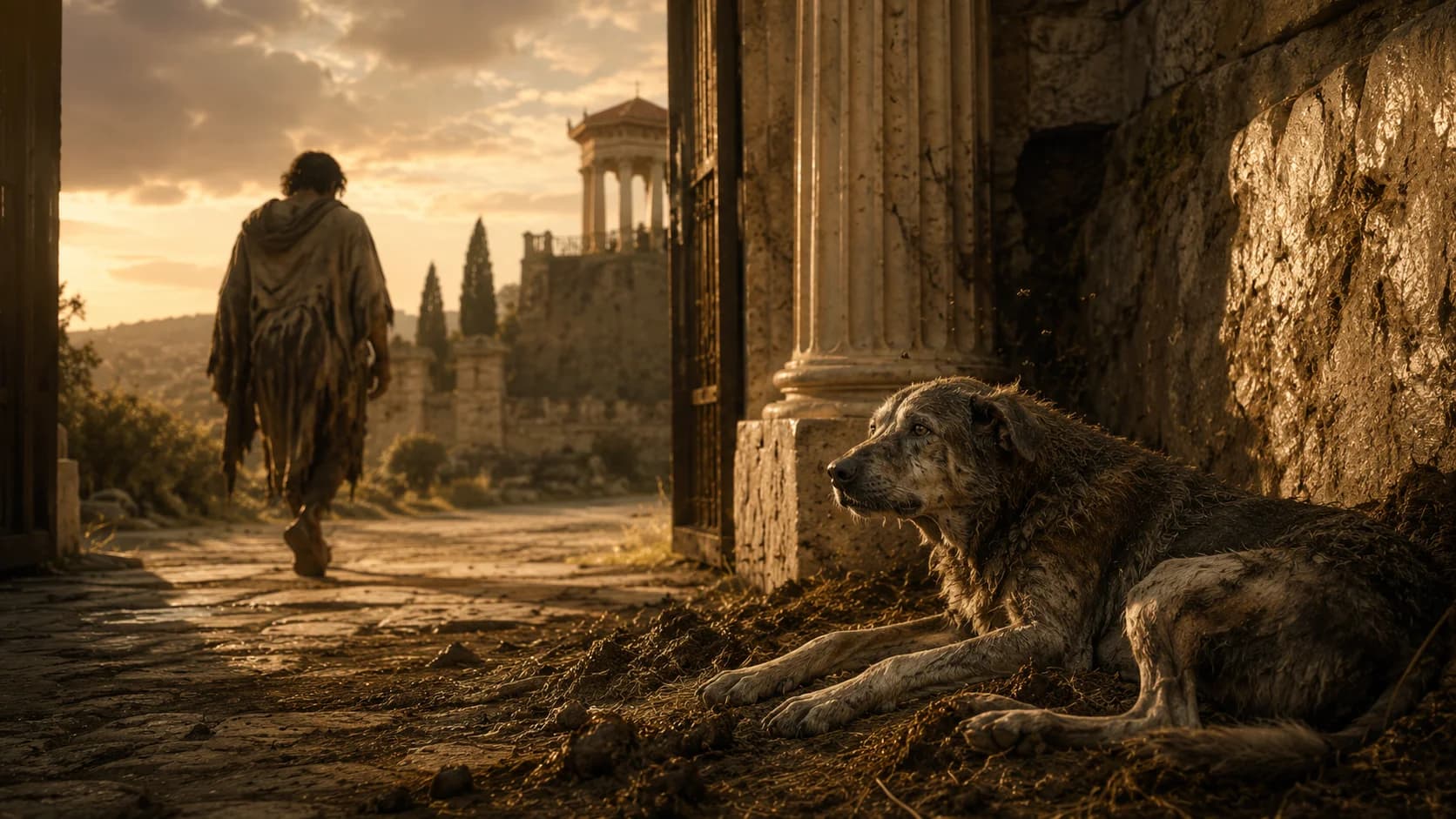
Homer's depiction of his time there is brief but specific. Calypso loves him. The relationship is sexual. The island is genuinely beautiful: caves with running water, gardens of grapevines and parsley, soft meadows, the kind of place a god would furnish for someone she wanted to please.
Calypso has offered him immortality. He has refused. He continues to refuse, every day, while sitting on the shore weeping for Ithaca.
Homer makes the contrast explicit. Odysseus has everything anyone could reasonably want. A divine partner. A perfect environment. The promise of eternal life. He wants to go home to a mortal wife on a rocky island where he is presumed dead.
The contrast is the point of the episode.
The temptation Calypso offers
Calypso's offer is specific. She does not just want Odysseus to stay. She wants him to become like her: immortal, agelessly young, permanently her companion. The offer is what the Greeks would have understood as the ultimate temptation. Mortal humans, in Greek thought, fear death above all things. Immortality is the one thing the gods can give that mortals cannot acquire by their own means.
Odysseus refuses.
This is, structurally, an important moment. He is not refusing because immortality is bad. He is not refusing because Calypso is dangerous. He is refusing because immortality with Calypso on Ogygia is not what he wants.
What he wants is Penelope, on Ithaca, with all the mortality that implies.
The Odyssey's argument here is sharp. Home is not a place you choose by quality of accommodation. Home is the specific people and specific places that constitute the meaning of your life. Calypso's island has every objective feature you could want. It does not have his wife. It does not have his son. It does not have Ithaca. Therefore it is not home, and immortality there is not desirable.
The mechanics of his release
Odysseus does not escape Calypso through his own action. He cannot. She is a goddess. He is a mortal washed up on her shore. The power differential is total.
The release comes from elsewhere. Athena, on Olympus, has been waiting for an opportunity to advocate for him. Poseidon, his usual antagonist, is briefly absent. Athena petitions Zeus. Zeus agrees. Hermes is dispatched to Calypso with the order: release Odysseus.
Calypso receives the order with significant bitterness. She delivers a famous speech complaining that the gods always begrudge goddesses their mortal lovers, while gods routinely take mortal women. The speech is one of the Odyssey's clearest moments of acknowledging that divine politics is gendered and that Calypso has reason to feel ill-used.
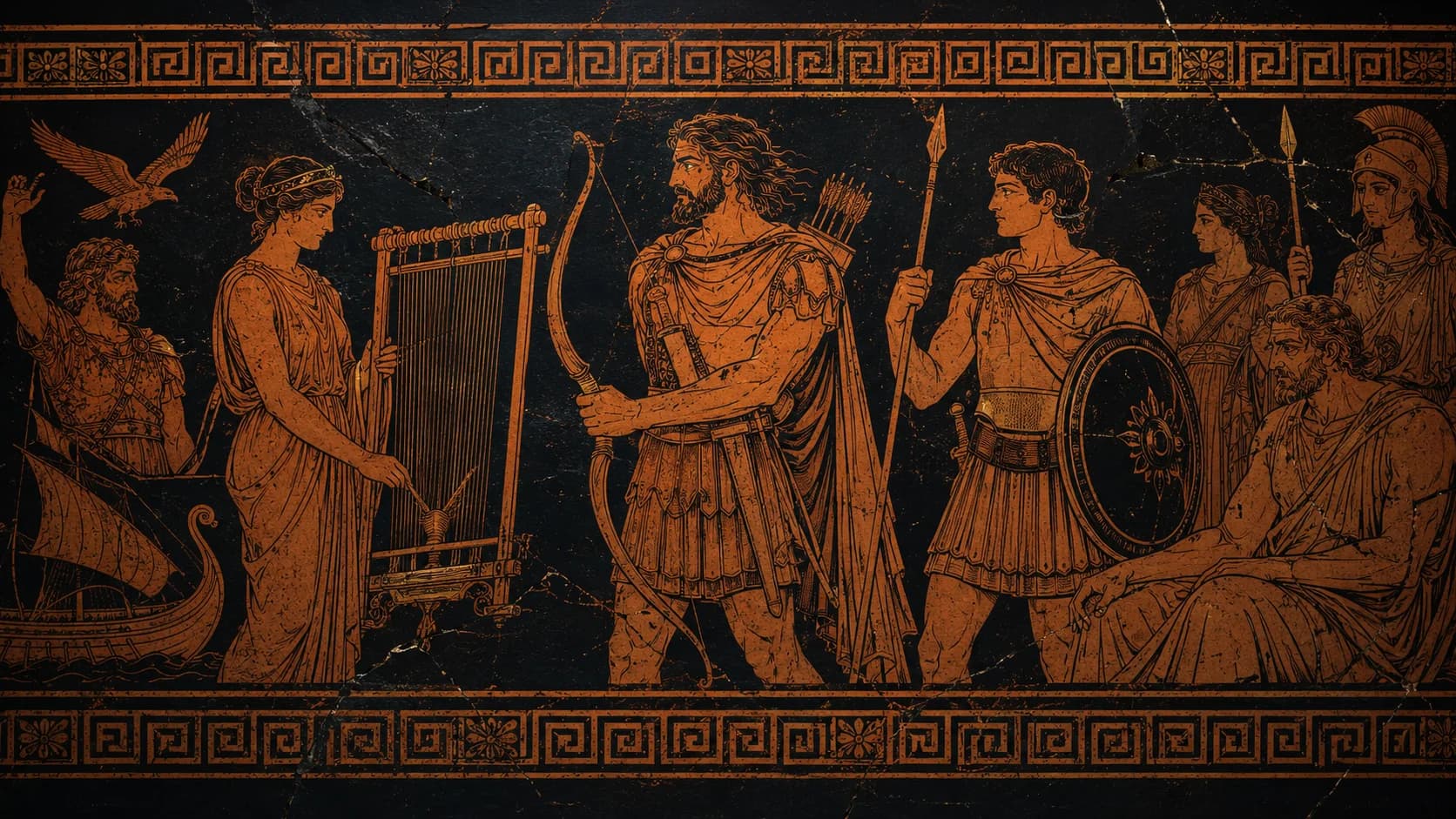
She complies, though. She gives Odysseus the tools and timber to build a raft. She gives him supplies. She tells him the navigational stars he must follow.
She does not give him a ship. She does not accompany him. She watches him leave on the raft she has helped him build. She does not, in Homer's text, weep.
What she represents
Calypso's name in Greek (Καλυψώ, Kalypso) comes from the verb kalyptein, 'to cover' or 'to conceal.' The name is significant. Her island is the place where Odysseus is concealed from his own life. His name is unknown there. His past is irrelevant. His future is replaced with a continuous present that has no internal markers.
Seven years on Ogygia produce no memorable events. Nothing happens. The island is the Odyssey's null space.
This is what comfortable forgetting looks like in Greek epic. It is also what dying looks like, in a way. Death, in Greek thought, is the place where you are no longer yourself in any meaningful sense. Calypso's island is functionally death, with the form of pleasure.
Odysseus's refusal of Calypso is, in some readings, a refusal of death itself. He chooses the mortal life with all its specific endings over the immortal one without endings. He chooses to remain a self that can be lost. He chooses Penelope and Telemachus, who can die and whom he can fail, over Calypso, who can do neither.
This is a difficult moral choice. The Odyssey treats it as the correct one.
The Ulysses Universe version
Our Calypso runs Calypso's Island as a time-distorted liminal space. Ten years pass for the universe. The crew experiences weeks. The temporal mechanism is different from Homer's, but the structural function is the same: the island is the place where you forget that there is a place to return to.
The relationship between Ulysses Theron and Calypso is, like Homer's, complicated and sustained. The trilogy is careful to avoid depicting it as simple infidelity. The moral question the chapters raise is closer to the Homeric original: what do you owe to the person who is genuinely kind to you in a trap?
What gets Ulysses out, in our version, is not Athena's petition (though she is supportive). It is a moment of recognition. He sees Telemachus on the long-range visual, working alone on the Odyssey's hull, ten years older than his father has been with him. The recognition is the trigger. He chooses to leave.
Calypso, like Homer's, watches him go. She does not stop him. She also does not forget him. Her warning to him (you will reach home, you will wish you hadn't) is the trilogy's structural prophecy.
For the full treatment, Calypso's Island: Where Time Stops is the location piece.
Where to go next
For our Calypso location piece, Calypso's Island: Where Time Stops. For the Pantheon-side character profile, Know Your Gods: Calypso. For the deity who arranges the release, Athena's Role in the Odyssey.
For the broader Ulysses Universe approach to relationships in the journey, Meet Penelope: The Queen Who Didn't Wait is the relevant counterpart.
The Ulysses Universe trilogy contains the Calypso episode at the bridge between Books 2 and 3. Buy Book One on Amazon to start at the beginning.
Key takeaways
- Calypso is a nymph (or minor goddess) who holds Odysseus on her island Ogygia for seven years. The relationship is sustained, sexual, and complicated.
- She offers him immortality if he stays. He refuses. He wants to go home to Penelope and Ithaca, even though both are mortal.
- Hermes, sent by Zeus on Athena's petition, orders Calypso to release him. She complies, with significant resentment.
- The episode is the Odyssey's clearest argument that home is not measured by comfort. Calypso's island has everything except the things Odysseus actually wants.