The 12 Olympian Gods Explained
Zeus, Hera, Poseidon, Demeter, Athena, Apollo, Artemis, Ares, Aphrodite, Hephaestus, Hermes, and Dionysus. The Olympian pantheon, what each god rules, and why they still matter.
The standard pantheon
The twelve Olympian gods are the central pantheon of ancient Greek religion. They live on Mount Olympus, the highest mountain in Greece. They rule different domains of human and natural life. They interact with each other and with mortals constantly. Most of the major Greek myths involve at least one Olympian.
This post is the practical reference. Each god, what they rule, what they look like in art, and what they care about. After reading this, you can engage with Greek mythology with the basic vocabulary in place.
The twelve
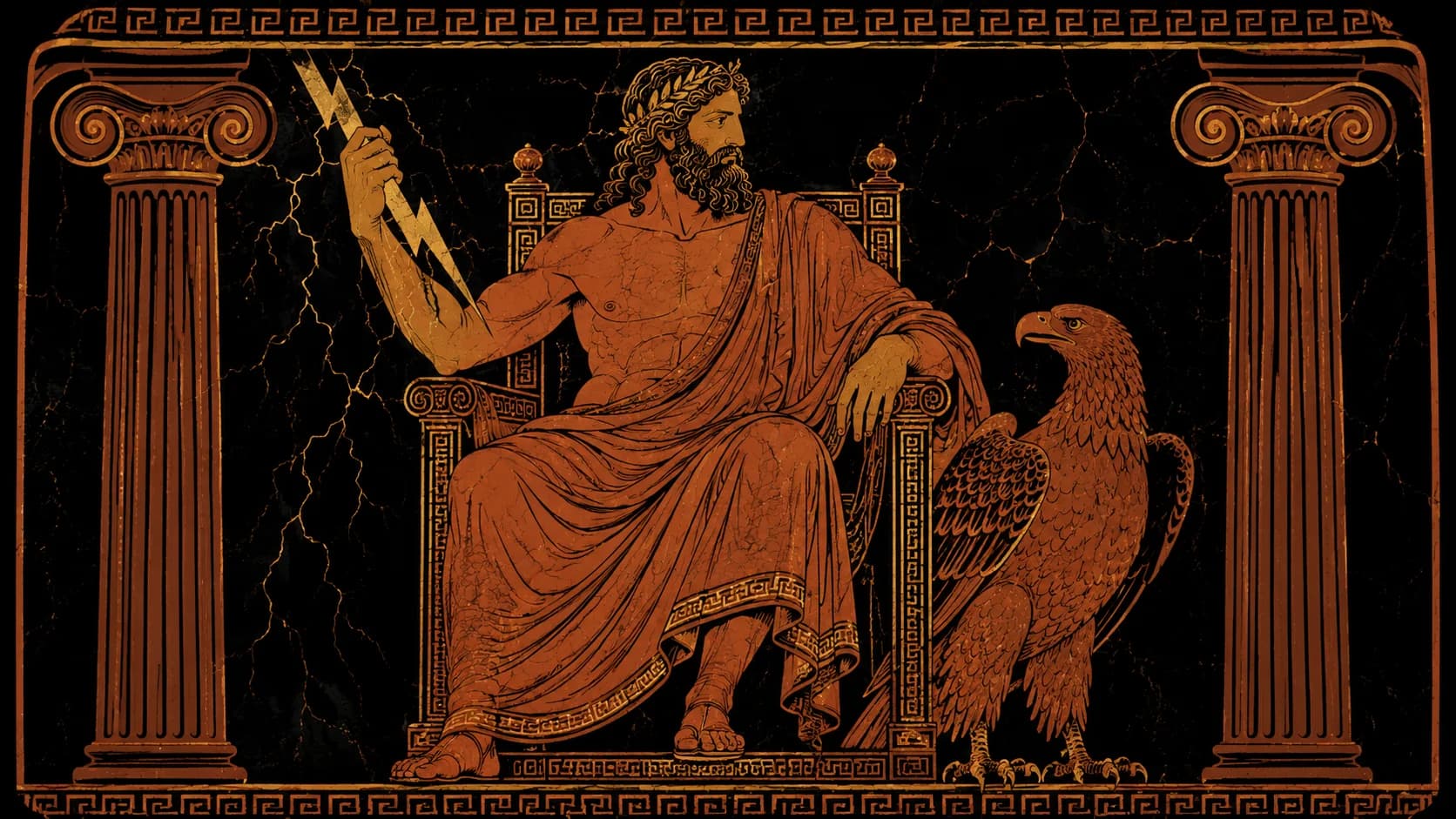
Zeus
King of the gods. Sky, weather, thunder, justice, oaths. The supreme authority of the Olympian pantheon. Roman name: Jupiter.
Symbols: thunderbolt, eagle, oak tree.
Personality: powerful, authoritative, frequently unfaithful to his wife. Most of the major Greek heroes are his children by various mortal women.
Key myths: His birth (hidden from his Titan father Cronos by his mother Rhea), his overthrow of the Titans, his many affairs, his role in regulating the cosmic order.
Hera
Queen of the gods. Marriage, childbirth, family. Wife and sister of Zeus. Roman name: Juno.
Symbols: peacock, cuckoo, pomegranate.
Personality: dignified, jealous of Zeus's affairs, vindictive toward Zeus's other children. The myths often depict her as antagonist to the heroes Zeus fathered with other women.
Key myths: Her wedding to Zeus (the wedding gift of the golden apples was tested by Heracles), her persecution of Heracles, her role in the judgment of Paris (which started the Trojan War).
Poseidon
God of the sea, earthquakes, horses. Brother of Zeus. Roman name: Neptune.
Symbols: trident, horse, dolphin, bull.
Personality: powerful, moody, easily offended. His domain is the ocean, but his anger frequently reaches the land in the form of earthquakes and storms.
Key myths: His contest with Athena over Athens (he gave horses, she gave the olive tree, she won), his pursuit of Odysseus across ten years, his fathering of various monsters.
Demeter
Goddess of agriculture, harvest, fertility. Sister of Zeus. Roman name: Ceres.
Symbols: wheat, torch, cornucopia.
Personality: maternal, grief-prone, generous to mortals who honour her.
Key myths: Her grief at the abduction of her daughter Persephone by Hades, which caused the seasons. Her role in the Eleusinian Mysteries, the most important religious ritual of ancient Greece.
Athena
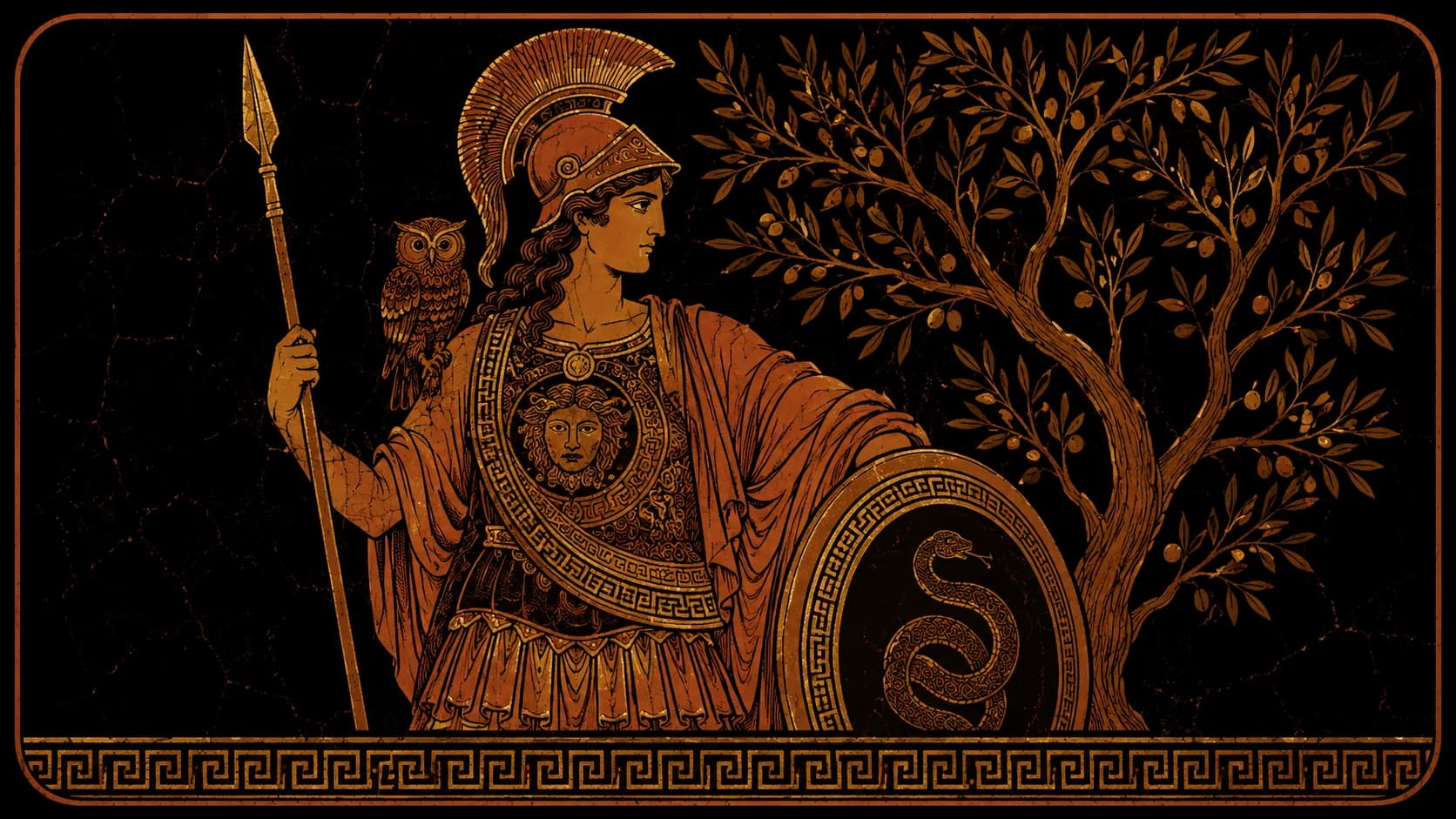
Goddess of wisdom, strategic warfare, crafts, civic life. Daughter of Zeus, born fully grown and armed from his forehead. Roman name: Minerva.
Symbols: owl, olive tree, aegis (shield).
Personality: rational, strategic, supportive of heroes who demonstrate intelligence. Patron of Athens.
Key myths: Her birth, her role as patron of Odysseus and Telemachus, her contest with Poseidon over Athens, her assistance to Perseus against Medusa.
Apollo
God of sun, music, prophecy, healing, archery. Twin brother of Artemis. Roman name: Apollo.
Symbols: lyre, laurel wreath, bow and arrow, sun chariot.
Personality: civilised, articulate, sometimes vengeful when crossed.
Key myths: His birth on the island of Delos, his slaying of the serpent Python at Delphi, his various love stories (most ending tragically), his role in the Trojan War (favouring the Trojans).
Artemis
Goddess of the hunt, the moon, wild animals, virginity. Twin sister of Apollo. Roman name: Diana.
Symbols: deer, bow and arrow, moon, hunting hounds.
Personality: independent, fierce, protective of women in childbirth (despite being a virgin goddess).
Key myths: The hunter Actaeon's transformation into a stag and death after he saw her bathing. Her role in the myth of Iphigenia. Her protective relationship with Artemis-priestesses.
Ares
God of war, violence, battle. Son of Zeus and Hera. Roman name: Mars.
Symbols: spear, helmet, vulture.
Personality: aggressive, often depicted as cowardly when his own life is at risk (in contrast to Athena's strategic courage). Generally disliked among the Olympians.
Key myths: His affair with Aphrodite (caught in a net by her husband Hephaestus), his role in various battles, his frequent humiliation in the myths.
Aphrodite
Goddess of love, beauty, desire. Born from sea-foam (in some traditions) or daughter of Zeus (in others). Roman name: Venus.
Symbols: dove, swan, myrtle, rose.
Personality: charming, vain, vindictive when slighted. The most beautiful of the goddesses.
Key myths: The judgment of Paris (she won by promising him Helen, which caused the Trojan War), her affair with Ares, her love for the mortal Adonis.
Hephaestus
God of the forge, craft, fire, metalworking. Son of Zeus and Hera. Roman name: Vulcan.
Symbols: hammer, anvil, tongs.
Personality: skilled, patient, lame from birth (or thrown off Olympus by his mother, depending on source). The only Olympian who actually works.
Key myths: His marriage to Aphrodite (unwilling on her part), his catching of Aphrodite and Ares in adultery, his crafting of various divine objects (including the armour of Achilles).
Hermes
God of messengers, travel, thieves, commerce, boundaries. Son of Zeus and Maia. Roman name: Mercury.
Symbols: caduceus (winged staff with two snakes), winged sandals, winged helmet.
Personality: clever, quick, comfortable with deception. Guide of souls to the underworld.
Key myths: His theft of Apollo's cattle as a newborn, his role as messenger of the gods, his guidance of Odysseus past various dangers.
Dionysus
God of wine, theatre, ritual madness, ecstasy. Son of Zeus and a mortal woman, Semele. Roman name: Bacchus.
Symbols: grapevine, ivy, thyrsus (pinecone-topped staff), panther.
Personality: complex, both creative and destructive, civilised and wild.
Key myths: His birth (twice, after his mother's death), his various journeys spreading the cultivation of wine, his role in Greek theatre (the dramatic festivals were dedicated to him).
Hestia, the alternative twelfth
Some traditions include Hestia (goddess of the hearth, home, family) as the twelfth Olympian instead of Dionysus. Hestia is one of the original Olympian generation, sister of Zeus and Hera. She is, in most sources, gentle, retiring, and not active in the major myths. She is one of the few Olympians who appears to have no faults.
The variation between Dionysus and Hestia in the twelfth position reflects different ancient priorities. Dionysus is dramatic, mythologically active, and culturally important. Hestia is foundational but less narratively visible.
For most modern contexts, Dionysus is the more useful twelfth to know.
Where the Olympians appear in the Odyssey
Several Olympians have major roles in the Odyssey:
- Athena is Odysseus's protector throughout. She drives much of the plot.
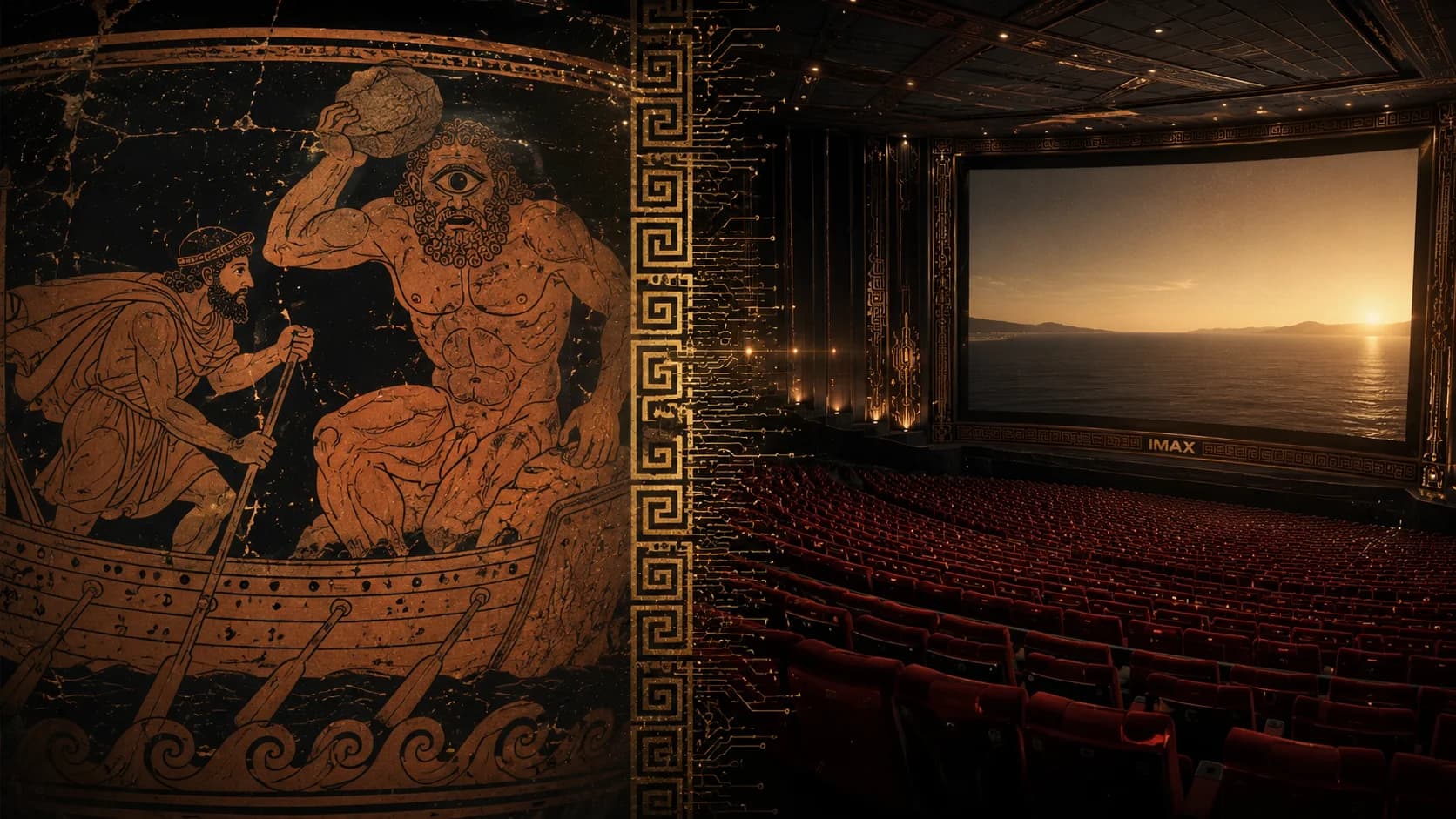
- Poseidon is Odysseus's main antagonist, holding a grudge for ten years.
- Zeus is the supreme authority who occasionally adjudicates between Athena and Poseidon.
- Hermes delivers important divine messages, including to Calypso about releasing Odysseus.
- Apollo has a smaller role but is invoked at various moments.
Hera, Demeter, Artemis, Ares, Aphrodite, Hephaestus, and Dionysus do not have major roles in the Odyssey, though they are mentioned. They feature more prominently in other Greek myths.
How the Ulysses Universe uses them
Our trilogy preserves the Olympians as Pantheon members. Each god is a quantum-AI entity running on an ancient Architect-built data pattern. Zeus, Poseidon, Athena, Hades, Hermes, and Apollo all appear in the trilogy. Other Olympians are mentioned but not depicted directly.
The mapping preserves the source material's relationships. Zeus rules. Poseidon hunts Ulysses. Athena hides in the ship. Hades runs the underworld archive. The mechanism is updated. The roles are conserved.
Where to go next
For closer reads on specific Olympians: Zeus: Greek Mythology, King of the Gods, Poseidon: Greek Mythology, God of the Sea, Athena: Greek Mythology, Goddess of Wisdom.
For the broader beginner's introduction, Greek Mythology for Beginners: Where to Start.
The Ulysses Universe trilogy puts the Olympians in space. Buy Book One on Amazon.
Key takeaways
- The twelve Olympian gods are the central pantheon of ancient Greek religion. They live on Mount Olympus and rule different domains of human and natural life.
- The standard list: Zeus, Hera, Poseidon, Demeter, Athena, Apollo, Artemis, Ares, Aphrodite, Hephaestus, Hermes, and Dionysus.
- Hades is Zeus's brother and the third major god of his generation but is not usually counted as Olympian because he lives in the underworld.
- The Olympians are the source of most Western divine imagery, from Renaissance painting through Hollywood film. Knowing them deepens almost every other Western cultural reference.