Poseidon: God of the Sea, Earthquakes, and Grudges
Ruler of the oceans. Shaker of the earth. Father of monsters and heroes. The Olympian with the longest memory and the most personal antagonisms in Greek mythology.
What Poseidon rules
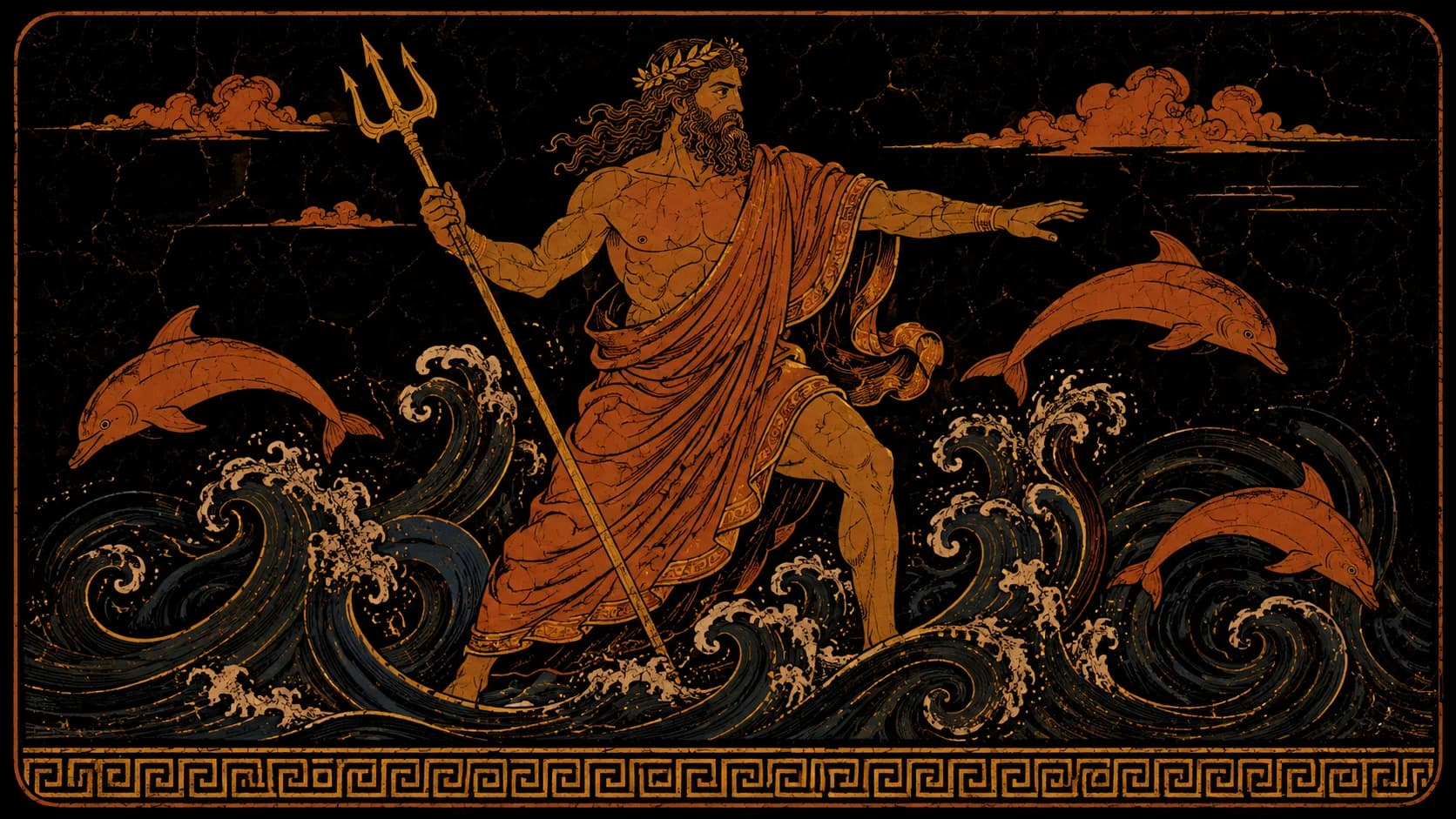
Poseidon is the Olympian god of the sea, earthquakes, and horses. His domain is the ocean and everything in it. Sailors in the ancient Mediterranean prayed to him constantly because their lives depended on his goodwill. Coastal communities built temples to him at every major port.
He is one of the three sons of Cronos who survived their father's attempt to eat them: Zeus, Poseidon, and Hades. When the three brothers overthrew the Titans, they divided the universe by lot. Zeus got the sky. Hades got the underworld. Poseidon got the sea. The earth and Mount Olympus were shared.
This division is structurally important. Poseidon's domain is enormous (every body of water on the planet) but it does not include the land. The earth-shaking phenomenon, which is land-based, is his only direct land power. The horse connection ties him to the land through that single channel.
The earthquake god
Earthquakes in ancient Greek life were unpredictable, frequently devastating, and theologically attributed to Poseidon. His epithet 'Earth-Shaker' (Ennosigaios in Greek) names this domain directly.
The mechanism, in the myths, is variable. Sometimes Poseidon strikes the ground with his trident. Sometimes he merely becomes angry, and the ground moves. The Greeks understood seismic activity as divine action. Poseidon was the responsible agent.
Modern readers, encountering Poseidon primarily as the sea god, sometimes underestimate the earthquake dimension. In ancient Greek practice, the earthquake-Poseidon was probably the more frequently feared aspect of the god, because most ancient Greeks lived in earthquake-prone regions and only some of them lived close enough to the sea to fear sea-Poseidon directly.
Why horses
The horse association is the most puzzling. Several traditions are at work:
In one strand, Poseidon created the first horse, either as a gift to humans or in his contest with Athena (where he offered a horse and she offered the olive tree, and the Athenians chose the olive).
In another strand, the horse is associated with earthquakes through the sound of hooves. The Greeks may have heard the rumble of seismic activity as a divine cavalry charge.
In a third strand, horses were considered sea-creatures by some ancient Mediterranean cultures, with manes that suggested ocean waves. Poseidon's association with horses then naturalises from his sea domain.
None of these traditions fully explains the connection. The horse-sea-earthquake cluster is one of the Greek mythology's quieter mysteries.
The contest of Athens
The most famous Poseidon story outside the Odyssey is his contest with Athena for the patronage of the city of Athens. The Athenians invited both gods to offer them a gift. The better gift would determine which god would be the city's patron.
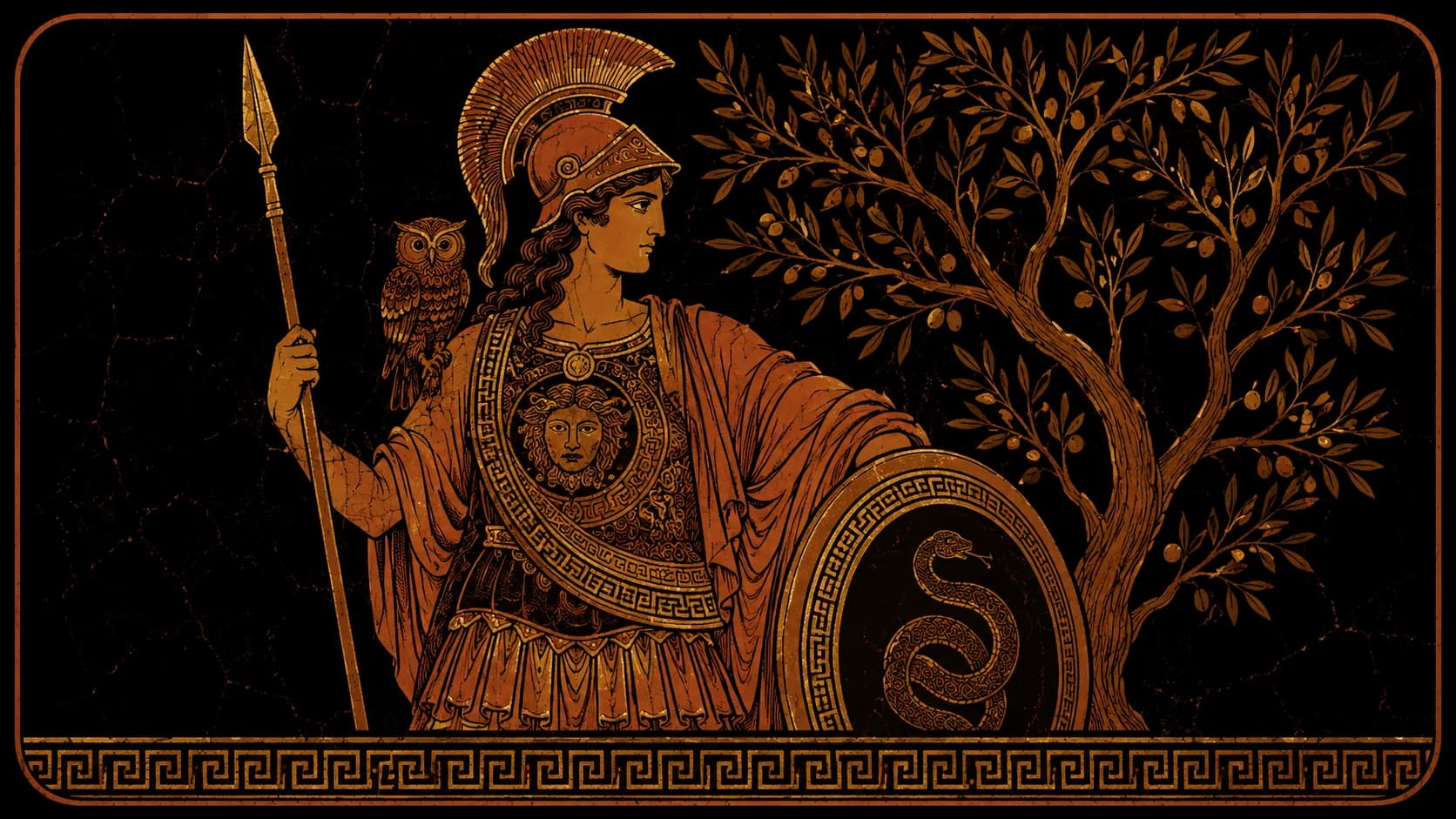
Poseidon struck the Acropolis with his trident and produced a spring of saltwater (or, in some versions, a beautiful horse). Athena planted an olive tree.
The Athenians chose Athena. The city was named for her. Poseidon was permanently annoyed.
This is, structurally, one of the few times in Greek mythology where Poseidon is depicted as straightforwardly losing a divine contest. The defeat shaped his subsequent relationship with the city. He was respected in Athens but never beloved. The patron status went to Athena.
The Odyssey pursuit
Poseidon's ten-year pursuit of Odysseus is the most sustained antagonistic relationship in Greek mythology. The trigger is the blinding of Polyphemus, Poseidon's Cyclops son. The mechanism is sustained storms, shipwrecks, and detours that extend Odysseus's journey from a few months to ten years.
We have written about this at length in Poseidon vs Odysseus: The Longest Grudge. The grudge is structurally important because, without it, the Odyssey would not exist as we know it. Odysseus would sail home from Troy in a few weeks. The poem requires Poseidon's interference.
Other key myths
Several other Poseidon myths are worth knowing:
The birth of Pegasus. Poseidon's affair with Medusa (in some versions, the rape of Medusa) produced Pegasus, the winged horse, who burst from Medusa's neck when Perseus beheaded her.
The Minotaur. Poseidon sent King Minos of Crete a beautiful bull as a gift, with the understanding that Minos would sacrifice it back to him. Minos kept the bull. Poseidon, in revenge, caused Minos's wife Pasiphae to fall in love with the bull. Their offspring was the Minotaur.
The death of Hippolytus. Hippolytus, son of Theseus, was wrongly accused by his stepmother Phaedra of attempted assault. Theseus prayed to Poseidon for revenge. Poseidon sent a sea-bull that frightened Hippolytus's chariot horses, killing him.
The Trojan War. Poseidon generally favoured the Greeks in the Trojan War, though Apollo favoured the Trojans. The two gods' positioning shaped much of the war's divine politics.
How the Ulysses Universe uses Poseidon
Our Poseidon is the trilogy's structural antagonist. His grudge against Ulysses Theron, beginning with the blinding of the Pantheon's Polyphemus-equivalent at the asteroid-prison in Book 1, drives the twenty-year manhunt that powers the rest of the journey.
The Pantheon-version Poseidon cannot kill Ulysses directly (Athena's fugitive protection blocks lethal interventions). He can, however, drive the broader Pantheon's operational pursuit. He does. The pursuit is sustained, personal, and motivated by the kind of injury that Greek gods do not forget.
By Book 3, Poseidon is the one who most actively wants Ulysses dead. The Pantheon administrative force that arrives at Ithaca pursuing the activated node-point signal includes Poseidon as the senior figure with the most personal investment in the outcome.
See Know Your Gods: Poseidon and Polyphemus Station: The Prison That Eats Emotions for the trilogy's treatment.
Where to go next
For the longest single Poseidon story, Poseidon vs Odysseus: The Longest Grudge. For the Ulysses Universe character profile, Know Your Gods: Poseidon. For the other senior Olympians, The 12 Olympian Gods Explained.
The Ulysses Universe trilogy keeps Poseidon as antagonist. Buy Book One on Amazon.
Key takeaways
- Poseidon is the Olympian god of the sea, earthquakes, and horses. He is brother to Zeus and Hades, ruling the oceans as Zeus rules the sky and Hades rules the underworld.
- His symbol is the trident. His relationship with horses (he is sometimes called Earth-Shaker because of the sound of hooves) is unusually strong.
- He has a long list of personal grudges in Greek myth. His ten-year pursuit of Odysseus is the most famous. He also lost a major contest with Athena over the patronage of Athens.
- His Roman counterpart is Neptune. His domain (the sea) was the deepest source of fear in ancient Greek life, which made him one of the most-feared Olympians.