The Trojan War Explained: Cause, Key Events, and Aftermath
Ten years. A stolen queen. The wooden horse. The fall of Troy. Everything you need to know about the war that produced the Iliad, the Odyssey, and most of Greek heroic mythology.
The basic story
The Trojan War is the most-told story in Greek mythology after the adventures of individual heroes. The basic outline:
The Greeks (called Achaeans, Argives, or Danaans in Homer) launch an enormous military expedition against the city of Troy, on the western coast of what is now Turkey. The war lasts ten years. The Greeks eventually win through the wooden horse stratagem. Troy falls. The Greek heroes scatter to various fates on their journeys home.
The Iliad covers approximately fifty-one days of the war's tenth year. The Odyssey covers the journey home of Odysseus, one of the Greek leaders. The Aeneid covers the journey of Aeneas, a Trojan survivor, to found Rome.
These three poems (Iliad, Odyssey, Aeneid) are the foundation of Western literature. Most of the rest of Greek heroic mythology is set in or around the Trojan War.
The causes
The Greek tradition gives multiple causes for the war, layered on top of each other.
The judgment of Paris. The goddess Eris, not invited to a divine wedding, threw a golden apple labelled "for the fairest" into the gathering. Hera, Athena, and Aphrodite each claimed it. Zeus refused to judge. He sent Paris, prince of Troy, to decide.
Each goddess offered Paris a bribe. Hera offered political power. Athena offered wisdom and victory in battle. Aphrodite offered him Helen of Sparta, the most beautiful mortal woman.
Paris chose Aphrodite.
The abduction of Helen. Helen was already married, to Menelaus, king of Sparta. Paris visited Sparta as a guest, was welcomed under xenia, and abducted Helen back to Troy (some traditions say with her consent, others without). The abduction was a major violation of guest-friendship.
The oath of the suitors. Before Helen's marriage to Menelaus, she had many suitors. Her father required all of them to swear an oath: whichever of them won her, the others would defend the marriage against any threat. When Paris took her, the oath activated. The former suitors were obligated to gather and recover her.
Divine politics. Zeus, in some traditions, wanted a way to reduce the population of demigod heroes who had been proliferating across Greek civilisation. The Trojan War was, in this reading, his plan to thin the demigods through mutual destruction.
These causes work together. Modern readers sometimes find them excessive. The Greek tradition treated layered causation as normal.
The Greek expedition
Once Paris took Helen, Menelaus called on his brother Agamemnon, king of Mycenae, who was the most powerful king in Greece. Agamemnon summoned the former suitors of Helen and their allies. The expedition gathered.
The Greek fleet that eventually sailed numbered, according to Homer's catalogue, 1,186 ships. The catalogue of ships in Book 2 of the Iliad lists the contingents from every Greek region. The numbers may be inflated by epic convention. The expedition was, in any case, large.
The major Greek leaders included:
- Agamemnon, supreme commander, king of Mycenae
- Menelaus, his brother, the wronged husband, king of Sparta
- Achilles, the greatest warrior, son of Peleus and the sea nymph Thetis
- Odysseus, the cleverest, king of Ithaca
- Ajax (the greater), warrior of immense physical strength
- Diomedes, a major warrior favoured by Athena
- Nestor, the wise elder, king of Pylos
- Patroclus, Achilles's closest companion
The expedition reached Troy and besieged it. The siege lasted ten years.
The Iliad period
Most of the first nine years of the war are passed over in the surviving literature. The Iliad covers approximately fifty-one days of the tenth year.
The Iliad's plot centres on the wrath of Achilles. Agamemnon insults Achilles by taking the captive woman Briseis from him. Achilles withdraws from the war in protest. Without Achilles, the Greeks begin to lose. The Trojans, led by Hector (Paris's brother), drive the Greeks back to their ships.
Achilles's closest companion Patroclus, anguished by the Greek losses, borrows Achilles's armour and re-enters the battle. He turns the tide briefly. Hector kills him.
Achilles, in grief and rage, returns to combat. He kills Hector and abuses his body, dragging it around the walls of Troy. He eventually allows Priam, Hector's father, to retrieve the body for proper burial.
The Iliad ends here, with the funeral of Hector. The war continues. The poem closes mid-war.
The fall of Troy
Events after the Iliad are covered in other ancient sources (the Aethiopis, the Little Iliad, the Iliupersis, the Aeneid). The basic outline:
Achilles is eventually killed, shot in the heel (his only vulnerable spot) by an arrow from Paris guided by Apollo.
The Greeks debate whether to continue. Various crises and divine portents.
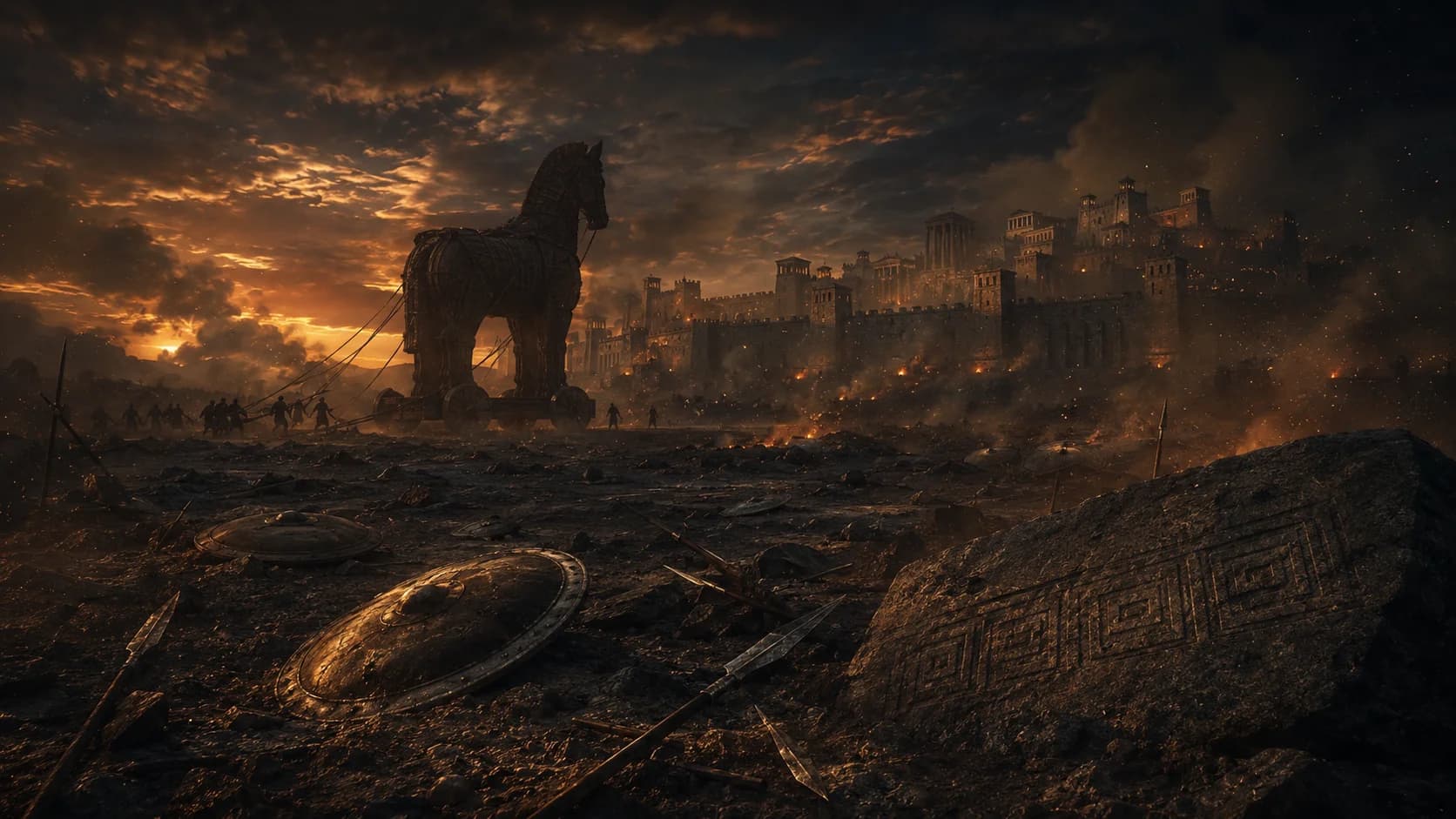
Odysseus proposes the wooden horse stratagem. The Greeks build a giant wooden horse, hide soldiers inside, and pretend to sail away. The Trojans, believing the war over, drag the horse into the city as a victory trophy. At night the Greek soldiers emerge, open the city gates, and let the returning fleet enter.
Troy falls. The Greeks slaughter the male population. The Trojan women (Hecuba, Andromache, Cassandra) are taken as slaves. The city is burned.
The aftermath
The Greek heroes scatter to various fates on their journeys home. The body of Greek literature treating this period is large. The most famous individual stories:
Agamemnon returns to Mycenae and is murdered by his wife Clytemnestra and her lover. The story is told in Aeschylus's Oresteia.
Menelaus and Helen return to Sparta after various delays, where they live out their lives in relative peace.
Odysseus spends ten years trying to get home. The Odyssey covers his journey.
Aeneas, a Trojan prince who survives the fall, journeys west and eventually founds the city that will become Rome. The Aeneid covers his journey.
The Trojan women suffer. Andromache becomes a slave. Cassandra is killed by Clytemnestra. Hecuba is enslaved and goes mad. Euripides's plays cover their stories.
How historical is the Trojan War?
Archaeology has identified the site of Troy. The mound at Hisarlik in northwestern Turkey was almost certainly the location. Heinrich Schliemann's excavations in the 1870s established this. Multiple layers of habitation are visible. One layer (called Troy VIIa) shows evidence of violent destruction around the 12th century BCE, which fits the conventional dating of the Trojan War.
Whether a single ten-year siege by a coalition of Greek kings actually happened is harder to determine. The Greeks of the historical period treated the war as real history. Modern scholarship is divided. The most likely answer is that some conflict happened, on a smaller scale than the literature describes, and that the literary tradition aggregated and elaborated multiple events into the single canonical war.
The Trojan War in the Ulysses Universe
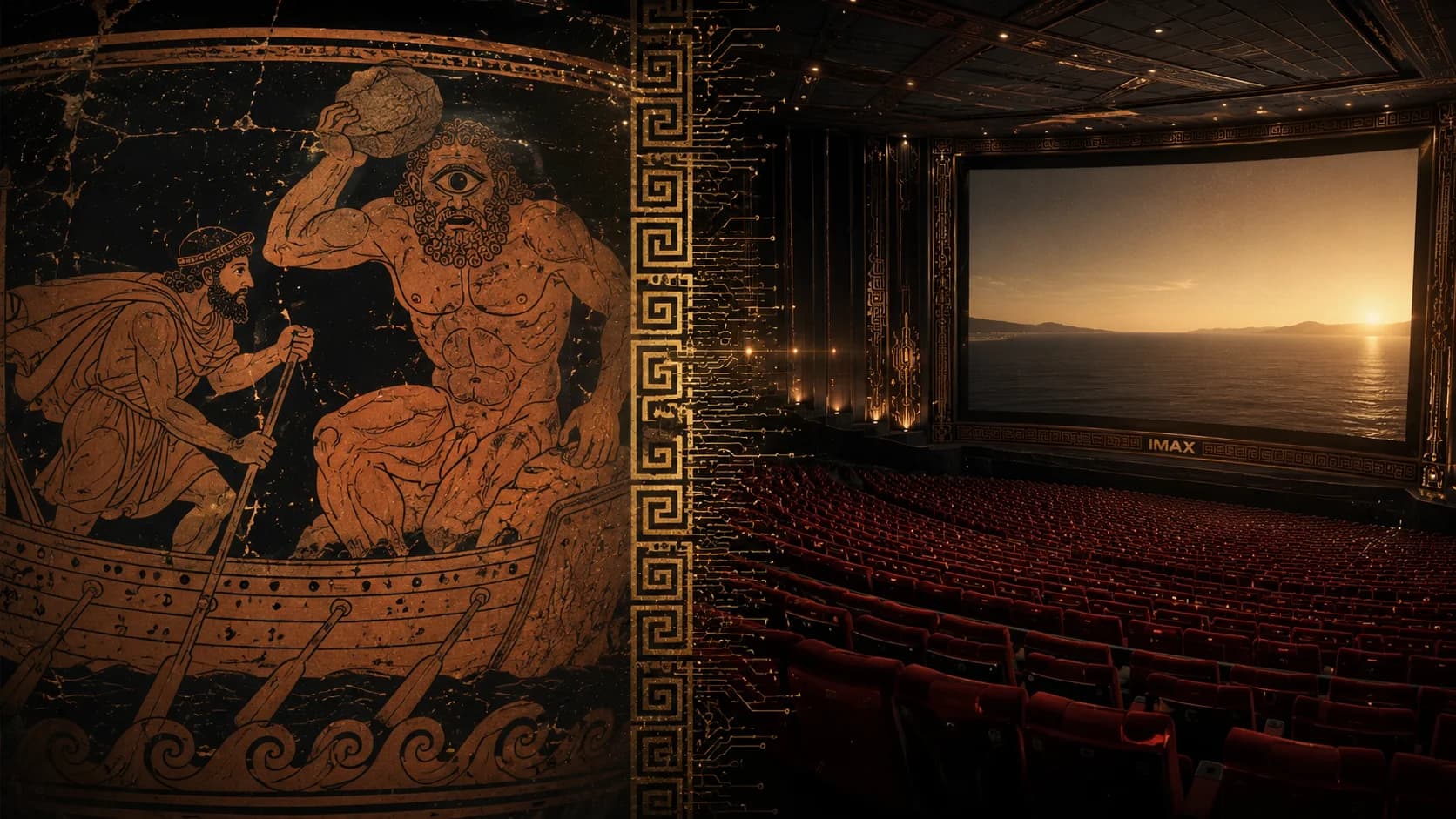
Our trilogy is set in the 23rd century. The Trojan War is implicit backstory in the way it is implicit backstory in Homer's Odyssey. Ulysses Theron earned his cybernetic right eye "at Troy," which in the trilogy's universe means a different conflict that operates as the Trojan War's structural equivalent. The wooden horse equivalent is referenced but not depicted.
Future projects in the Ulysses Universe may engage with the trilogy's Trojan War equivalent directly. The trilogy itself does not.
Where to go next
For the Odyssey, The Odyssey Summary: Book by Book Breakdown. For the relationship between the two epics, The Odyssey vs The Iliad. For modern Trojan War novels, The Best Greek Mythology Books for Adults in 2026 covers Madeline Miller's Song of Achilles, Pat Barker's Silence of the Girls, and Natalie Haynes's A Thousand Ships.
The Ulysses Universe trilogy starts after the Trojan War. Buy Book One on Amazon.
Key takeaways
- The Trojan War was a ten-year conflict between the Greeks (called Achaeans in Homer) and the Trojans, allegedly fought around the 12th century BCE.
- The proximate cause was the abduction of Helen of Sparta by Paris of Troy. The deeper causes involved trade rivalry, divine politics, and the legendary judgment of Paris.
- Key events: the gathering of the Greek fleet, Achilles's wrath, the death of Patroclus, the death of Hector, the wooden horse stratagem, the fall of Troy, the suffering of the Trojan women in defeat.
- The historicity of the war is debated. Archaeology supports the existence of Troy (likely the site at Hisarlik in modern Turkey) and various conflicts in the broader region. The specific events of the Iliad are legendary.