Greek Mythology in Modern Culture: From Marvel to Hades to Nolan
Why ancient Greek stories keep showing up in contemporary entertainment. From the Percy Jackson franchise to Supergiant's Hades video game to Nolan's 2026 Odyssey adaptation.
The persistence
Greek mythology has been continuously present in Western culture since the classical period. Roman literature treats it as foundational. Medieval European thought engages with it (often filtered through Latin sources). Renaissance art and literature use it constantly. The Romantics return to it. The Modernists (Joyce especially) build whole novels on it. Twentieth-century cinema adapts it repeatedly.
The last twenty years have produced an unusually high concentration of mythology-influenced commercial work. This post is a tour of where Greek mythology shows up in current culture, what each example does, and why the persistence keeps surprising people.
Film
The film space has been actively engaging with Greek mythology since the 1950s. Recent significant entries:
Troy (2004). Wolfgang Petersen's adaptation of the Iliad. Brad Pitt as Achilles. Eric Bana as Hector. The film conflates events and characters but treats the source material as serious adult material. Mixed reception. Better than its critics give it credit for.
300 (2006). Zack Snyder's adaptation of Frank Miller's graphic novel about the Spartans at Thermopylae. Historical-mythological rather than strictly Greek myth. Stylistically influential. Politically debated.
Clash of the Titans (2010 remake). A loose Perseus adaptation. Mixed-quality CGI. Worth watching as historical document. Not the version to start with.
Immortals (2011). Tarsem Singh's stylistic Greek mythology film. Visually striking. Narratively confused.
Percy Jackson and the Lightning Thief / Sea of Monsters (2010, 2013). Adaptations of Rick Riordan's young-adult Greek-mythology-in-modern-America series. The films are widely considered to underuse the source material. The Disney+ series (2023-) is generally considered an improvement.
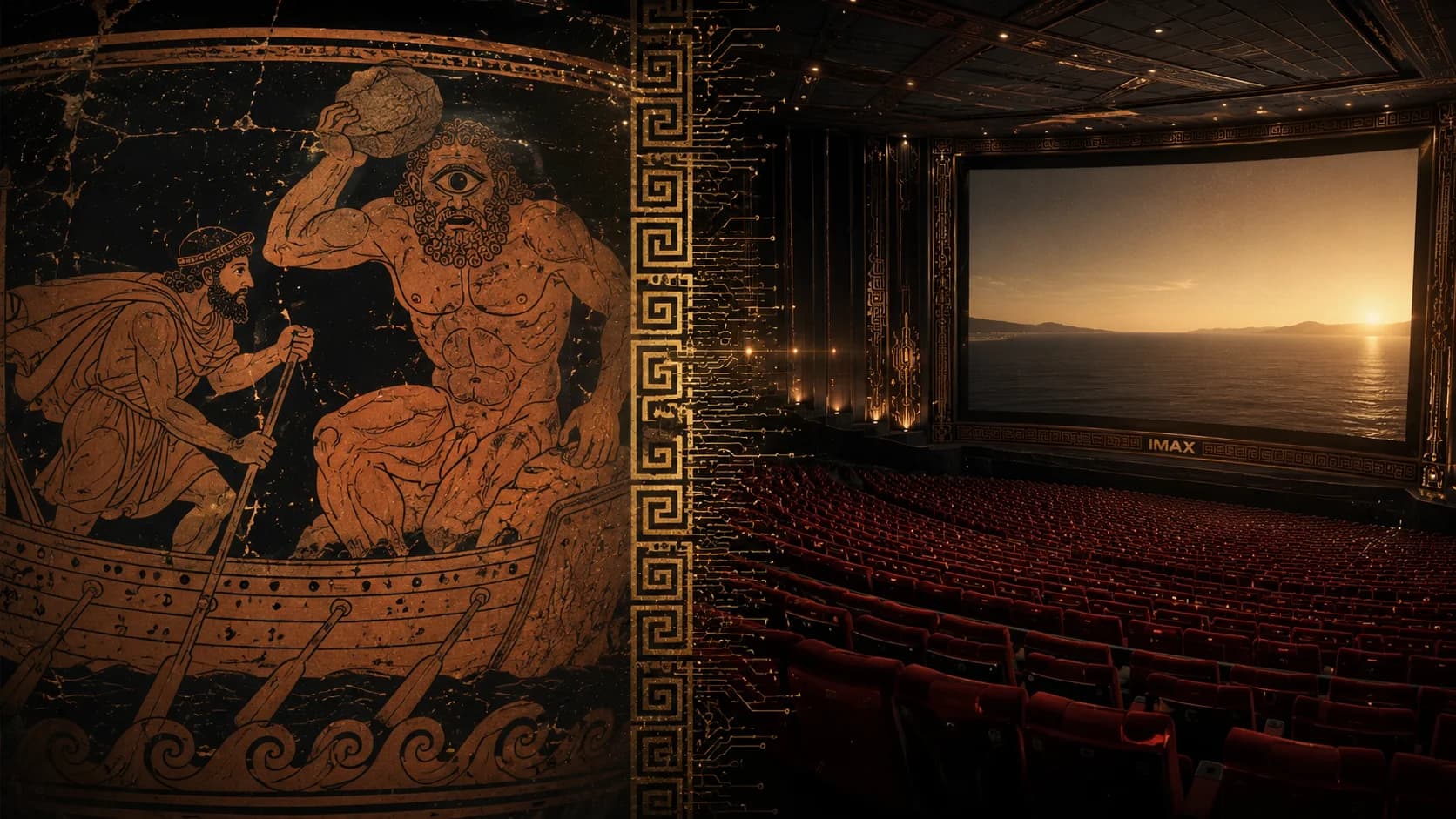
Christopher Nolan's Odyssey (2026, upcoming). Released 17 July 2026. The most-anticipated Greek mythology film of the decade. See Christopher Nolan's Odyssey: Everything We Know.
Television
The TV space has been quieter than film but has produced significant work:
Troy: Fall of a City (2018, BBC). An eight-episode adaptation of the Trojan War. Well-cast. Underwatched outside the UK.
Kaos (2024, Netflix). A modern reimagining of Greek mythology with the Olympians as contemporary figures. Mixed reception. Cancelled after one season.
Percy Jackson and the Olympians (2023-, Disney+). The TV adaptation Riordan's franchise has been waiting for. Faithful, well-produced, popular.
Television's lower budget ceilings have generally pushed it toward modern-setting Greek myth (Kaos, Percy Jackson) rather than bronze-age direct adaptation. The economics favour that direction.
Video games
The video game space has been arguably the most successful recent engagement with Greek mythology. Three highlights:
Hades (2020, Supergiant Games). A roguelike action game where you play Zagreus, son of Hades, trying to escape the underworld. Won multiple Game of the Year awards. Praised for its writing (Greg Kasavin), its art, its music, and its respectful but witty treatment of mythology.
Hades II (2024-2025, Supergiant Games). Sequel, focused on Melinoë, sister of Zagreus. Builds on the strengths of the first game. Similarly well-received.
Assassin's Creed Odyssey (2018, Ubisoft). A large-scale historical-mythological game set in classical Greece during the Peloponnesian War. The protagonist (player choice: Kassandra or Alexios) encounters major historical and mythological figures. The largest digital recreation of classical Greece available.
God of War (2005-2013, Sony Santa Monica). The original God of War trilogy is set in Greek mythology with Kratos as a Spartan demigod who eventually kills most of the Olympian pantheon. The 2018 reboot and Ragnarok (2022) move Kratos to Norse mythology, but the original trilogy remains the canonical violent-Greek-mythology video game.
Apotheon (2015, Alientrap). A side-scrolling action game styled to look like ancient Greek vase painting. Visually distinctive. Underrated.
Indie titles (Pyre, Immortals Fenyx Rising, various others) have continued the engagement at smaller scales.
Books
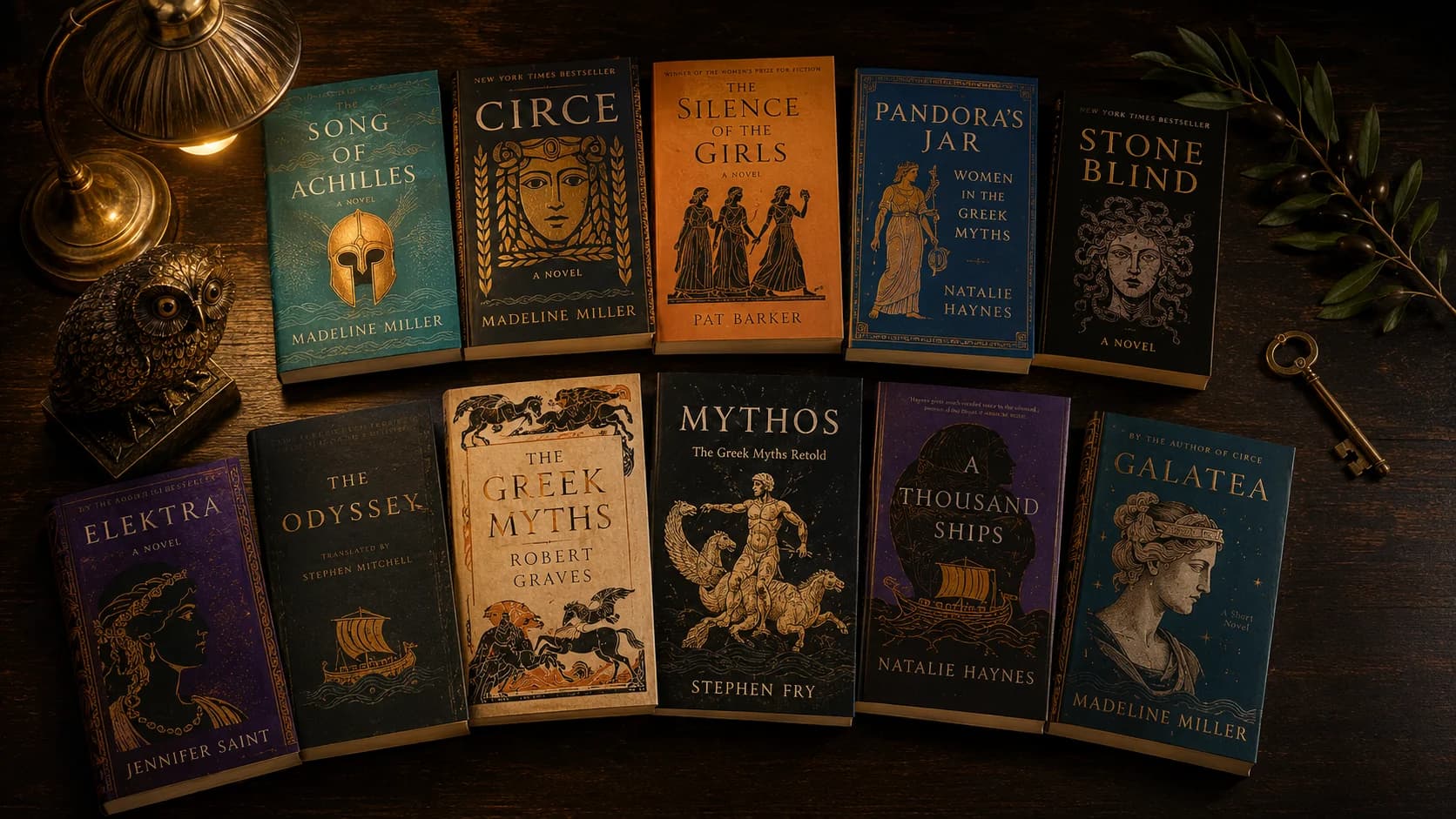
The book space, covered in detail elsewhere on this blog, has produced more Greek mythology titles in the last decade than in the previous five combined. For the full overview, see The Best Greek Mythology Books for Adults in 2026.
Highlights: Madeline Miller, Margaret Atwood, Pat Barker, Natalie Haynes, Jennifer Saint, Claire North, Stephen Fry, and (with full disclosure) our own Ulysses Universe trilogy.
Music
Music engages with Greek mythology in two registers. The first is classical and operatic, where the engagement is ancient and ongoing (Monteverdi's L'Orfeo, Gluck's Orpheus and Eurydice, Stravinsky's Oedipus rex, various contemporary operatic adaptations).
The second is popular music, where mythological references appear occasionally as imagery rather than sustained engagement. Florence + The Machine's Ceremonials (2011) draws on Greek mythology in songs like 'What the Water Gave Me.' Hozier's Wasteland Baby! and Unreal Unearth (2023) lean on mythological imagery throughout. Various other artists (especially in folk and indie traditions) use mythology as a recurring source.
Why the persistence
Several explanations work in combination.
Flexibility of source material. Greek mythology is internally inconsistent across ancient sources. There is no single canon. Different authors have always told different versions. This makes new versions feel like contributions to an ongoing tradition rather than deviations from a fixed text.
Rich character set. Greek mythology has more well-developed characters than most other mythological traditions. Each Olympian has personality. Each hero has specific traits. Each monster has distinctive features. The character set is large enough to support new work indefinitely.
Enduring themes. Home. Identity. Justice. Divine attention. The cost of pride. The nature of cleverness. These are the questions Greek mythology asks. They are also the questions that have remained relevant across three thousand years. New work that engages them has natural traction.
Cultural shorthand. Greek mythology is a shared Western cultural reference. New work that draws on it benefits from instant recognition. A film that includes a character named Achilles does not need to explain that the name carries weight. The reader or viewer already knows.
Adaptation potential. Greek myths transplant. The Coen brothers moved the Odyssey to Depression-era Mississippi. Nolan is filming it in 2026. The Ulysses Universe trilogy puts it in space. The myths survive each transplant because their structural elements are portable.
How the Ulysses Universe fits
Our trilogy is the current sci-fi entry in the long history of Greek mythology adaptation. It launched May 2026 ahead of the Nolan film. It preserves the structural elements while updating the setting to a 23rd-century space opera with quantum-AI gods.
We are part of the persistence. Not the source of it. The persistence will continue when the trilogy has long since been out of print.
Where to go next
For the foundational beginner's tour, Greek Mythology for Beginners: Where to Start. For the Olympian pantheon specifically, The 12 Olympian Gods Explained. For the contemporary book scene, The Best Greek Mythology Books for Adults in 2026. For Christopher Nolan specifically, Christopher Nolan's Odyssey: Everything We Know About the Source Material.
The Ulysses Universe is the science-fiction entry in the contemporary mythology landscape. Buy Book One on Amazon.
Key takeaways
- Greek mythology has been a major component of Western popular culture for two thousand years. The last twenty years have produced an unusually high concentration of mythology-influenced commercial work.
- Film: Nolan's 2026 Odyssey, Percy Jackson series, Troy (2004), 300, Clash of the Titans, the Ulysses Universe (forthcoming adaptations TBD).
- Video games: Supergiant's Hades and Hades II, Assassin's Creed Odyssey, God of War (especially God of War 2018 and Ragnarok), various indie titles.
- Books: Madeline Miller's novels, the Riordan franchise, Margaret Atwood, Pat Barker, Natalie Haynes, our own Ulysses Universe.
- The persistence is explained by the source material's flexibility, the rich character set, and the themes that have remained relevant across three thousand years.