Christopher Nolan's Odyssey: Everything We Know About the Source Material
What Christopher Nolan is actually adapting on July 17, 2026. The 12,000-line Homeric epic, what it covers, who's in it, and what Nolan is most likely to keep, change, and reinvent.
The film
Christopher Nolan's Odyssey opens in cinemas on 17 July 2026. Universal Pictures is distributing. The production budget is reportedly $250 million, which puts it in the top tier of contemporary film financing. The trailer, released earlier this year, hit 121 million views in its first 24 hours.
This is a major event. Nolan is the most ambitious mainstream filmmaker working today. He's adapting one of the foundational texts of Western literature. The cast is unusually loaded.
This post covers what's actually being adapted. The source material. What Nolan has the option to keep, change, cut, and reimagine. By the time you finish, you'll know enough to walk into the film with the literary context that most viewers will not have.
What the Odyssey is
Homer's Odyssey is an ancient Greek epic poem, composed sometime in the 8th century BCE, attributed to Homer (whose historical existence remains debated). It is approximately 12,000 lines of dactylic hexameter verse, divided into 24 books.
The poem tells the story of Odysseus, king of Ithaca, attempting to return home after the ten-year Trojan War. The journey home takes another ten years. Twenty years total away from his wife Penelope and son Telemachus.
The structure is non-linear. The poem opens in the middle of the story (in medias res, the term originates here), with Telemachus on Ithaca dealing with the suitors who have moved into his father's house. From there the narrative jumps to Odysseus on Calypso's island, then flashes back to the events between Troy and Calypso, then returns to the present for the journey home.
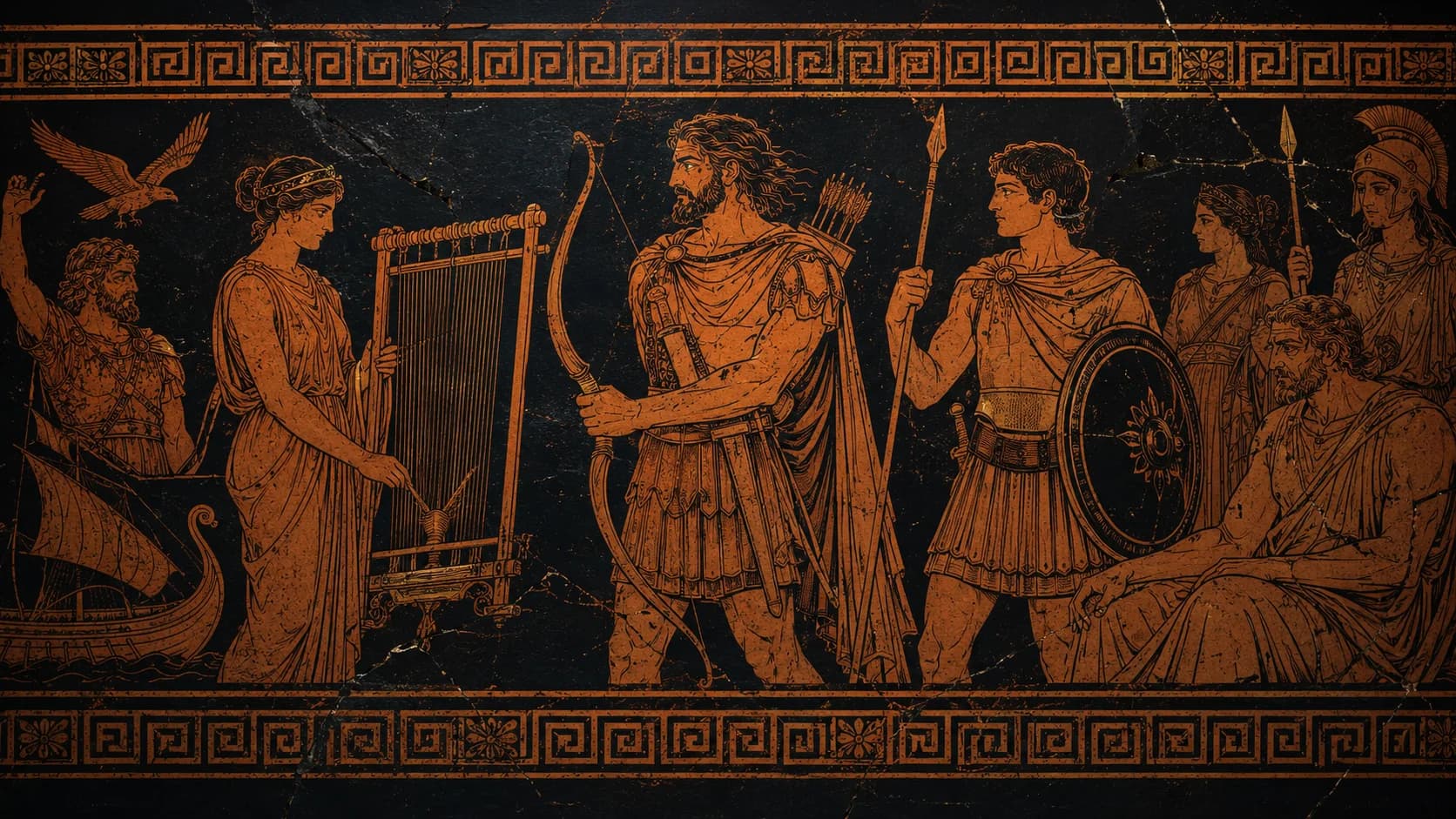
The poem ends with the bow contest, the slaughter of the suitors, and the recognition between Odysseus and Penelope. The famous moment when she tests him with the secret of their marriage bed.
What we know Nolan is doing
A short summary of what's been announced or reliably reported:
| Element | What we know |
|---|---|
| Release date | 17 July 2026 |
| Distributor | Universal Pictures |
| Budget | Reportedly $250 million |
| Format | Shot in IMAX. Likely 70mm presentations available. |
| Locations | Mediterranean. Specifically Sicily, Malta, Morocco, and Greece. |
| Translation cited | Emily Wilson's 2017 Norton translation |
| Director | Christopher Nolan |
| Cinematographer | Hoyte van Hoytema |
| Composer | Ludwig Göransson |
| Lead | Matt Damon as Odysseus |
| Penelope | Anne Hathaway |
| Telemachus | Tom Holland |
| Zendaya's role | Undisclosed, rumour Circe |
Other cast names that have been reported but not officially confirmed include Robert Pattinson, Charlize Theron, and Lupita Nyong'o. We're not going to speculate on their roles here. Multiple outlets have made plausible cases for each of them as Hermes, Athena, and Calypso respectively, but none of this is confirmed.
What Nolan is most likely to keep
A few elements are too central to drop:
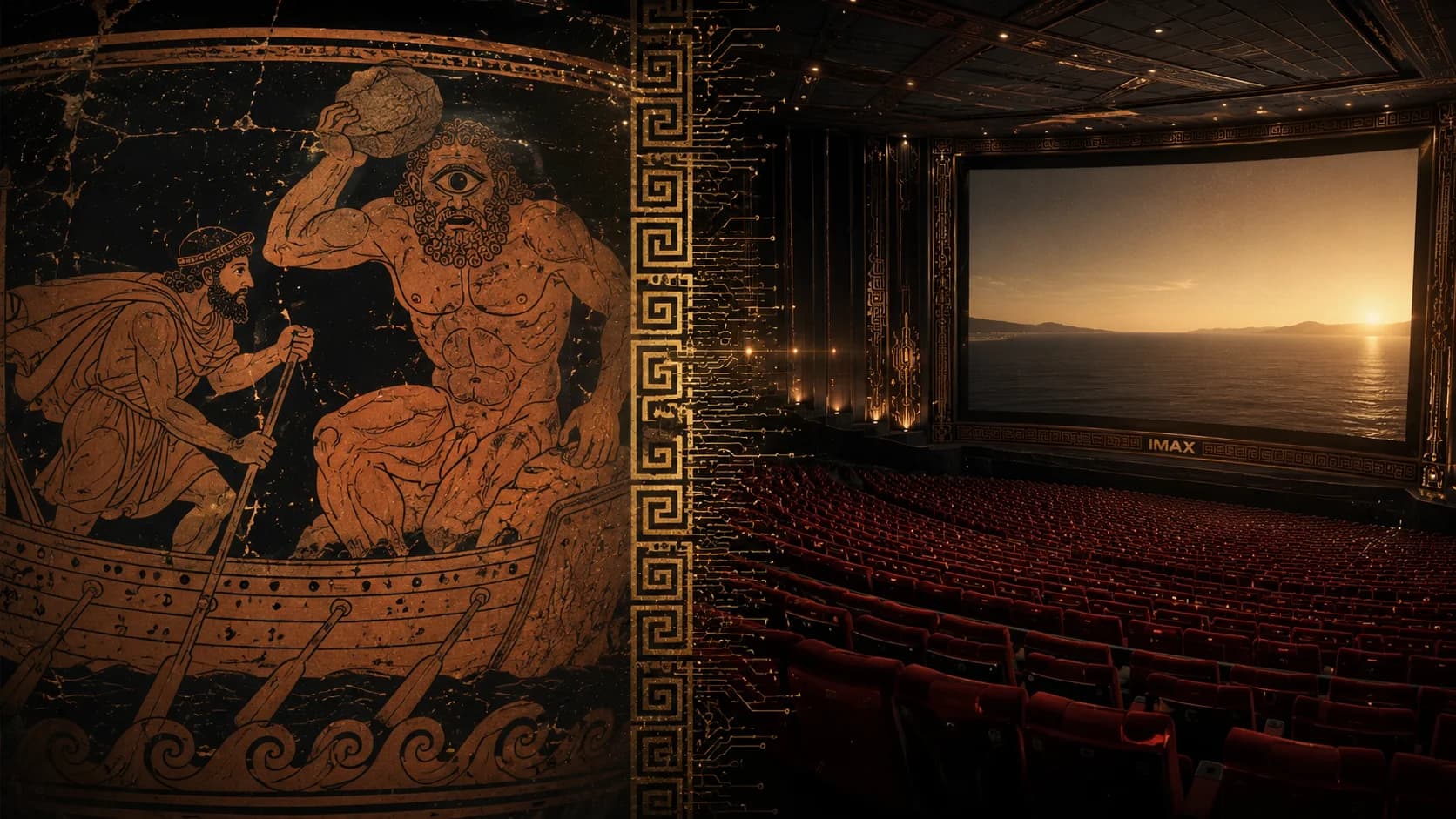
The Cyclops sequence. The blinding of Polyphemus with a sharpened wooden stake is the single most iconic visual moment in the Odyssey. It launched a thousand vase paintings in antiquity and it's the kind of set piece Nolan builds films around. Expect it in the trailer cycle. Expect it to be terrifying.
The Sirens. Too famous to skip. Likely a short sequence, probably tense and acoustic.
The bow contest and the slaughter of the suitors. This is the structural payoff of the entire poem. Skipping it would be like adapting Hamlet without the duel. Expect this to be the film's third-act crescendo.
Penelope's recognition scene. The marriage-bed test. The most psychologically subtle scene in the poem. Hathaway has been cast specifically to carry this scene. Expect it to be a centrepiece.
What Nolan might change
Adaptations always change something. Educated guesses:
The opening. Homer opens with Telemachus on Ithaca. Most film adaptations of the Odyssey start with Odysseus, because audiences want the protagonist on screen quickly. Nolan, however, is comfortable with non-traditional openings (think Memento, Tenet). He might preserve the Telemachus opening for structural reasons. Or he might cold-open on the Trojan Horse and use that to establish Odysseus before the Calypso sequence.
The gods. Homer's gods physically intervene in events. Athena disguises herself, Poseidon causes storms, Hermes carries messages. Modern adaptations tend to make the gods more symbolic and less literal because audiences find direct divine intervention difficult to accept. Nolan's track record suggests he'll commit to whatever he chooses. If the gods are in the film, they'll be in the film. If they're absent, they'll be conspicuously absent. He won't compromise.
The underworld descent. Book 11 of the Odyssey is the descent to the underworld, where Odysseus speaks with the dead. It's the most ambitious set piece in the poem and the hardest to film. Most adaptations either cut it or compress it. Nolan loves a sequence with formal challenges. We expect this to be a major part of the film.
The Ithaca-side narrative. Homer spends a lot of time on Ithaca with Penelope, Telemachus, and the suitors. Modern adaptations often cut this. Hathaway has been cast for Penelope, which suggests Nolan is keeping the parallel narrative. Expect substantial Ithaca content.
What Nolan might add or invent
A short, speculative list:
Time. Nolan has always been interested in subjective time. The Odyssey has a built-in time problem (Calypso's island is described in ways that suggest time moves differently there), and Nolan might lean into it. Expect set pieces where the passage of time is the central tension.
Telemachus's coming of age. Holland is too good an actor to waste on a background role. Expect Telemachus to be given his own arc, possibly including parts of the Telemachy (the first four books of the Odyssey, which centre on Telemachus's search for news of his father).
The Trojan War. Homer alludes to the Trojan War throughout the Odyssey but doesn't depict it directly. Nolan might use the Trojan War as a flashback structure, allowing him to show set pieces (the wooden horse, the killing of Hector, the death of Achilles) that the Odyssey only references.
Why this matters
Nolan's Odyssey will be the most-watched piece of Greek mythology adaptation in a generation. It will shape how millions of viewers think about Homer, Odysseus, Penelope, the gods, and the entire body of work that depends on the Odyssey as foundation.
That's a big cultural moment. Worth being prepared for.
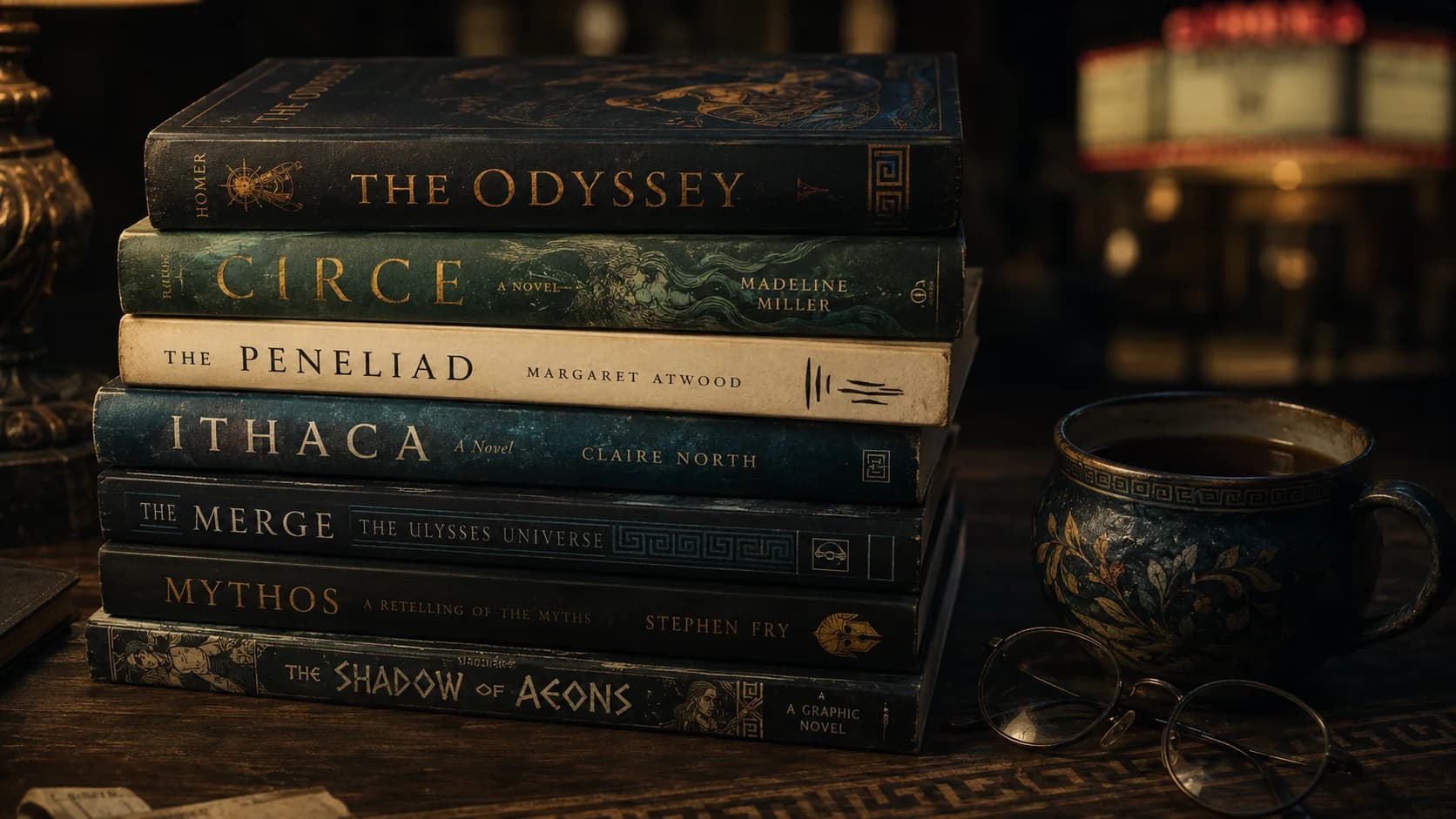
If you want to read the actual poem before the film, Books to Read Before Watching Nolan's Odyssey covers the best translations and supporting reading. If you want to read other modern adaptations to put Nolan's version in context, What to Read After Watching Nolan's Odyssey: 7 Modern Retellings has the full list.
What we're doing in parallel
A brief disclosure. The Ulysses Universe trilogy, which is the site this blog is part of, is a science-fiction reimagining of the Odyssey. Book 1 launched on 1 May 2026, ahead of Nolan's film. We've spent three years working on the same source material Nolan has spent three years working on. Our answers are different from his answers. They'll probably keep being different.
If you're curious how the same poem looks when it's adapted as space opera rather than literary epic film, Buy Book One: The Blinding on Amazon. Read it before the film. Compare notes afterward.
Where to go next
For the foundational character profile, Meet Ulysses Theron: The Admiral Who Blinded a God is the Ulysses Universe answer to 'who is this man.' For the difference between Odysseus and Ulysses (the same character, two names, long history), see Ulysses vs Odysseus: Why the Same Hero Has Two Names. For the broader history of every Odyssey adaptation ever made, Every Version of The Odyssey Ever Told has the timeline.
Key takeaways
- Christopher Nolan's Odyssey (July 17, 2026) is adapting Homer's 12,000-line epic poem written around the 8th century BCE.
- Nolan has cited Emily Wilson's 2017 translation as direct inspiration. The film is shooting in IMAX in Mediterranean locations.
- The Odyssey covers twenty years: ten years of the Trojan War and ten years of Odysseus's journey home. Nolan's film is expected to focus on the journey home, with the Trojan War referenced through flashback.
- Key adaptation challenges include the non-linear structure (the Odyssey starts in the middle and uses extensive flashback), the inclusion of supernatural elements (gods who intervene physically), and the long stretches of domestic Ithaca-side narrative.
- Cast highlights: Matt Damon as Odysseus, Anne Hathaway as Penelope, Tom Holland as Telemachus, Zendaya in an undisclosed role rumoured to be Circe. Production budget reportedly $250 million.