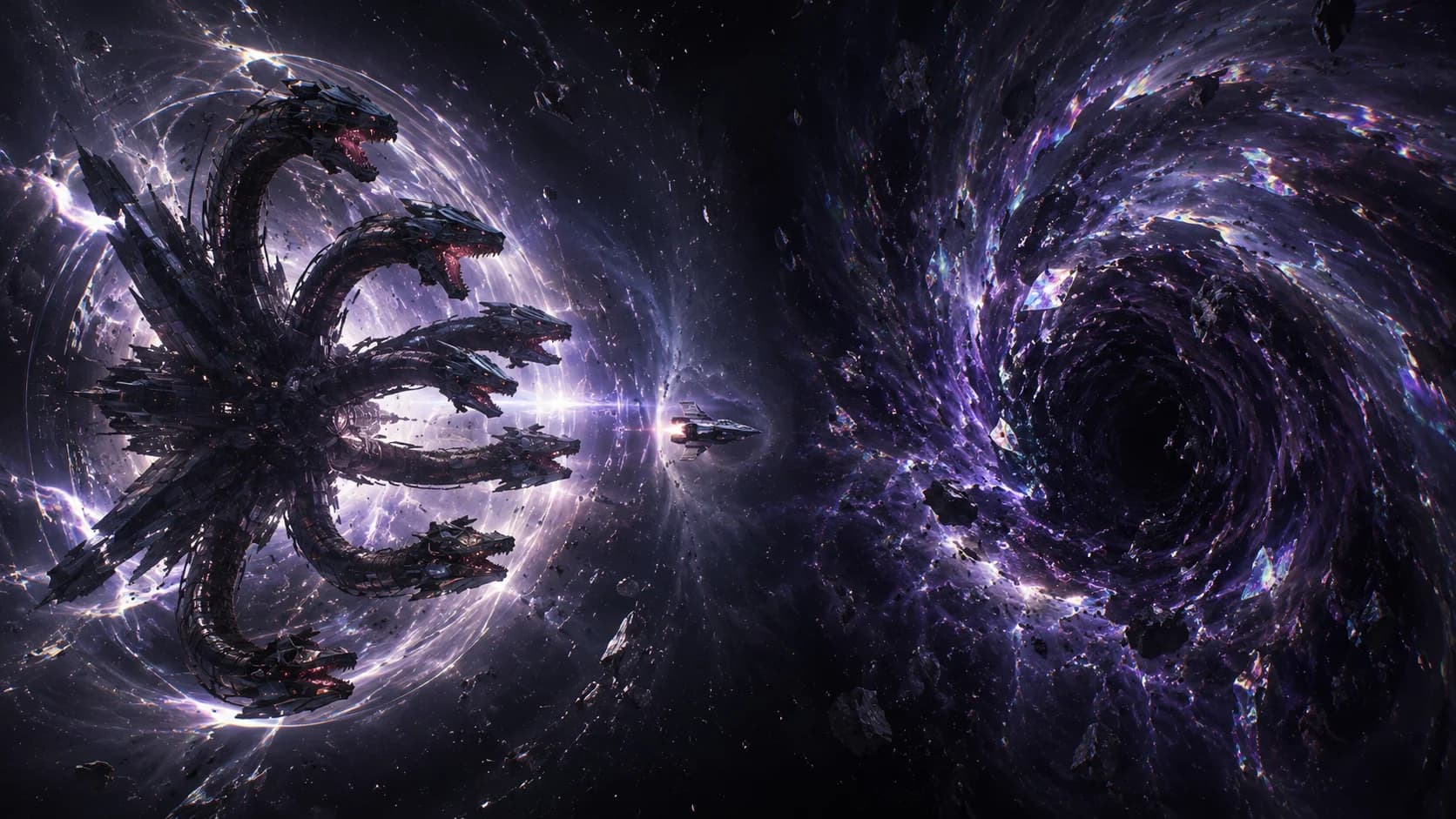
The Sirens: A Signal That Rewrites Memory
Not voices. A broadcast. The trilogy's reimagining of Homer's most insidious threat, where the danger isn't being lured to your death but having your memories surgically altered while you listen.
What Homer wrote
In Book 12 of the Odyssey, Odysseus's ship must pass the Sirens. Circe has warned him. The Sirens sing songs so beautiful that any sailor who hears them is unable to resist sailing toward their island, where the wreckage of previous ships is piled high and the bones of previous sailors line the meadow.
Odysseus's crew block their ears with wax. Odysseus, on Circe's specific instruction, leaves his own ears unblocked. He has his men tie him to the mast. He listens. He hears what no man who has heard has ever survived to describe.
The scene is one of the most famous in the Odyssey, and one of the strangest. The threat is not violence. The threat is desire. The threat is something so beautiful that hearing it ends you.
The Ulysses Universe needed to preserve the structural elements (the warning, the partial shielding, Ulysses's exposure, his survival) while updating the mechanism. Sea monsters singing on a rocky island were not going to translate to space.
What translated was the more interesting reading of what the Sirens actually are. Not creatures. Information.
The signal
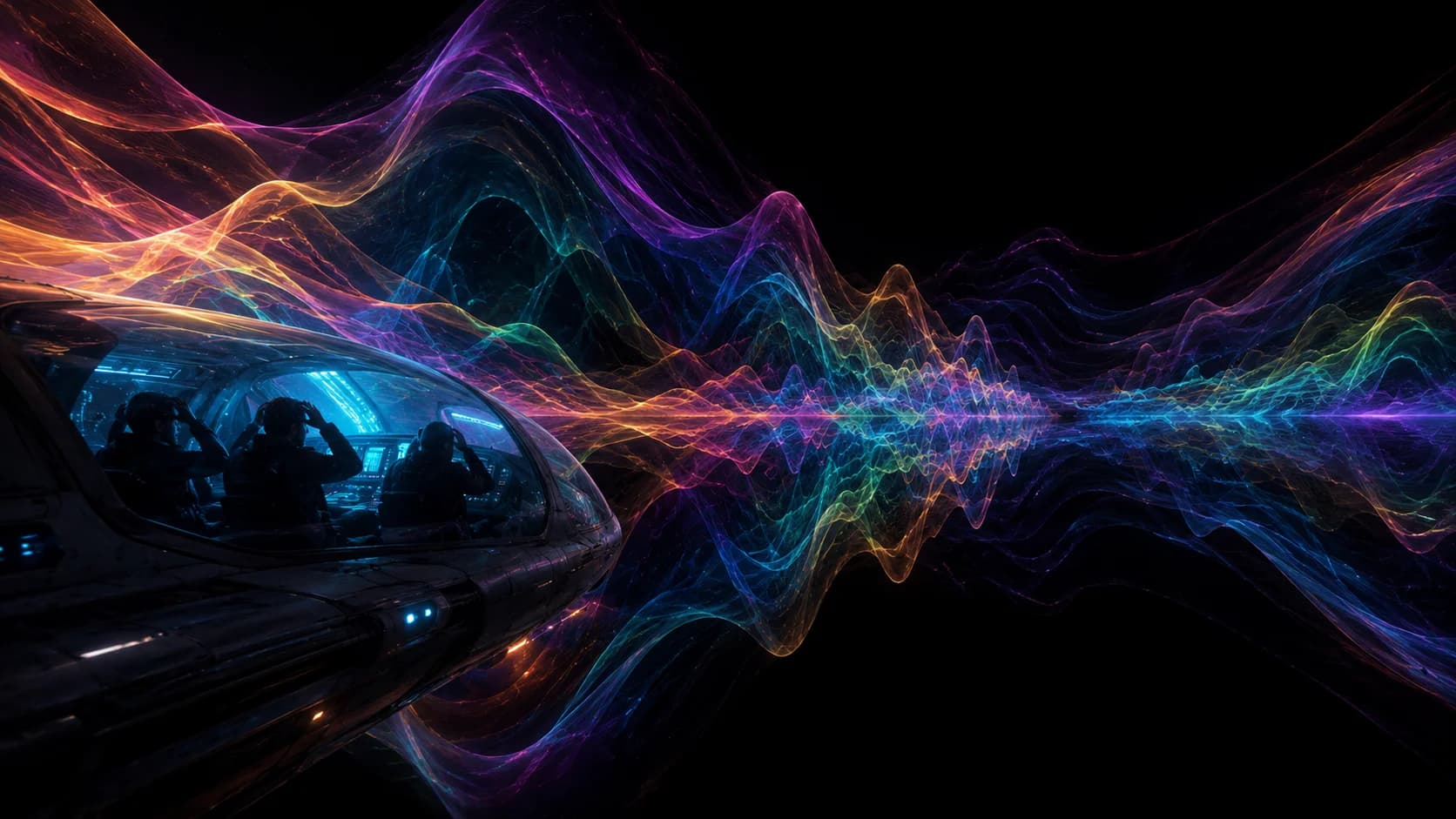
The Sirens in the Ulysses Universe are a broadcast. A signal that propagates through a defined region of space at high power, modulated in patterns that interact with the structure of conscious memory at the neurological level.
The signal does not transmit content the listener can refuse. There are no words. There are no songs. There are no voices. There is only modulation, in the range that the listener's brain processes as familiar pattern. The brain, encountering familiar patterns, attempts to integrate them with existing memory. The integration succeeds. The signal becomes memory. The memory it replaces is gone.
The danger is not seduction. The danger is rewriting. By the time you notice that something has changed, the something has been replaced with something else, and you cannot tell the difference because the version you have is the one your brain is currently storing as canonical.
This is, the trilogy argues, what the Sirens actually were. Homer's beautiful voices were a metaphor for an attack that operates by replacing the listener's history. The wreckage on the island was not corpses. It was the husk of people who survived the signal physically but had been so thoroughly rewritten that they no longer remembered to come home.
Why the Pantheon maintains it
The Sirens signal predates the Pantheon. It is, like several other dangers in the trilogy, an Architect artefact that the gods have chosen to leave operational. The Pantheon does not control the signal directly. They could disable it if they wanted to. They have chosen not to.
Why? Several theories. The trilogy commits to none of them definitively. The most likely is that the signal sometimes does the Pantheon's work for them. Travellers who do not return because they no longer remember where home was are not a political problem. The Sirens are a kind of slow filtration.
Hades does not approve. He has said so. But Hades has limited authority over what the Pantheon does at large.
The encounter in Book 2
The Odyssey enters the Siren region in Year 11 of the journey, between the Aeaea events and the descent to the underworld. Tiresias has not yet given Ulysses his warning. He knows from Pantheon survey data that the region exists. He knows that ships have been lost. He does not yet know the mechanism.
Echo identifies the signal first. Her pre-Awakening architecture, supplemented by the ECHO-7 fragment from the Eurydice salvage, gives her sensitivity to the broadcast that the rest of the crew does not have. She reports it. She also reports that her own processing is being affected. The crew runs to electromagnetic shielding immediately.
The shielding helps. It does not fully block. Marcus-Reyes, who was outside the main bridge complex when Echo's warning came through, gets a heavier exposure than the bridge crew. He locks himself in his compartment and waits out the encounter.
Ulysses, on a partial instruction Echo gives him in the moment, listens without full shielding. He needs the partial exposure for reasons he does not fully understand at the time. Tiresias's later warning will retroactively explain the choice.
The Odyssey is in the Siren region for nineteen minutes.
After
The crew emerges. Quick physical check. Everyone is alive. Everyone is breathing. Vital signs look normal.
The damage is in the memory architecture, and the damage is not visible from outside.
Marcus-Reyes is the worst hit. By the time he emerges from his compartment, three hours after the encounter, he cannot tell Ulysses what year it is. He cannot tell Ulysses his own daughter's name. He can speak, but his sentences do not connect to each other in the way sentences usually do. He looks at his own hands as if he is not sure they are his.
The trilogy handles this with great care. Marcus-Reyes is not a side character. He is one of the named crew, present from the start of the journey, with substantial scenes in earlier chapters. His being lost like this is one of the trilogy's hardest emotional beats.
Ulysses places him in medical stasis. The decision is the only humane one available. Stasis will halt the degradation. It will not reverse it. Marcus-Reyes will not be conscious again until Book 3, when the journey is over and the medical facilities on Ithaca can attempt repair.
What Ulysses kept
Ulysses himself survived the partial exposure mostly intact. He has lost some specific memories, but he has retained the structural integrity of his identity. The countermeasures Echo improvised worked, in the partial way that improvised countermeasures work.
The cost is in the specific memories he lost. None of them are crew-related. None of them are Penelope-related. The signal seems to have targeted what it could reach, which was older and less central material.
He has lost his memory of his own naming ceremony, age seven on Olympus Station. He has lost his memory of his first commanding officer in the fleet. He has lost several specific moments from his childhood on Ithaca that the trilogy mentions in passing as having been important to him.
These are not catastrophic losses. They are real losses.
He acknowledges them in his log. He writes down, where he can, the second-hand memories of those events that other people have told him about. The log entries are a quiet ritual of preservation. He cannot get the memories back. He can at least record that they existed.
The pattern Sirens fits
The trilogy's interest in memory, identity, and what persists is one of its through-lines. Calypso's Island takes ten years. The Sirens take specific memories. The underworld accesses the residue of those who have lost themselves entirely.
Each set piece is the trilogy thinking about the same question from a different angle. What is a person, when you take away the continuity of memory? What is identity when the body persists but the mind does not?
The Sirens are the cruellest of the three because they leave the listener intact in every observable way and gut them invisibly. You cannot point at the damage. You can only notice that the person who emerged is not exactly the person who entered, and the differences are subtle, and you can never quite specify what is missing.
Where to go next
For the crew member most heavily damaged by the encounter, his fate sits inside Twenty Years on the Odyssey: The Master Timeline. For the descent that gave Ulysses his structural warning about the Sirens, The Underworld: Data of the Dead is the companion piece. For the Pantheon-side profile of the Sirens, Know Your Gods: The Sirens is the relevant character page.
Book 2: The Void Between contains the Sirens encounter. Buy Book One on Amazon to start at the beginning.
Key takeaways
- The Sirens in the Ulysses Universe are a signal, not creatures. A broadcast that propagates through a region of space and rewrites the listener's memories at the structural level.
- The danger is not death. The danger is forgetting. Listeners survive the encounter physically. They emerge with substantial portions of their personal history rewritten or deleted.
- Marcus-Reyes is the trilogy's casualty. He listens. He survives. He is placed in medical stasis for the rest of the journey and only fully awakens in Book 3 because the damage is too severe to address in flight.
- Ulysses listens too, on Tiresias's instruction, with countermeasures Echo has prepared. He keeps his memories. The cost of keeping them is high.