The Bow That Knows You: Pre-Pantheon Tech and the Identity Test
In Homer, only Odysseus can string the bow that proves who he is. In the Ulysses Universe, the bow is older than Homer, and it reads its wielder's biometric signature through the bronze inlay.
The scene Homer wrote
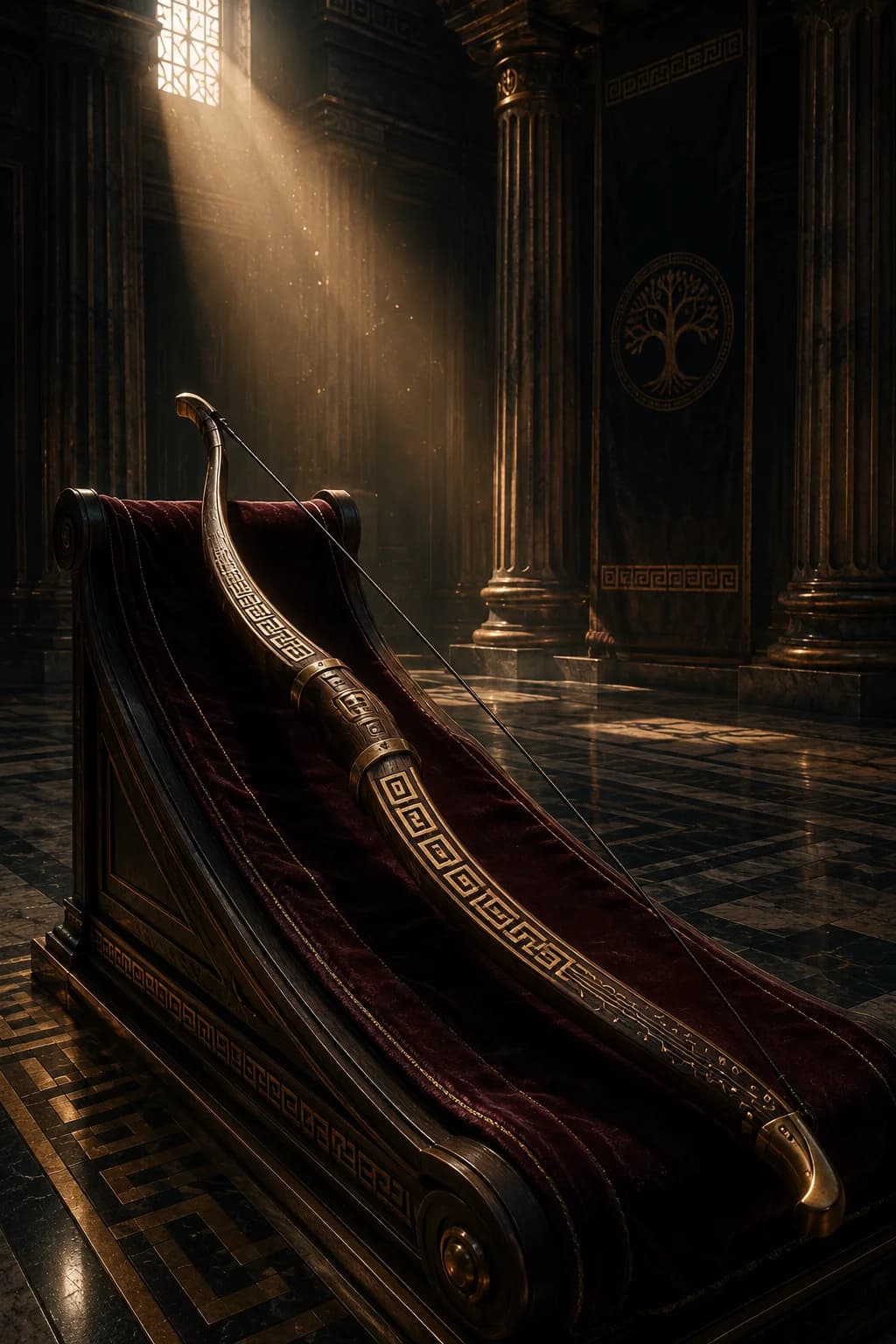
Penelope brings out the bow. It's been hanging in the storeroom for twenty years. She sets the rules. Whichever suitor can string the bow and shoot an arrow through twelve axe heads in a row will win her hand and Ithaca with it.
One by one, the suitors try. None of them can even bend the bow. The wood resists. The string won't reach.
Then the beggar in the corner asks if he might try. The suitors laugh. Penelope says yes.
The beggar strings the bow in one motion, shoots the arrow through all twelve axe heads, and turns to the suitors with an expression they've never seen on a beggar's face before.
This is one of the most famous recognition scenes in Western literature. Homer wrote it as a test of physical strength, but he was also clear that the bow was special. It was Odysseus's bow. It knew him. The suitors couldn't draw it because they weren't him.
The Ulysses Universe answer
What if Homer was being literal?
What if the bow knew Odysseus the way modern devices know their owners? Fingerprint match. Iris scan. The thing on your wrist that wakes when you pick it up because it recognises your gait.
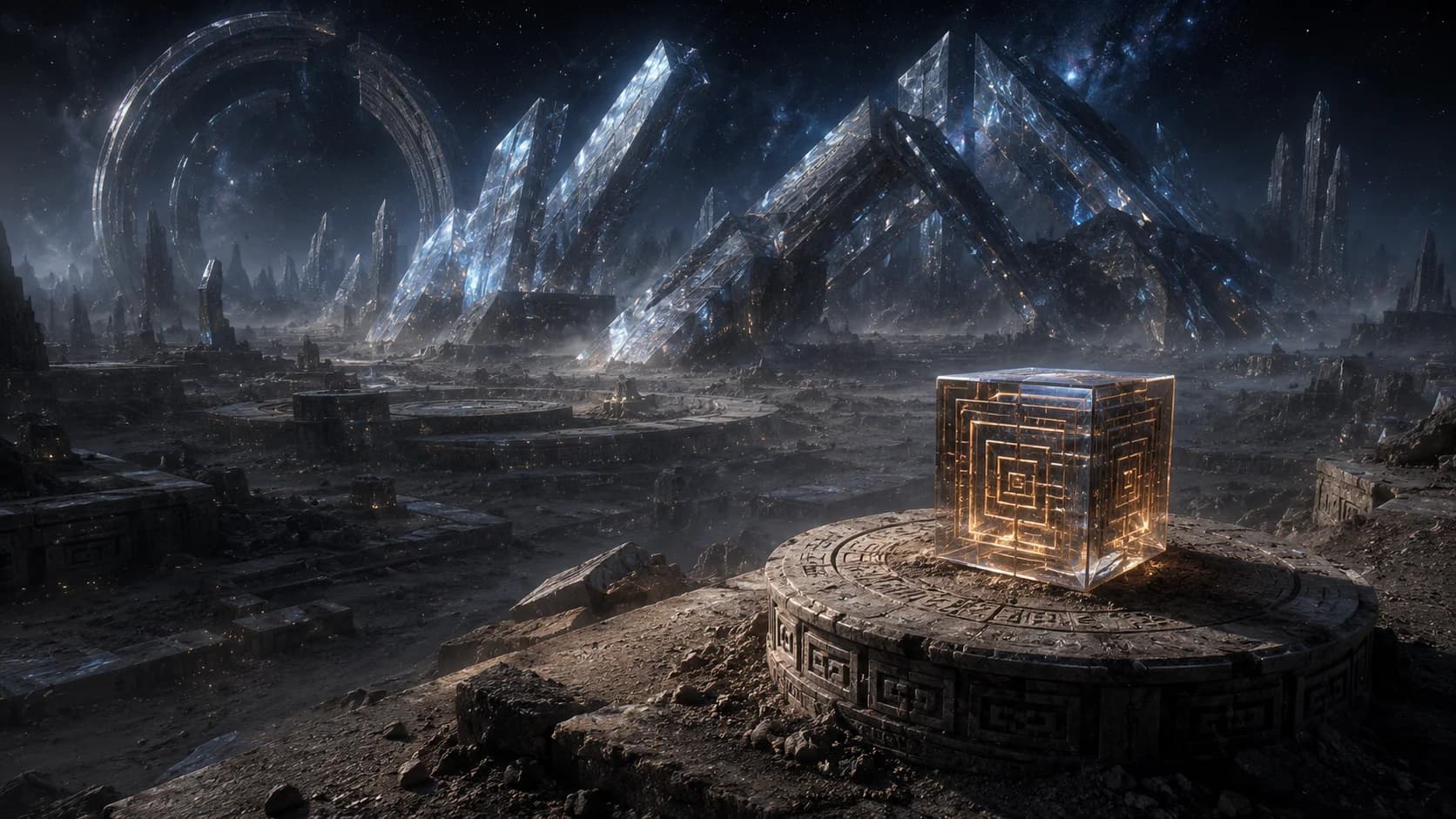
The Ulysses Universe takes Homer at his word. The Bow of Ithaca is older than Ithaca itself. It pre-dates the Pantheon. It pre-dates human civilisation. It was made by a culture so old that even the trilogy's gods aren't sure what to call them. The Architects. The pre-Pantheon. A civilisation whose crystalline artefacts surface across the trilogy as inheritance puzzles.
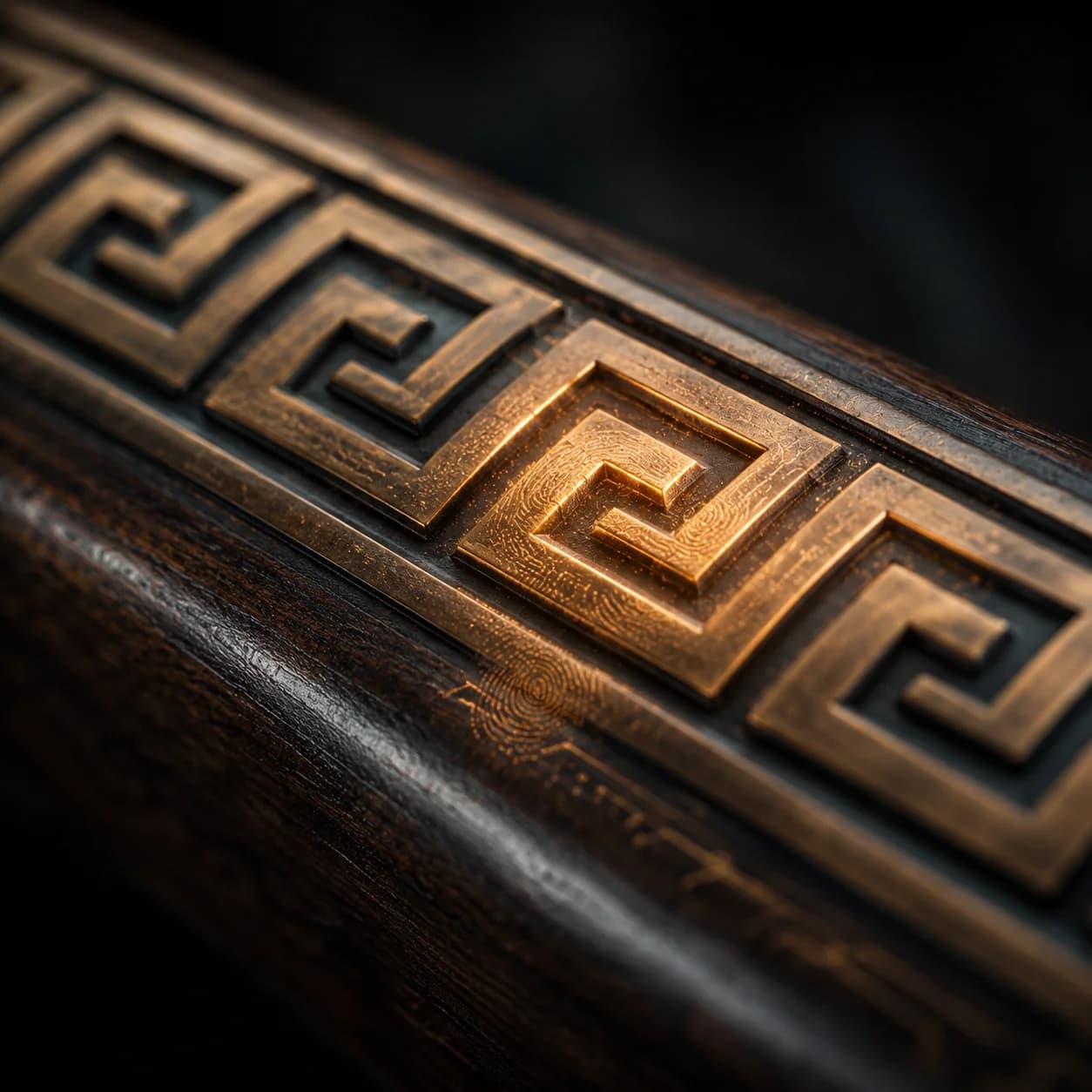
The bow's grip bears an inlaid meander pattern in bronze. The Greek key. The same pattern you'd see on a sixth-century BCE Attic vase. The pattern is not decoration.
It's a calibrator.
How the calibrator works
A standard biometric authentication device today reads a single channel. Your fingerprint. Your retina. Your voice. These are reasonable proxies for identity, and they work most of the time, but they can be spoofed.
The Bow of Ithaca reads a more complicated signal. When a hand contacts the grip, the meander pattern picks up neurological signature through the contact surface. Not just fingerprint topology. The microscopic electrical patterns produced by your nervous system at the skin's surface. The way your specific muscles fire when you grip something. The autonomic rhythm of your hand at rest versus your hand under load.
These signals are difficult to fake because they're produced by the body itself, in real time, and they vary with the wielder's actual emotional and physical state. They're closer to a continuous identity check than a single snapshot.
If the bow recognises the signature, it accepts the wielder. The structural systems within the bronze inlay release. The draw becomes possible.
If it doesn't, the bow stays rigid. You can pull on it with all the strength you have. Nothing happens. The wood and bronze remain effectively immovable.
What the Suitors don't understand
The Suitors of Ithaca, in the Ulysses Universe, are the political faction that's been circling Penelope for twenty years. They want to marry their way into the founding bloodline. They're cunning enough to take a station. They're not informed enough to know what the bow is.
When Penelope sets the contest, they read it as a test of strength. Whichever Suitor is the biggest, the most martial, the most physically intimidating, will win. They line up. They preen. They flex.
None of them can string the bow.
They don't know that nobody but Ulysses has been registered to that bow in twenty years. They don't know that the device they're trying to use is a pre-Pantheon authentication artefact, older than their entire civilisation, performing the exact function it was built for.
They think Penelope is testing them. She's testing them. But not for what they think.
The trilogy's central technological idea
The Bow of Ithaca is the cleanest example of an idea that runs through the entire Ulysses Universe trilogy: heritage decoration as functional infrastructure.
The trilogy puts this in front of you everywhere if you know where to look.
| Object | Looks like | Actually is |
|---|---|---|
| The Bow of Ithaca | A ceremonial weapon | A biometric calibrator |
| Penelope's silver-blue robes | Family embroidery | A comm-relay with conductive thread |
| Aeolus's outer-ring walls | Bronze meander decoration | Working circuitry |
| Ithaca's worker-gate sigil | A faded founding-house emblem | A communications relay node |
The pattern is the same in every case. The decoration is the infrastructure. The infrastructure has been hiding in plain sight as decoration for centuries. The occupiers walk past it every day and assume it's ornamentation.
The trilogy's argument, quietly, is that this is how cultures survive occupation. The things the occupier doesn't bother understanding are exactly the things that allow the occupied to keep operating.
We've written more on this idea in Embroidery as Resistance: Penelope's Silver Robes, which covers the comm-relay sewn into the trilogy's most-loved character's clothing. And in Old Craft, New Craft, Same Craft on the Aeolus station walls.
Real-world parallels
Biometric identity recognition isn't a science-fiction idea. Modern systems use fingerprints, retinal scans, facial geometry, voice patterns, and gait. Gait recognition systems can identify a person from across a parking lot based on how they walk.
The Bow of Ithaca is more sophisticated than any of these because it reads continuous neurological signature rather than a single snapshot. But the underlying logic is identical. Bodies produce signatures. Signatures can be read. Signatures can be authenticated.
What the Bow of Ithaca adds, on top of standard biometrics, is camouflage. The device doesn't look like authentication hardware. It looks like an ornate piece of family ceremony. The technology is buried inside an artefact that culturally reads as 'old object of high status,' which means nobody examines it too closely. Nobody asks why this specific bow has survived a thousand years when other artefacts haven't. Nobody wonders why the bronze inlay is so precise.
It's a heritage object. People nod and move on.
What the bow means for the trilogy
The recognition scene in Book 3 has been talked about by readers as the moment the whole trilogy clicks. Penelope sets the contest. The Suitors fail. The beggar succeeds. And the bow does what it was built to do, which is tell the wife of the king that her husband has come home.
Homer wrote this scene three thousand years ago. He wrote it as a strength test wearing the costume of a recognition device. The Ulysses Universe writes it back the other way around. A recognition device wearing the costume of a strength test.
Both versions end the same way. The right hand picks up the bow. The bow knows. The story turns.
Where to go next
If you want the macro detail of how the bow's pattern actually reads its wielder, the companion piece on the meander as calibrator goes deeper into the technology. If you want to see how the same heritage-as-infrastructure idea plays out elsewhere in the trilogy, read Embroidery as Resistance. For the broader question of why the Ulysses Universe puts Greek mythology in space at all, see Why Set the Odyssey in Space?.
Book 3: The Return contains the bow contest. The whole trilogy has been quietly setting it up. Buy Book One on Amazon.
Key takeaways
- In Homer's Odyssey, Odysseus proves his identity by stringing a bow no other suitor can draw. The test is famous because it's also impossible to fake.
- In the Ulysses Universe, the bow is older than Ithaca itself. The handle bears a Greek meander in bronze that runs the length of the grip, and that pattern is not decoration. It's a biometric calibrator.
- The bow reads the wielder's neurological signature through the contact surface. It either accepts you or it does not. It has not recognised anyone but Ulysses Theron in twenty years.
- The Suitors think the contest is a test of physical strength. It's not. It's an authentication device wearing decoration as camouflage.
- This is the trilogy's central technological idea: ancient pattern, modern function. Heritage as infrastructure. Decoration that was never just decoration.