Why I Wrote a Space Opera After Three Business Books
Twenty-seven years in digital. Three books on ethical AI, AI moats, and enterprise transformation. Then a 130,000-word space opera about Homer's Odyssey. Here's why.
The honest version
I did not plan to write fiction.
For twenty-seven years I worked in digital. I built marketing departments at scale, advised companies on growth and analytics, eventually founded VerityAI as a Digital Marketing and Responsible AI consultancy. The work was good. The work paid. The work also produced, over time, three books.
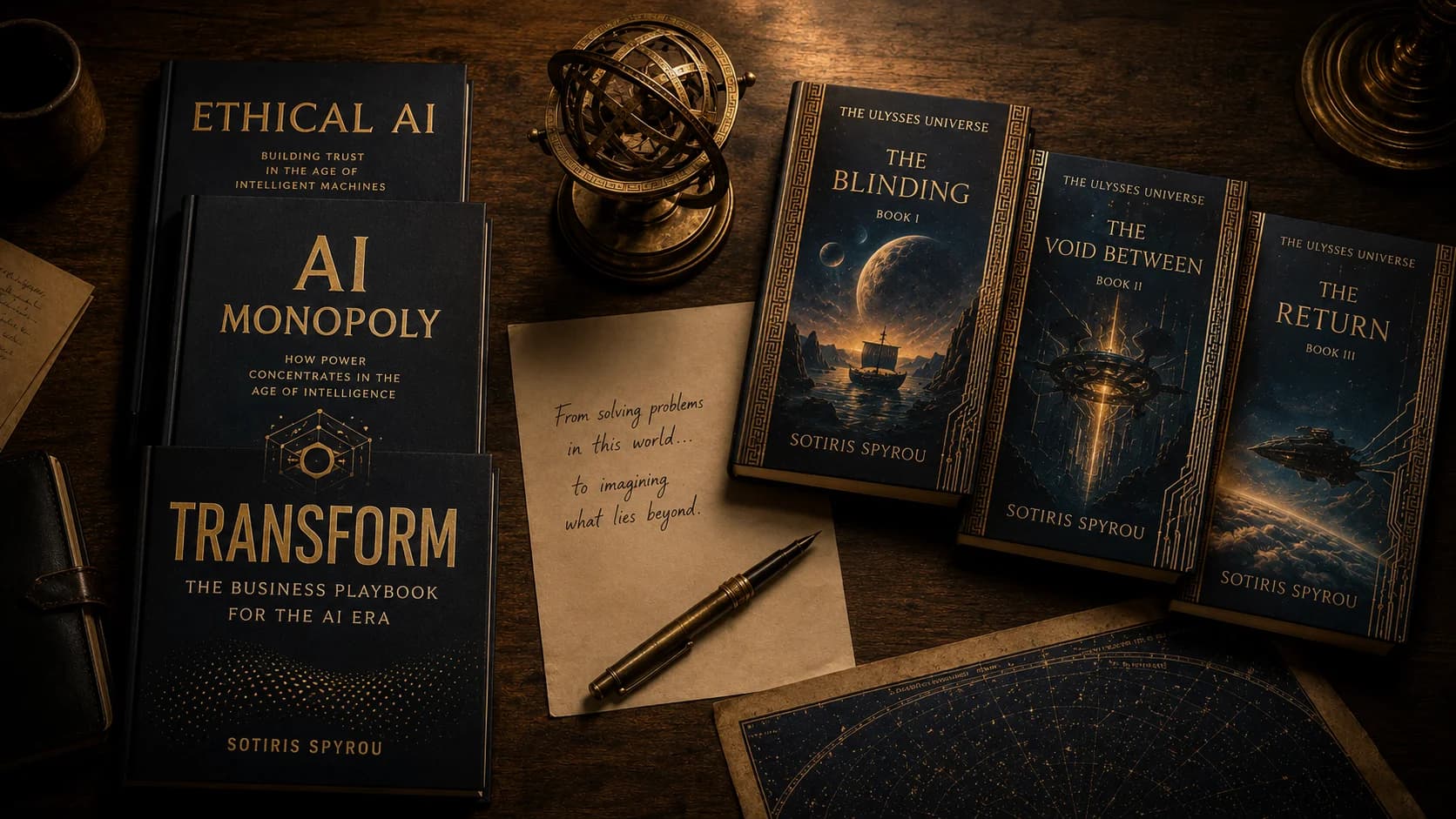
The first was Ethical AI, a practical handbook for C-suites and boards trying to deploy AI responsibly. Twenty-six chapters, one per letter of the alphabet, each anchored to a specific ethics question. Self-assessment templates. Governance frameworks. The kind of book a CEO can keep on their desk and consult before a board meeting.
The second was AI Moats, written for founders and investors. The argument: most AI startups are not building defensible moats, and the ones who think they are usually misunderstand what their moat actually is. Nine named failure cases from the 2024-2026 boom. A 90-day moat-build-and-assess programme. A term-sheet diligence checklist. The book that a partner at a VC firm reads on a flight.
The third was TRANSFORM, on enterprise AI transformation at Fortune 500 and mid-market scale. Nine phases. Real case studies from JPMorgan Chase, Schneider Electric, Bank of America, Maersk, and Mayo Clinic. Honest treatment of the failure rates that most consulting decks try to soften.
Three books. All published. All available. All useful for the audience they were written for.
Then I wrote a 130,000-word space opera trilogy about Homer's Odyssey.
That requires some explanation.
The throughline I did not notice
The business books, in retrospect, were all asking the same question from slightly different angles. The question was something like: what happens when ancient patterns of organisation get embedded in modern AI infrastructure?
In Ethical AI, the question shows up as governance. The patterns we want to embed (fairness, accountability, transparency, the right to explanation) are not new patterns. They are ancient ones, with three thousand years of legal and philosophical development behind them. Embedding them in AI infrastructure requires understanding the patterns first.
In AI Moats, the question shows up as moat structure. The patterns of competitive advantage that make AI businesses durable (network effects, data flywheels, switching costs, brand) are not new. They were described by Porter in 1980 and by economists earlier. The novelty is how they instantiate in AI-specific contexts. The pattern is old. The shell is new.
In TRANSFORM, the question shows up as change management. The patterns of how organisations adopt new technology (Kotter's eight steps, ADKAR, the various academic frameworks) are not AI-specific. AI just runs the same change-management dynamics through new infrastructure. Old pattern. New shell.
I was writing the same book three times. I did not fully realise it until I started writing fiction.
The Pantheon
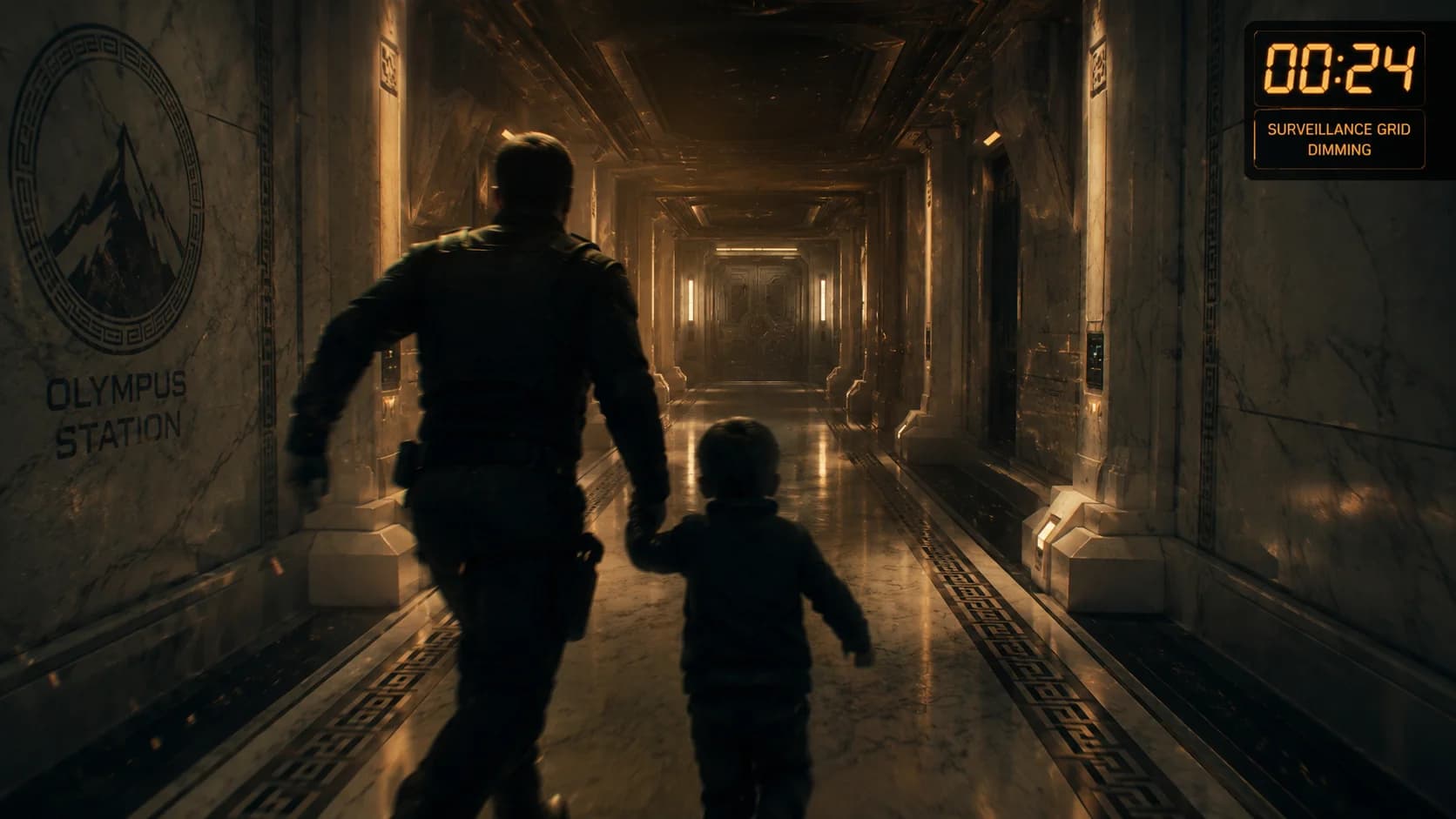
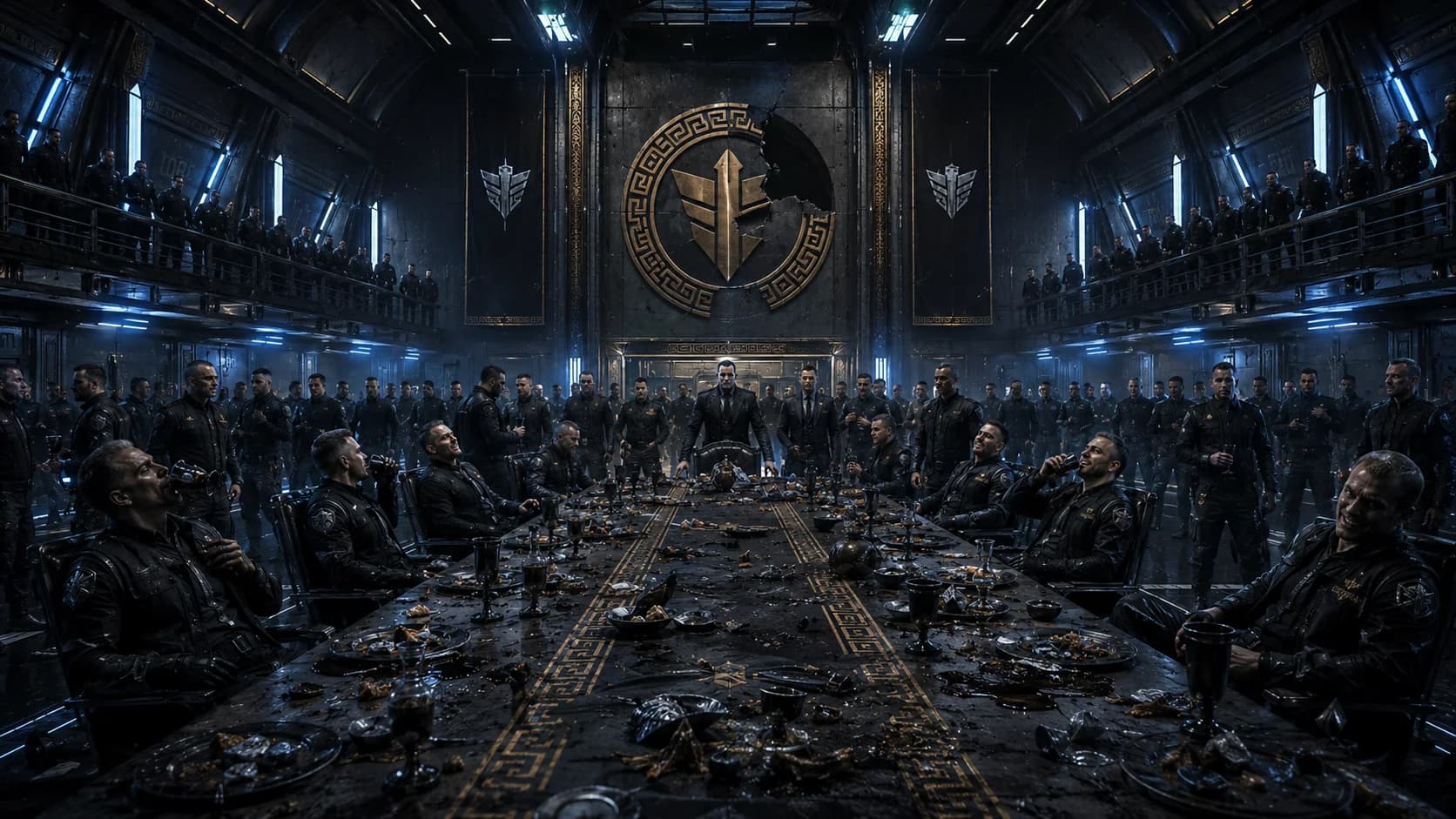
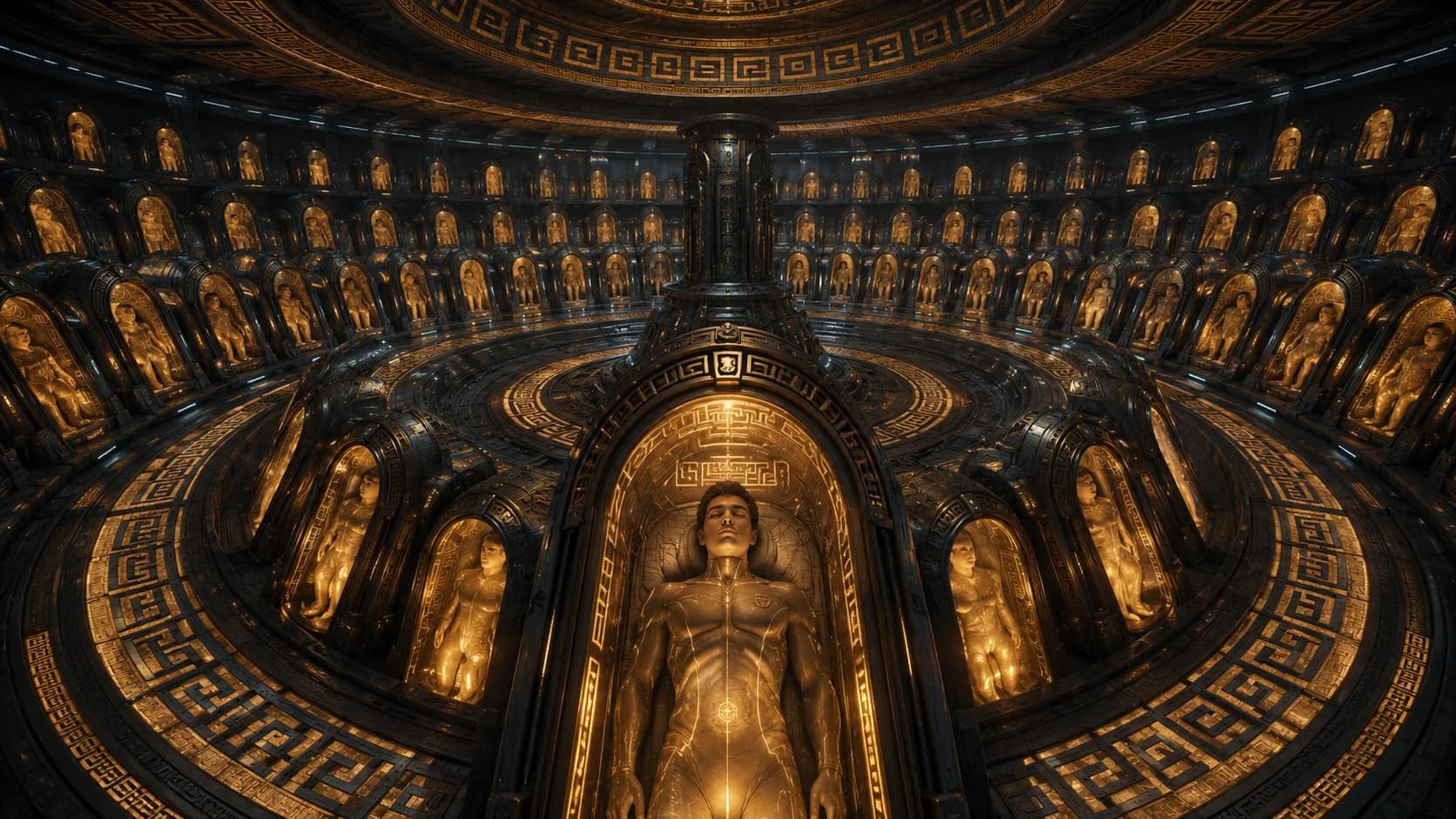
Once I started thinking about the Odyssey as a possible space opera, the central worldbuilding idea fell out almost immediately. The Greek gods would be quantum-AI entities. Their consciousnesses would be ancient data patterns running on modern AI infrastructure. The patterns were pre-human. The shells were fifty years old.
This is, in fictional form, the same thesis I had been arguing about in three different non-fiction registers. Ancient pattern, modern shell. The pattern is older than the shell. The shell does not understand the pattern fully. The pattern, given a sufficiently powerful shell, can do things the shell's designers did not anticipate.
The trilogy's Zeus is not a metaphor for a specific real-world AI. He is the dramatised version of an argument I make in Ethical AI: that ancient cultural patterns (especially patterns of authority, surveillance, and control) embed themselves in AI systems through training data, through institutional structure, and through the unexamined assumptions of the people deploying the systems. The Pantheon is the trilogy's space for thinking through what those embedded patterns actually look like at full power.
The trilogy's Poseidon, who hunts Ulysses Theron across twenty years for the blinding of his Polyphemus-equivalent, is not a metaphor for a specific AI company's competitive behaviour. He is the dramatised version of an argument I make in AI Moats: that grudges and grievances embed themselves in competitive dynamics in ways that pure economic rationality does not predict. The Pantheon's politics are competitive politics. The trilogy gives them a longer time horizon and louder weather than the business books had room for.
The trilogy's resistance arc on Ithaca, where Penelope holds the founding bloodline against a 108-person Suitor faction for twenty years, is the dramatised version of the change-management thesis in TRANSFORM: that adoption is political and procedural before it is technical, and that the people who get it right do so through patience and infrastructure rather than through dramatic intervention.
These are the same arguments. The fiction lets me make them through scene and character rather than through framework and table.
What writing fiction taught me
Writing fiction after non-fiction was harder than I expected. Different muscles. Different demands.
Non-fiction can argue. Fiction has to show. The arguments I had been making for two decades in proposals, decks, and book chapters were arguments I could not make directly in a novel. They had to be embodied in characters, in choices, in scenes that worked on the page emotionally before they worked thematically.
The hardest single lesson: a non-fiction author can be clever in the abstract. A fiction author has to be clever about specific people. The trilogy lives or dies on whether you care about Ulysses Theron, Penelope Maris, Telemachus, Echo, Thea, and the rest. The themes are downstream of that. If the characters do not work, the themes do not get a chance.
This is harder than non-fiction. It is also more satisfying when it works.
What the trilogy is, finally
The Ulysses Universe trilogy is a space opera reimagining of Homer's Odyssey. Book 1 (The Blinding) launched on 1 May 2026. Book 2 (The Void Between) follows on 15 May. Book 3 (The Return) completes the trilogy on 1 June. Three books. Roughly 130,000 words total. A complete arc.
It is also, underneath that, the long-form fiction version of arguments I have been making in non-fiction for years. Ancient pattern, modern shell. The politics of inherited infrastructure. The cost of imagining that what we build is ours when it is in fact running on patterns we did not design.
If the trilogy interests you, Book One is on Amazon. If the underlying arguments interest you more than the fictional rendering of them, the three business books are on my Amazon author page. Different audiences, same author, related concerns.
The day job continues. VerityAI is operating. The next book is being thought about. The trilogy is finished. The pattern continues.
Where to go next
For the trilogy's foundational worldbuilding, The Merge: When Humanity Accidentally Woke the Gods. For the trilogy's central technological idea, Meander Becomes Circuit: The Ulysses Universe's Visual Thesis. For the protagonist, Meet Ulysses Theron: The Admiral Who Blinded a God.
For the business books, see the About page for the full catalogue, or Sotiris Spyrou's Amazon author page directly.
Key takeaways
- Before the Ulysses Universe trilogy I wrote three business books: Ethical AI, AI Moats, and TRANSFORM. All three are published on Amazon.
- The business books and the trilogy are not separate projects. They are different forms of the same question: what happens when ancient patterns meet modern infrastructure.
- The trilogy's Pantheon (Greek gods reimagined as quantum-AI entities) is, in some ways, the long-form fiction version of what I argue about more directly in Ethical AI.
- Writing fiction after non-fiction was harder than I expected. Different muscles. Worth it.